The jailing of two Reuters journalists shreds what remains of Nobel laureate Aung San Suu Kyi's reputation as a rights champion, critics say, after she failed to come to their defence or speak up for the persecuted Rohingya minority.
Suu Kyi was once a staunch advocate for the free press and a darling of the foreign media.
During her long years of house arrest under the former junta — which choked the media inside Myanmar — it was foreign correspondents who carried her message of peaceful defiance to the outside world.
Glowing profiles burnished her image, with comparisons made to the Dalai Lama, Nelson Mandela and Martin Luther King.
Suu Kyi remains adored inside Myanmar. Supporters of her democracy battle say she has limited control over the military, which ceded full control in 2015 after almost 50 years in power.
But her response to the Rohingya crisis has sent her international reputation into a tailspin.
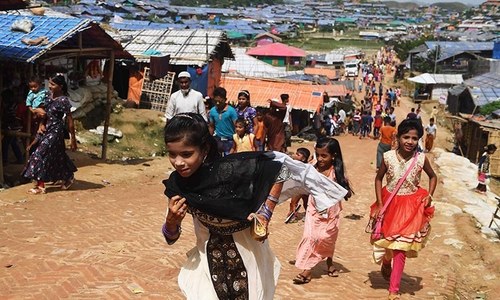
Former friends and supporters have looked on aghast at her lack of criticism of last year's military campaign against the Rohingya.
UN investigators last week said that campaign was pursued with "genocidal intent".
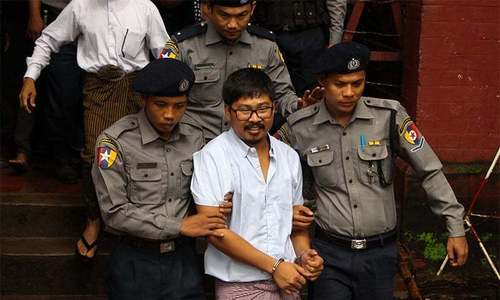
Monday's conviction of two Reuters journalists, Wa Lone and Kyaw Soe Oo, and their seven-year sentence has sent a chill through Myanmar's already embattled press community.
Yet throughout the trial Suu Kyi has been unmoved by calls to intervene, or even criticise the court case.
'Traitors'
Bill Richardson, a US diplomat and until recently a Suu Kyi confidante, alleges that she denounced the two journalists when he tried to raise their plight in person.
"Suu Kyi's response was filled with anger, referring to the journalists as traitors," the former New Mexico governor told AFP.
Shortly after the set-to in January, Richardson quit his position on an international advisory body into the Rakhine crisis, labelling it a whitewash.
Another person at the same meeting said there was shouting and a "charged atmosphere".
"In that heated exchange I wouldn’t dismiss that the word was used," said retired Thai lawmaker and ambassador Kobsak Chutikul, who was secretary for the panel and who also later resigned.
"It would have fitted the emotions and sentiments at the time," he added.
Since sweeping to power three years ago, Suu Kyi's relationship with the press has been fraught.
Prosecutions of journalists and media intimidation more redolent of the junta years have been common.
Around 20 journalists were prosecuted in 2017, many under a controversial online defamation law.
At the same time Suu Kyi has been accused of backing misinformation and distorted reports about the Rakhine crisis.
State media published by the Suu Kyi-controlled Ministry of Information has continuously echoed the military line, rejecting allegations of atrocities against the Rohingya as "fake news".
That has put her at odds with a mountain of evidence and an international community calling for justice.
"To say that Aung San Suu Kyi's star has faded is a massive understatement," said Matthew Burgher from free speech advocacy group Article 19.
Powerless or accomplice?
Suu Kyi's defenders say her hands are tied by an army that still controls all security matters as well as 25 percent of parliamentary seats.
The stateless Rohingya are also a deeply unpopular cause among the Buddhist-majority public in Myanmar, where Islamophobia has surged in recent years.
That reality gives Suu Kyi little political incentive to defend the Muslim minority — or reporters who write about their plight.
But some analysts note a transformation in Suu Kyi in recent months, from trying to avoid talking about them to supporting the military's kickback against "terrorists".
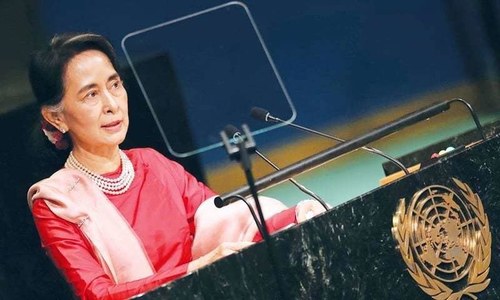
At a speech in Singapore last month she referred to generals in her cabinet as "rather sweet". UN investigators have accused the army of genocide.
"We who are living through the transition in Myanmar view it differently from those who observe it from the outside and who will remain untouched by its outcome," she said.
Given that an appeal could take years, the best hope for early release for Wa Lone and Kyaw Soe Oo may be a pardon from President Win Myint, a key aide to Suu Kyi.
Aaron Connelly, a Myanmar expert at Australia's Lowy Institute, said the notion that Suu Kyi is powerless to counter the military's excesses is a "myth" since she uses her political leverage on issues she deems worthy.
"Unfortunately, she does not consider the safety and dignity of Rohingya to be among them," he added.