1
1
ISLAMABAD: A 10-member committee has been constituted by Federal Ombudsman Syed Tahir Shahbaz to study and give recommendations for the establishment of a bioequivalence and bioavailability laboratory (BEBAL) in Pakistan, in response to public complaints about the quality of healthcare services in the country.
His intervention has begun a process to remove a major obstacle to the export of medicines to development countries.
Pakistani health departments have been criticised for the absence of any United States Food and Drug Administration (USFDA) and World Health Organisation approved drug manufacturing factory, but there has been little effort to establish an international standard BEBAL.
“If a laboratory is established it will become possible for pharmaceutical companies to hold bioequivalence tests and, after that, invite the USFDA and WHO to register Pakistani drugs so they can be exported to developed countries,” one of the committee members, Dr Syed Khalid Saeed Bukhari told Dawn, adding that most develop countries allow imports of USFDA-approved medicines.
Body set up in response to public complaints regarding quality of healthcare
He said that while original drugs – called innovative drugs – are made by companies after extensive research, stability testing and so on, multi-sourced or generic drugs are made by companies that are not innovators and are exact copies of innovative drugs.
However, it does need to proven that generic drugs are true copies and have the exact same effects of patients as the innovative drug, he said.
“There are currently around 1,200 drug molecules in Pakistan, of which 300 need bioequivalence. In case of a minor difference between the generic and innovator medidines, the results can be dangerous.
“In a BEBAL, innovative and generic drugs are tested on volunteers. Innovative drugs are imported from abroad for the tests, and a data logger is placed with them to ensure there is no variation in temperature,” he explained.
After that, the medicine is given to the volunteer. During the test, the volunteer is isolated and tested to see the level of the medicine in the blood after six, 12, 24 and 48 hours.
Then the volunteer is allowed to live normally, which is called the washout period, and then once again kept in the laboratory in the same atmosphere and even given the same food.
Then, the volunteer is given the generic medicine and the same tests are repeated.
Dr Bukhari said once it is proven that both medicines had the same results, the companies can apply to the USFDA and WHO for registration.
“One the applications are filed, the USFDA and WHO send their teams to verify the tests, and after that the medicines can be registered.”
He said that the government has currently decided that tuberculosis medicines with bioequivalence will be permitted, so Pakistani companies are seeking bioequivalence certificates from abroad and are spending almost Rs15 million on each test.
He added that a good laboratory can be established within Pakistan for around Rs100m, which can also be used for business purposes.
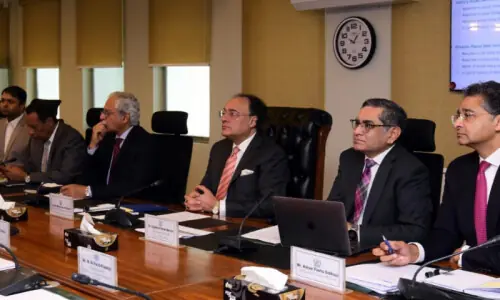
According to a statement, the committee will be headed by former surgeon general Asif Mumtaz Sukhera and includes former Drug Regulatory Authority of Pakistan CEO Dr Mohammad Aslam, Dr Bukhari from USAID, Prof Dr Zabita Khan Shinwari, Sardar Mohammad Yasin, Dr Sultan Ghani and others. The committee’s secretary will be Federal Ombudsman Adviser Dr Khalid Ranjha.
The committee will examine existing facilities at home and abroad, and will recommend the establishment of a state-of-the-art BEBAL in Pakistan according to WHO guidelines. It will submit its report within two months from the date of its constitution.
Published in Dawn, March 18th, 2018