ISLAMABAD: China has brokered a deal between Pakistan and Afghanistan for the establishment of a bilateral crisis management mechanism aimed at keeping the communication channels between the two neighbours open during crises and enabling them to resolve their differences through dialogue.
Additionally, Pakistan, China and Afghanistan have agreed to establish a trilateral foreign ministers’ dialogue forum, which is apparently meant to sustain Beijing’s mediation space in Pak-Afghan disputes.
The agreement on the new bilateral mechanism, which would be supported by Beijing, and the trilateral dialogue forum was announced on Sunday in a joint statement issued by Pakistan, China and Afghanistan.
It came at the conclusion of a shuttle diplomacy mission by Chinese Foreign Minister Wang Yi for defusing tensions between Islamabad and Kabul that have been trading accusations of sponsoring terrorism and were embroiled in bitter border disputes.
“Afghanistan and Pakistan agree to establish a crisis management mechanism. … The Chinese side will support this mechanism,” said the declaration in which Islamabad and Kabul also committed to “shared security”, in addition to pledging to jointly confront security challenges.
Trilateral foreign ministers’ forum to supplement arrangement
Pakistan and Afghanistan will bilaterally negotiate the terms of reference and other details for the mechanism. This task may prove challenging for the two countries that have in the past agreed to a number of similar initiatives, including a cooperation agreement between their intelligence agencies that failed to materialise due to deep-rooted mutual mistrust. They had also agreed in March, during a meeting facilitated by Britain, on a mechanism for interaction at multiple levels — military, intelligence and political.
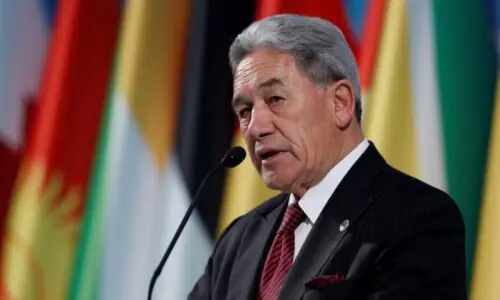
The Chinese foreign minister noted this challenge. Speaking at a press conference along with his host, Foreign Affairs Adviser Sartaj Aziz, he said: “The key for Pakistan and Afghanistan is to have detailed consultations on how this mechanism would function and reach an agreement on the operability of this mechanism.”
He, however, described the Pak-Afghan agreement on bilateral mechanism as “an important step”.
Mr Aziz also hailed the accord as a “very important initiative on behalf of China”, which would help to resolve differences and improve relations between Pakistan and Afghanistan.
The bilateral mechanism will provide for sharing intelligence and information for preventing terrorist attacks and other steps that the two sides may agree to take.
It will keep the communication lines between the two governments open during a crisis so as to resolve issues through dialogue while insulating the relationship from its negative impact.
The arrangement on crisis management will be supplemented by the forum for dialogue between the foreign ministers of the three countries.
It will discuss all aspects of Pak-Afghan ties but will focus more on promoting the economic aspect of the relationship.
Peace in Afghanistan
The three countries also supported the revival of the dysfunctional Quadrilateral Coordination Group and the Shanghai Cooperation Organisation’s Contact Group on Afghanistan for renewing the stalled Afghan reconciliation process.
The Chinese minister said his country was ready to play its constructive role in this regard and asked others (an apparent reference to the United States) to play a positive role.
He warned against delaying the reconciliation process and said that this could lead to complications.
Mr Aziz also said that sustainable peace in Afghanistan required a politically negotiated settlement.
The Chinese foreign minister, on the second day of his visit to Pakistan, called on President Mamnoon Hussain and Chief of the Army Staff Gen Qamar Bajwa.
“Matters of mutual interest and regional security with special reference to Afghan situation and CPEC came under discussion” during his meeting with the army chief at the General Headquarter, the military’s public relations wing ISPR said.
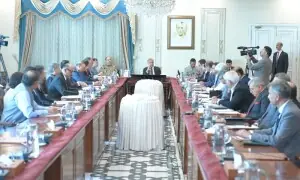
Mr Wang’s mediation trip took place at a time when the US is planning to take a tougher line towards Pakistan because of reservations about Pakistani counterterrorism operations. A security conference at the GHQ on Saturday dismissed those concerns and noted that Pakistan had done all it could. The meeting chaired by Gen Bajwa observed that it was now time for others to do more.
The visiting Chinese minister said that questioning Pakistan’s counterterrorism commitment would be unfair.
Security concerns
Talking to the visiting minister, President Hussain said Pakistan had raised a Special Security Division force of 15,000 personnel for the protection of Chinese nationals working on the China-Pakistan Economic Corridor projects and tough action was being taken against terrorists.
Pakistan considered the enemies of China as its own enemies, he said, according to a handout.
Mr Wang thanked the government for setting up the special force for protecting Chinese citizens.
Syed Irfan Raza contributed to this report
Published in Dawn, June 25th, 2017