7
7
No journalist was murdered in Pakistan “in retaliation for their work” in 2016, a first since 2001, a recent study reported.
The Committee to Protect Journalists (CPJ), an independent organisation working to promote press freedom worldwide, in its special report launched on Monday said that it “did not identify anyone singled out for murder in Pakistan because of journalist work” — for the first time in 15 years.
The organisation classifies murder as “the targeted killing of a journalist, whether premeditated or spontaneous, in direct relation to the journalist's work”.
At least 33 journalists have been targeted and killed “in retaliation for their work” since 1992, CPJ further said in its press statement.
However, many Pakistani journalists have resorted to self-censorship or have abandoned the profession altogether to avoid “grave risks”, CPJ added.
A report released by Pakistan Press Foundation (PPF) in November said, “Media houses and media persons are not only being targeted but threatened, pressurised, intimidated and harassed by the state and non-state elements.”
“Threats and violence have forced many journalists to move from these danger zones and to leave the profession or to resort to self-censorship, particularly in conflict areas,” it added.
Aside from murder and crossfire/combat, CPJ also records deaths of journalists who were killed while on a “dangerous assignment such as covering political unrest”.
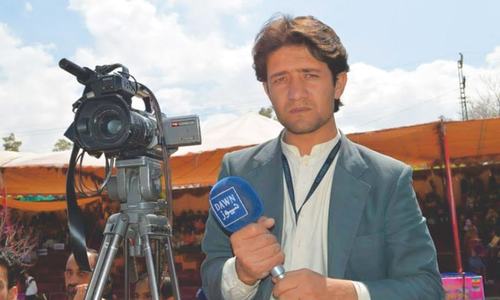
According to CPJ, at least three journalists died while covering such assignments in 2016, two of whom were Pakistani. In August, DawnNews cameraman Mehmood Khan and Aaj TV cameraman Shehzad Ahmed were killed in a bomb blast at the Quetta Civil Hospital.
The slain crew members were in the hospital, covering a large group of lawyers mourning the murder of the president of the Balochistan Bar Association.
Read more: Remembering my fallen colleague Mehmood Khan, on his birthday
Terrorist groups have repeatedly launched secondary attacks targeting mourners or people rushing to the scene of a first attack, CPJ maintained.
“Such secondary attacks put journalists, who often cover the funerals and the aftermath of bombings, at special risk.”
CPJ said in the press release that its staff members independently investigate and verify the circumstances surrounding the death of a journalist.
“CPJ considers a case work-related only when its staff is reasonably certain that a journalist was killed in direct reprisal for his or her work; in combat-related crossfire; or while carrying out a dangerous assignment,” the statement added.