0
0
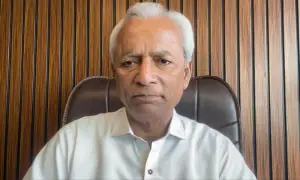
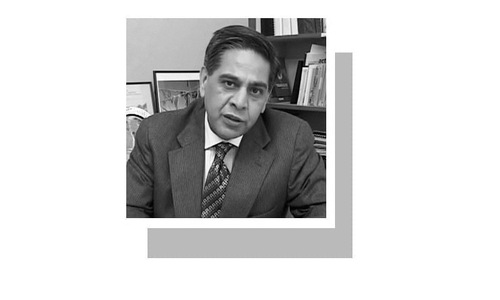
KARACHI: At Partition, Pakistan inherited a medieval feudal system with tax-exempt jagirdars and inamdars acting as intermediaries between the state and zamindars, said Kaisar Bengali, former adviser to the chief minister of Sindh and founding member of the Pakistan Institute of Labour Education and Research (Piler), on Thursday.
“Jagirs were abolished in what was the North West Frontier Province and Punjab in 1952, but the abolition only removed the jagirdars tax-exempt status,” he said while speaking at a provincial consultation, ‘Debating approaches for land redistribution’ organised by Piler at a local hotel.
According to Mr Bengali, this move did not address the issue of land ownership and was motivated by revenue considerations.
Speaking about the 1950 reforms, Mr Bengali said these gave hereditary tenants the right to acquire ownership, graduation of tenant-at-will to hereditary status, fixed share of produce and abolished all additional levies on tenants. However, he added, that these reforms remained ineffective.
He went on to talk about the West Pakistan Land Reform Regulation of 1959, the land reforms of 1972 and 1977. According to the 1959 regulation, an individual was allowed 500 acres of irrigated and 1,000 acres of non-irrigated land or 36,000 Produce Index Units (PIUs).
“In 1972 this changed to 150 acres of irrigated land or 10,000 PIUs,” he said. “By 1977 [former prime minister Zulfikar Ali] Bhutto amended this to 100 acres of irrigated and 200 acres of non-irrigated land or 8,000 PIUs, this didn’t last long and was suspended when Ziaul Haq took over.”
Mr Bengali discussed the history of land reforms in Pakistan from the Sindh Hari Committee of 1930 and dissenting notes written by G.M. Syed and Dialmal Doulatram to the PPP’s land reforms of 1972 and 1977, where the basic landlord-tenant relations were maintained.
He concluded the session by stating that there was a need for a grass-roots political struggle. “We will have to work in villages, we will have to bring the hari together,” he said.
Mr Bengali was one of the six speakers invited by Piler to speak on the topic. Joining the session from Lahore via Skype was Prof Akmal Hussain, who teaches economics at the Forman Christian College. He discussed inequality and how it affects growth in depth. He said that long-term growth was not sustainable as there was unequal ownership of land, distribution of income and productive assets.
After Prof Hussain, Nikhat Sattar of the Indus Resource Centre discussed whether or not land reforms were unIslamic. In the 1970s, the Shariat court declared “mandatory acquisition of private land by the state as being against the injunctions of Islamic religious law”.
Dr Riaz Sheikh, the dean of the social sciences department at the Shaheed Zulfikar Ali Bhutto Institute of Science and Technology, said political parties and the state need to work together as one.
The president of the Awami Workers Party (AWP) in Sindh, Yousuf Masti Khan, also spoke at the event. He talked about his party’s petition at the Supreme Court regarding redistribution of land.
“The AWP filed a constitutional petition in the SC and the PPP lawyers would come and say this was old news,” he said, adding that so far they had only had one hearing as even judges were “afraid to take up the case”.
He discussed how after Partition, feudalism transferred to the newly created nation of Pakistan and damaged democracy. According to Mr Khan, democracy and feudalism cannot work together. “If you want a successful democracy, you need to make some constitutional changes,” he said. “We cannot progress further if feudalism exists.”
He also took up the issue of the peasant movement and claimed that one of the reasons the peasant and labour movements had not been successful was because they did not work together.
Karamat Ali, the executive director of Piler, also spoke at the event.
Published in Dawn, January 29th, 2016