12
12


ISLAMABAD: Federal Minister for Climate Change Mushahidullah Khan said on Sunday that weather patterns in Pakistan were changing rapidly because of climate change and having negative impacts on glaciers, river flows, underground water recharge systems, agriculture and overall biodiversity.
“However, efforts are being made at various levels in the light of policy recommendations proposed in the National Climate Change Policy of Pakistan to cope with the negative impacts,” he said.
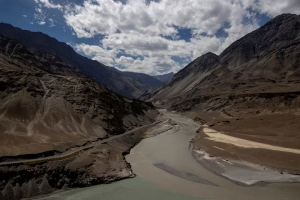
Mr Khan said in a statement that depleting river flows, falling underground water level, shifting rainfall patterns, frequenting heatwave, droughts, sea intrusion/sea-level rise, shrinking winter season, expanding summer months and melting glaciers were all indicators of how fast the climate in the country was changing.
Minister says construction of new water reservoirs necessary
“We need to take corrective measures and work hard in collaboration with relevant government and non-governmental organisations on fast-track basis for hammering out mitigation and adaptation plans to tackle the negative impacts of the climate change on different sectors of economy, particularly irrigated and rain-fed agriculture, which is mainstay of national economy,” he said.
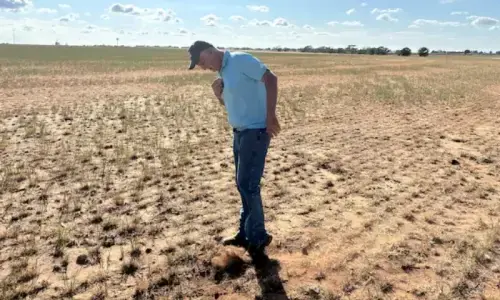
The minister warned that global warming would exacerbate land degradation and desertification in countries like Pakistan, where over 80 per cent of the land mass was arid. The climate change threatens to increase water-logging and salinity, diseases and insect attacks.
He said that developing and introducing regulatory mechanisms to manage and store summer water overflows and construction of new reservoirs of varying sizes was critical for making irrigated and rain-fed agriculture climate-resilient.
There is also serious need for encouraging farmers to adopt high irrigation efficiency systems, methods and techniques on farm which will require policy interventions by the departments concerned, including Pakistan Agriculture Research Council, he emphasised.
He said it was a matter of serious concern that the country’s forest cover was shrinking fast because of deforestation and tree-cutting activities, which was leading to ecological and environmental imbalances.
Mr Khan cautioned that “what makes deforestation alarming is the immediate and long-term effects it is bound to inflict on our environmental and waste our efforts to tackle global warming.”
Agricultural activities, logging, urbanisation, desertification of land and inadequate access to clean/renewable energy are among key causes of unchecked deforestation in the country, he said.
“However, agro-forestry, sustainable and environment-friendly urbanisation, plantation of drought-tolerant tree species, increasing people’s access to renewable energy for...heating and bathing can help put brakes on deforestation/tree cutting and increase the area under tree cover in the country.”
Published in Dawn, February 23rd, 2015
On a mobile phone? Get the Dawn Mobile App: Apple Store | Google Play