26
26

MUMBAI: India's gemstone industry will hope to add some sparkle to ties between New Delhi and Moscow this week by persuading Russia to massively increase its exports of diamonds direct to the global hub of cutting and polishing.
Vladimir Putin's two-day visit to the Indian capital from Wednesday is expected to see landmark deals clinched on natural gas and nuclear power.
But the Russian president is also due to attend the inaugural World Diamond Conference, starting Thursday, which aims to raise Mumbai's status as a major diamond trading centre.
Russia is the world's top producer of rough diamonds and the majority of them pass through India, where a cheap workforce cuts and polishes the gemstones before most are exported again for use in jewellery.
But only about a fifth of rough produce is sold directly from Russian mines to India, with the rest passing through diamond hubs such as Antwerp and Dubai — something that may be about to change.
At the conference in Delhi, Russian state-controlled mining group Alrosa is due to sign about a dozen long-term contracts with Indian companies, according to India's Gem and Jewellery Export Promotion Council (GJEPC).
“We are trying to convince the Russian president that Alrosa... needs to have more supplies directly to Indian companies, as India is the natural partner for the Russians,” GJEPC chairman Vipul Shah told AFP.
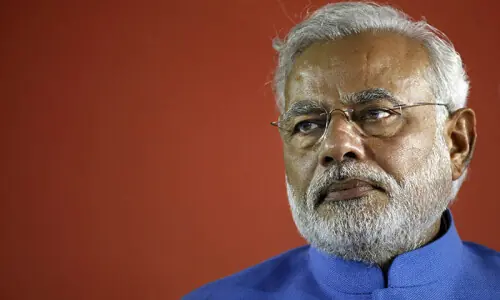
Putin's trip is his first to the country since Prime Minister Narendra Modi came to power in May on pledges of kickstarting India's stuttering economy.
Despite years of strong relations, bilateral trade stands at just $10 billion, and the diamond segment is seen as an opportune area for growth.
Russia exports $4-billion worth of rough diamonds, but currently only about $800 million of them go directly to India, said Shah — despite the fact that 14 out of 15 of the world's rough diamonds are cut and polished there.
“India is one of the largest markets in the world for Russia. Diamonds are a good way to get off on a good footing,” said Rajrishi Singhal of the Mumbai-based Gateway House think tank.
Direct trade concerns
Diamond traders say Russia has traditionally been wary of direct sales to India owing to bureaucratic and taxation hurdles, preferring to deal with middlemen traders in Belgium and the United Arab Emirates.
But recent European sanctions on Moscow over its activities in Ukraine and efforts by the Indian government to enhance the business climate appear to be changing sentiment.
“Certainly there is a discussion on making Mumbai a world-class trading hub,” a senior Indian government official told reporters in New Delhi on Friday.
“The discussion is about how to increase the imports of rough diamonds from Russia to India.”
Most of India's polishing factories are located in Surat, about 300 kilometres (190 miles) north of Mumbai, but the trading nerve centre is the financial capital's four-year-old Bharat Diamond Bourse.
In a diamond-shaped hall within the security-laden, blue and silver complex, brokers pore over glittering stones with tweezers and magnifying glasses.
Bourse president Anoop Mehta says around 55,000 people come daily through the centre, which contains banks, customs offices and couriers for exporting the polished products, the main client for which is the United States.
But Mehta said various regulations had been hampering the Indian industry, with foreign mining companies “terrified” of tax complications if they set up shop in the country.
Zone for auctions
In a bid to attract such firms to open Mumbai offices, there are proposals for a “special notified zone” in the bourse, allowing rough diamond auctions on the site under favourable tax laws.
“This way we will get rough diamonds at our doorstep and that will help us to increase our exports,” said Shah.
The global diamond industry has experienced a volatile few years, with prices plunging after the 2008 financial crisis before soaring to historic highs in 2010 and 2011, according to a report by consultancy Bain last year.
Bourse president Mehta said demand had been slow in the past 18 months and a “tough time” was expected in the immediate future.
A growing hunger for gems within India and China is likely to drive long-term future demand, but a lack of major new diamond finds means global production is expected to decline.
The GJEPC therefore wants India to diversify from its traditional cutting and exporting role into more jewellery manufacturing and retail — where most value is added in the diamond supply chain.
“We still remain as a raw material producer,” said Mehul Choksi, chairman of the Gitanjali Group, which expanded from diamond cutting to become a leading jewellery maker and global retailer.
“China is a much larger player as a manufacturer of jewellery and India should grow and keep that image.”