0
0

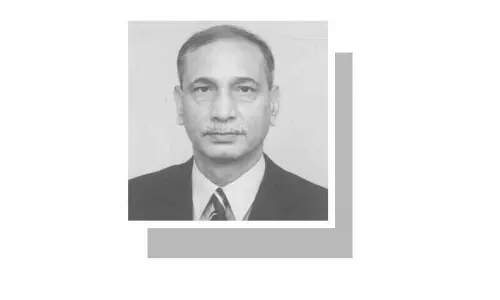
PESHAWAR: Imtiaz Ahmad Sahibzada, former chief secretary of Khyber Pakhtunkhwa, published the English translation of selected poems from mega corpus of Abdul Ghani Khan’s poetry.
The English translation of about 141 inspiring Pashto poems of Ghani Khan was completed in 2001 but remains unpublished due to lack of adequate funds. Sponsored by the Afghan Cultural Initiative ‘Aga Khan Trust for Culture’ the English version of Ghani Khan’s selected poems ‘The pilgrim of beauty’ will be formerly launched in Islamabad in December this year. The book is embellished with art pieces and Pashto version of Ghani Khan’s poetry.
“My poetry is about humanism and the search for truth. It is self-realisation. I want my people educated and enlightened. A people with a vision and sense of justice, who can carve out a future for themselves in harmony with nature,” Ghani Khan said once.
Ghani Khan was a rebel who chose a thorny path to tread on. A versatile genius, he was a restless soul always in search of new ideas and images.
Former bureaucrat believes his effort will go a long way in introducing the literary giant to English readers
The recurrent themes in his poetry are Pakhtun nationalism, landlords, mysteries of life and death, love both human and divine, clergy, nature in all its manifestations -- insects, birds, animals, trees, flowers -- and many more. Above all ‘beauty’ is the prime objective, which forms the edifice of Ghani Khan’s poetic genius. He firmly believed that ‘beauty’ was the expression of God’s existence.
At one place he says that beauty is truth and harmony embodying symmetry and rhythm. “I believe that beauty is from God and He is the most beautiful, Al-Jameel.”
He was a true lover rather worshiper of beauty. Ghani Khan’s poetry has the force and strength of Khushal Khan Khattak and sufi restraint of Rahman Baba. To a few Pakhtun critics, he was a staunch sufi in his own right.
His art is a word-picture while his poetry is images in words. He is blunt and polite at the same time.
Born in a political family, Ghani Khan’s forte was poetry and art. He owed his grooming much to his mentor Mr Wigram, a British teacher who influenced him to generate love for humanity, brotherhood, service of mankind and love for his people and land.
About his stay at Shantinekatan, he writes: “It was a whole new experience for me. From Hashtnagar I had gone to Europe. In Shantinekatan, I got the opportunity to assimilate the Asian philosophy, literature and appreciate the performing and visual arts.”
The subjects of Ghani Khan are strange, unique and varied but fit his taste and inborn talent. His language is bare, simple, direct and without any artificial embellishment.
Ghani Khan was highly critical of the role of mullah and landlords, who according to him had played havoc with Pakhtun society down the ages. His poetry and prose are characterised by humour and scathing satire. Being a keen observer, nothing escapes his sharp critical eye.
Mr Sahibzada has done the English translation of Ghani Khan’s poetry in such a befitting manner that an English reader will take it for the original. In most cases, Ghani Khan has not followed regular rhyme scheme and preferred blank verse for expression of his lofty imaginative flight.
Ghani Khan is a trendsetter in Pashto literature both in style and substance and therefore, he occupies a distinct position in the Pashto literary circles. He was his own voice and choice of words no problem with him as he could carve out and paint words and images.
Mr Sahibzada enjoyed a lifelong association with the literary giant. He started rendering Ghani Khan into English soon after his death in 1996. The launch of the translation will culminate in the yearlong birth celebrations of the legendary Pashto poet.
“The selections of poems in this volume are representative of the themes that Ghani Khan wrote on and which have been touched upon in the introduction of the book.
The translation was inspired by a desire to truly understand the inner meaning and beauty of his poetry. I strongly believe that my this humble effort will go a long way in introducing Ghani Khan to the English speaking in his true colours,” Mr Sahibzada said.
Published in Dawn, September 23rd, 2014