0
0

KARACHI The federal health ministry on Monday put a thermal scanner at the Haj terminal of Karachi airport to prevent swine flu from entering the city through pilgrims returning from Saudi Arabia.
Confirming the belated installation of the scanner at the airport, the director-general of health Pakistan, Prof Rashid Jooma, told Dawn on Monday night that every pilgrim returning from Saudi Arabia would be screened for swine flu and made to pass through the scanner.
He said the heat-sensitive device had been imported from Singapore and was easy to operate.
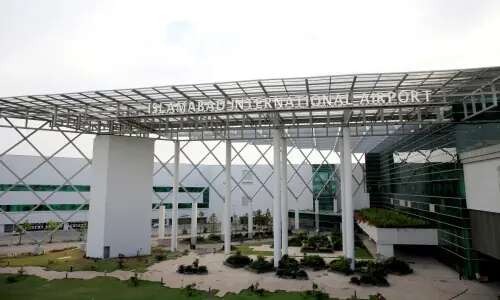
He added that Islamabad airport got a similar scanner on Sunday, and Lahore airport would get one on Tuesday.
The national carrier, PIA, alone would be flying back about 127,000 Haj pilgrims from Saudi Arabia between Dec 2 and Jan 1, out of which about 30,000 pilgrims are likely to land at Karachi airport's Terminal 1.
The health ministry failed to put in place the scanners at the airports of the country earlier in accordance with its announcement made about six months back. But health experts had been pressing the federal government to ensure the provision of minimum facilities such as thermal scanners, training of doctors, ambulances at the airports, isolation wards at major hospitals or special establishments in the vicinity of the airports receiving international passengers to contain the swine flu threat.
Stressing the need for adequate arrangements to be made at the country's airports for proper swine flu screening, a couple of experts only four weeks back had noted that the Haj congregation in Saudi Arabia, where more than two million pilgrims had gathered for several weeks, was a potential source of swine flu transmission through the pilgrims of various countries.
Experts were actually demanding that the government ensure that no Pakistani pilgrim affected by the swine flu virus was allowed to travel back to Pakistan without a clean bill of health as the prevailing situation was not favourable for checking proliferation of the virus. Pakistani pilgrims will be landing directly or indirectly at Karachi, Lahore, Islamabad, Peshawar, Quetta, Sialkot, Faisalabad, Rahimyar Khan and Sukkur airports.
The health DG said that any of the returning pilgrims suspected of suffering from swine flu would be quarantined by airport health staff till the results of laboratory tests of their throat swab were received and they were cleared.
Answering a question, he said that at Karachi the health ministry's quarantine in the airport vicinity and the Jinnah Postgraduate Medical Centre would be used as care and treatment facilities for the H1N1 virus affected pilgrims. He said the health ministry was also studying the possibilities of further installation of big or small scanners at the airports.
Karachi Airport Health Officer Dr Rab Nawaz Wassan told Dawn that the scanner had been installed at Terminal 1 reserved for Haj operations, while another scanner for Quaid-i-Azam International Airport would be placed within two weeks or so. He said the federal health minister and other senior officials of the health ministry were likely to inspect the machine sometime on Tuesday.