0
0

PESHAWAR, Feb 28: Deep down Swat’s security crisis lays an opportunity for local tourism sector as foreigners, who ‘gravitate’ for spiritual reasons to challenging situations, can be attracted to Buddhist sites, according to a foreign-funded study.
The strategy pinpoints Buddhists as a potential market to revive Swat’s tourism sector, capitalising on their tendency to find spiritual healing in ‘unpredictable situations to help them train in overcoming feelings of fear and uncertainty.’
“It is both convenient and ironic that uncertainty in the security situation in Swat may actually be an asset, as opposed to a liability, for attracting foreign visitors,” contains the strategy prepared under a US-funded development project in Swat.
In this connection, the strategy underlines a wide range of multiple sector activities to improve Buddhist sites, establish linkages with foreign tour operators, establish a system of incentives for local tour operators, extend procurement support to selected transport companies, support high level delegations that represent target demographic to visit and promote Swat tourism, identify hotels and restaurants in Swat that could be upgraded, and establish a feedback system through a recently set up web portal to promote spiritual tourism.
Titled as “Swat Tourism: Sector Recovery and Development Strategy,” the document notes that the proper development of Gandhara sites and artifacts can attract millions of ‘well-to-do’ followers of Gandhara civilisation from across the world ‘with large concentrations nearby by in Japan, China and Korea’.
The premise that Swat can attract foreign tourists with spiritual zeal is based on its appeal for Buddhists. The area, adds the study, is believed to be the original birthplace of Buddha and the origin of the world’s largest sect of modern Buddhists (Mahayana), according to the document.
“The potential economic benefits for Swat…are staggering,” contains the study, adding “there are over 500 millions of Mahayana Buddhism in Korea, Japan and China whose interest in Gandhara could ultimately turn Swat into the ‘Mecca’ for Buddhism.”
According to the study, cultural heritage tourism is one of the fastest growing market segments globally, accounting for about 10 per cent of tourists worldwide.
Describing Gandhara as ‘arguably the single most promising tourism attraction on the sub-continent,’ the strategy asks for reorienting Swat’s tourism sector to develop it on competitive lines.
It emphasised the need for the major stakeholder to focus on specific market niche opportunities and towards strategic development of tourism products.
In this respect, the strategic plan asks for reorienting Swat tourism sector towards five niches, including domestic leisure tourism (summer and winter holidays), congressional tourism (conferences and events), cultural heritage tourism (Gandhara civilisation), eco-tourism (sustainable conservation), and adventure tourism (alpine recreation).
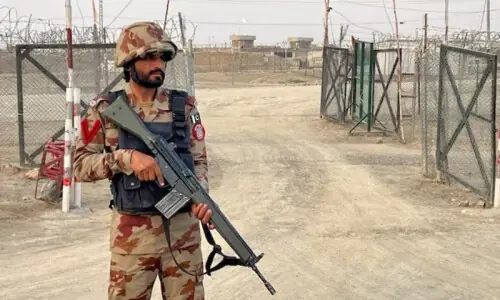
Taking into consideration Swat’s prevalent security situation, the strategy notes that the local tourism sector has severely been damaged because of militancy and the Pakistan army’s response to the militants. It adds that the military’s continued presence in Swat to maintain post-conflict law and order has been affecting Swat’s tourism sector.
In terms of tapping the foreign tourists market potential, the strategy views the cultural heritage tourism niche with potential to boost the overall tourism sector in the short and long run despite insecurity in Swat.
“Safety and security considerations are generally believed to be less important than other factors in the selection of a destination in each of the three largely foreign tourist segments recommended for Swat,” notes the strategy.
The strategy has been put in place in a joint effort on part of the provincial government and its development partner to restore Swat’s tourism sector from the devastative effects of, first, militancy in 2007-2009 and, later, due to the flashfloods of 2010.
Based on interviews of scores of hoteliers and other stakeholders from Swat, the strategy held that the sector had always been banking on what existed there in Swat and no attention was ever paid to develop new products.
“This may at least partially explain why Swat’s tourism industry had been suffering from a slow decline for many years before the eventual escalation in 2007 of conflict with the extremists, and it may also explain why the drop off of foreign interest in Swat occurred long before decline of the domestic market,” contains the study.The strategy chalks out a detailed recovery plan involving multiple activities with emphasis on reviving Swat’s hotels ruined by floods, streamlining the sector on modern lines, developing linkages, exploring foreign markets, and improving the area’s image through effective publicity campaigns.
An official of the Provincial Reconstruction, Rehabilitation and Settlement Authority (PaRRSA) told Dawn that the strategy was one of the two sector recovery plans put in place as part of broader strategy to rehabilitate Swat’s local economy.
“Some of the activities have already been carried out, e.g. the restoration of hotel businesses in Swat in addition to arranging exploratory tours for the benefit of the local entrepreneurs and producing a documentary to improve Swat’s image as a tourism destination,” said the official.
The official said that PaRRSA with financial and technical support extended by USAID provided assistance to 239 hotels in Swat to help them recover from the damages caused by conflict and floods, helping them to prepare for the domestic tourism season in 2011-12 and onwards.