Medical teaching institutions officials to face action for anomalies in light of audit findings
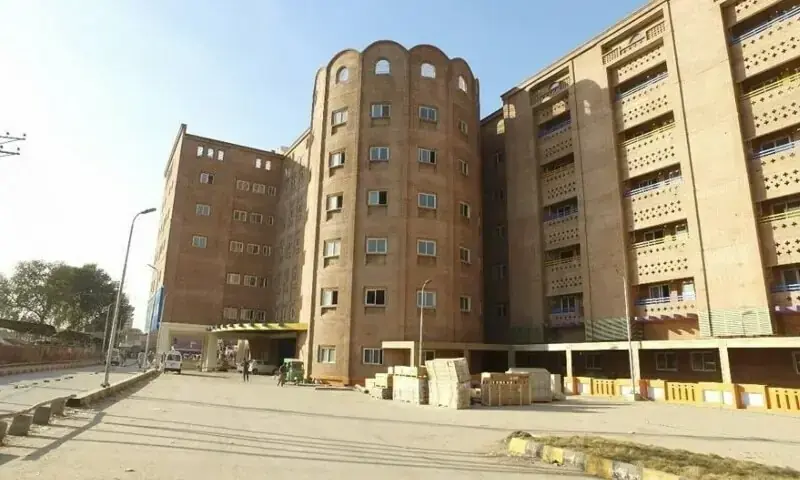
PESHAWAR: The recently-concluded third party audit of medical teaching institutions by a private firm recommended action against officials responsible for irregularities, sources said.
They said that the recommendations of first-ever third audit of medical teaching institutions (MTIs) would help them to overcome issues regarding diagnostic and clinical services and academic work to ensure better patient care.
MTIs have been facing criticism for lack of audit on the pattern of other departments annually. In the past efforts by health department had yielded no result, but now it succeeded to conduct the audit and action was planned in light of its findings, official sources told this scribe.
“Health Minister Khaliqur Rehman, Health Secretary Fayez Ali and the director general of health services, Dr Shaheen Afridi, met with directors where audit of MTI was presented. We all know that we get funds from the government and then why not seek its inputs,” the director of an MTI, who attended the meeting, held at Khyber Medical University recently, told this scribe.
Policy Board chief says it has already started analysing the first-ever report
He said that findings of the audit, covering institutional performance, governance, financial management, administrative processes, compliance with prescribed standards and service delivery, and recommendations of the department were shared with MTIs.
He said that health department would be monitoring implementations of audit’s recommendations for accountability, administrative efficiency utilisation of budget and establishing a culture of transparency.
Sources said that all relevant officials were directed to treat audit’s observations with utmost seriousness, accelerate institutional reforms and ensure full compliance with the recommendations of the audit firm in coordination with the department to build a transparent, accountable, efficient, and patient-centred healthcare system.
They said that the audit was conducted on the directives of cabinet that would examine it. They said that the audit would be made a regular exercise as presently it was meant for the years 2022-23 and 24-25.
Officials said that health department regained its authority, which it had prior to the enforcement of Medical Teaching Institutions Reforms Act (MTIRA) in Khyber Pakhtunkhwa.
The chairman of Policy Board Prof Nausherwan Burki said that they had already started analysing the audit report and a plan of action. He said that the findings would be made public. He added that MTIs in collaboration with health department would make sure that government’s funds were spent for uplift of healthcare.
“I have already visited MTIs outside Peshawar and received briefings about their progress and needs to upgrade patient care. We will go to Bannu and Dera Ismail Khan next month,” he said.
Prof Burki said that the government, which passed MTIRA from the assembly, was trying to carry out accountability of MTIs that escaped financial and administrative audit, like other government’s departments, so far. He added that it was the first-ever audit of MTIs in 12 years.
Dr Khalid Masud, the director of Bacha Khan Medical Complex Swabi, said that the autonomy granted to MTIs by government was meant to facilitate prompt action in days instead of months under the guidance of BoG and health department.
He said that MTIs could not make progress without the support of department. He said that health department was instrumental in enabling MTIs to enhance services.
“MTI is a better mechanism as we have created 10 additional health specialties and now we have 24 due to which patients’ outflow from Swabi to Peshawar has declined. It is because of the law that has helped us to fast-track things. The government helped us due to which we have got two of our specialists recognised by College of Physicians and Surgeons Pakistan (CPSP) for training of doctors,” he said.
He said that those specialists were non-existent in other MTIs.
Dr Khalid, who previously served at Lady Reading Hospital Peshawar and Pakistan Institute of Medical Sciences (Pims) Islamabad as director before his current assignment, said that they had 46-bed neonatal ward for 1-30 year infants, the biggest in the province equipped with state-of-the-art machines to benefit patients and training of doctors, nurses and paramedics.
“Before launching neonate services in Swabi, the mortality rate in neonates was 35-40 pc which had fallen to 10-15pc. We deploy 15 nurses in a single shift as per requirements of World Health Organisation,” he said.
Published in Dawn, July 20th, 2026