Nato diplomacy in a multilayered world


 0
0
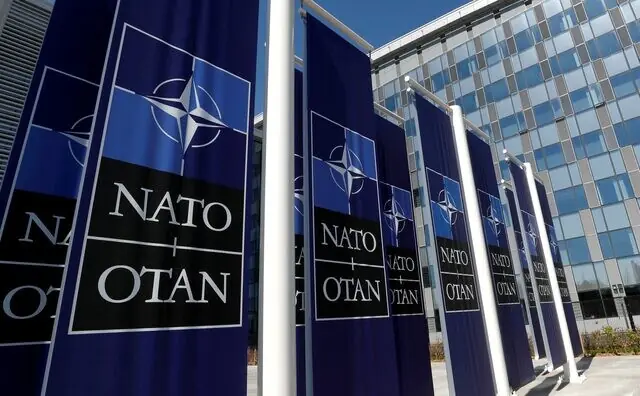

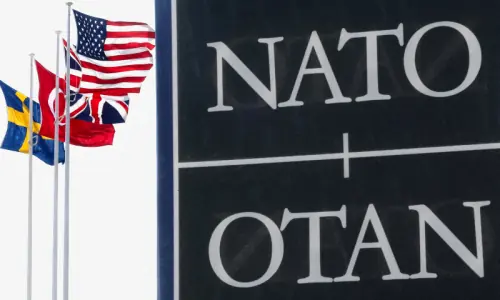
SOUTH Korean President Lee Jae Myung’s participation in this year’s Nato summit and his commitment to expanding defense industrial cooperation with the alliance have received widespread praise at home. Supporters view the visit as an opportunity to strengthen Korea’s defense industry and deepen strategic cooperation with like-minded partners. The visit has also drawn criticism. Some analysts argue that closer ties with Nato will pull South Korea further into the alliance’s strategic orbit, damage relations with China and Russia, and ultimately undermine efforts to resolve issues on the Korean Peninsula. Others warn that expanding arms exports could tarnish South Korea’s image as a peaceful nation.
These concerns deserve careful consideration. Any major shift in defense cooperation inevitably carries diplomatic consequences, and a responsible government should take them seriously. Yet many of the criticisms are based on an outdated understanding of international politics. They tend to view today’s world through a Cold War lens, assuming that cooperation in one area inevitably determines every other aspect of a country’s foreign policy. However, the international environment has become far more complex than that.
The first misconception is the tendency to confuse cooperation with alliance. Nato membership and defense industrial cooperation are fundamentally different. South Korea is not joining Nato. Cooperation in defense research, technology, procurement or industrial production does not place South Korea under Nato’s political authority or strategic command. Modern diplomacy is filled with overlapping partnerships in different sectors. Countries cooperate in trade and technology without becoming political allies. Defense industrial cooperation should be understood in the same way. Treating every security partnership as equivalent to joining a military bloc oversimplifies contemporary international relations.
The second misconception is that closer cooperation with Nato will fundamentally alter South Korea’s relationship with China and Russia. Beijing and Moscow may not welcome expanded Nato cooperation, and South Korea should neither ignore nor underestimate their concerns. However, it is an exaggeration to argue that such cooperation will suddenly transform South Korea into their enemy. South Korea has maintained a military alliance with the United States for more than seven decades. Its strategic orientation has long been well understood by both China and Russia. Expanding cooperation with Nato’s defense industry does not create an entirely new geopolitical reality.
Even amid growing competition, countries continue to cooperate on trade, climate change, energy security, supply chains and global health. Recent efforts by Washington and Beijing to stabilise their relationship demonstrate that strategic rivalry does not automatically eliminate diplomatic engagement. Although China and Russia have strengthened their strategic partnership, it remains far from a formal military alliance comparable to Nato. Today’s international system is too interconnected to be understood solely through Cold War-style bloc politics. No single bilateral relationship can define the entire global order. International politics today is defined by competition and cooperation existing simultaneously rather than by permanent confrontation.
This points to a broader lesson. What today’s diplomacy requires is a multilayered worldview. A multilayered worldview recognizes that countries simultaneously cooperate and compete across different policy domains without allowing one relationship to dictate all others. During the Cold War, a country’s relationship with one major power often defined its entire foreign policy. That is no longer the case. In the twenty-first century, countries maintain different partnerships across different policy areas at the same time. South Korea can strengthen its alliance with the United States, expand defense cooperation with Nato, deepen economic ties with China, maintain dialogue with Russia, strengthen cooperation with ASEAN and work with middle powers on global governance. Foreign policy should therefore reflect the complexity of the international system rather than the binary logic of the past.
The same perspective applies to concerns over South Korea’s growing defense exports. Some critics argue that becoming a major arms exporter contributes to an international arms race. Such concerns are understandable, particularly at a time when many regions face rising military tensions. Yet ignoring legitimate security needs is not a realistic path toward peace. The purpose of deterrence is precisely to prevent conflict by reducing the temptation for aggression. Deterrence exists not to wage war but to prevent it. South Korea’s defense industry has become internationally competitive because it provides reliable, high-quality systems for countries seeking to strengthen their security. Providing defensive capabilities to responsible partners should not automatically be equated with promoting war.
Nevertheless, South Korea should remain mindful of its international image. Expanding defense exports should not come at the expense of its reputation as a country committed to peace. This challenge cannot be addressed simply by reducing arms exports. Instead, it requires more effective public diplomacy.
Published in Dawn, July 20th, 2026