Farmers feel left out as budget sidelines agriculture
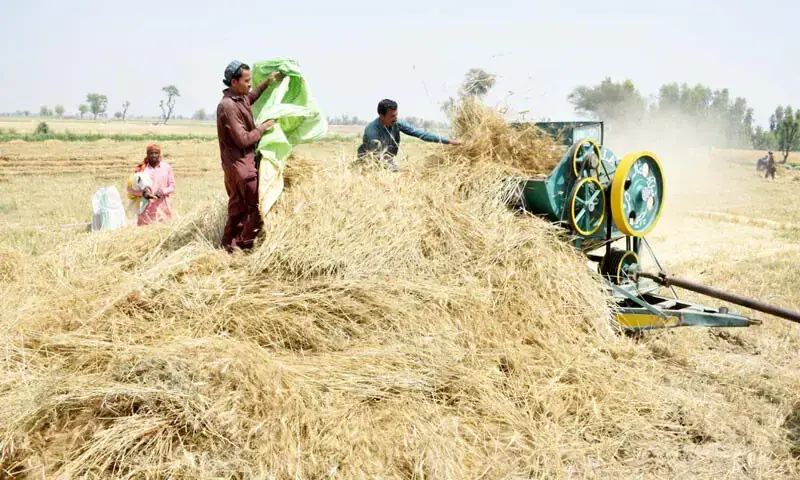

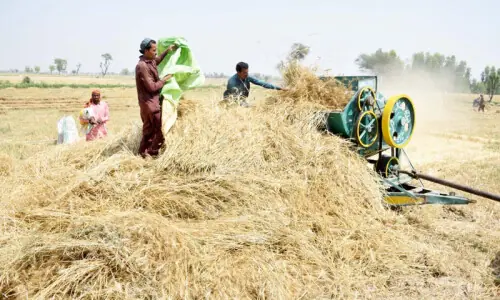
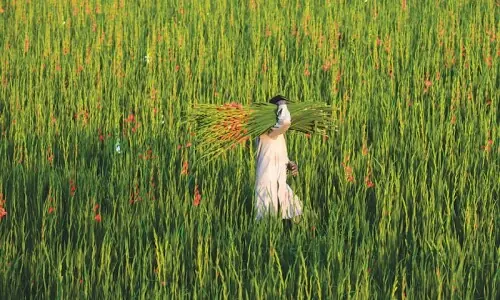
In the aftermath of the budget, farmers say they are feeling “angry, frustrated and helpless.” Of these emotions, they describe helplessness as the most devastating, as it leaves them with little hope and few options.
Against this backdrop, they argue that the budget speech and accompanying documents appear to have all but forgotten a sector that contributes nearly a quarter of the country’s gross domestic product (GDP), employs around 33 per cent of the workforce, feeds the nation, supplies raw materials to industry and underpins the rural economy.
They point out that there is hardly any mention of agriculture, let alone any meaningful policy direction, planning or allocations. As a result, farmers say they feel abandoned and powerless.
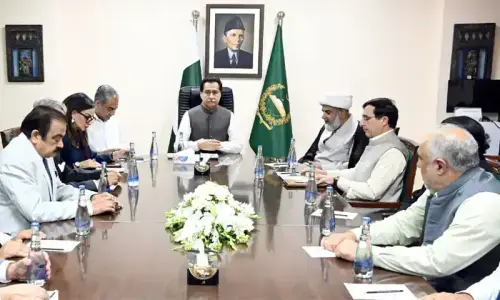
Khalid Khokhar, who heads Pakistan Kissan Ittehad, one of the country’s most active farmers’ organisations, sums up the mood within the farming community: “We had an idea of what was coming when the prime minister convened a meeting of farmers and other stakeholders barely two weeks before the budget — when the entire preparation process had effectively been completed — merely to constitute a committee for proposals.
Without putting agriculture at the centre of economic planning, food security and growth will be harder to achieve
Throughout the budget-making exercise, the finance minister never bothered to engage with farmers or seek their input. If farmers and their sector were forgotten during the preparation stage, they were naturally destined to be excluded from the final product. But still, the level of callousness is devastating for farming and the lives of its practitioners.”
Echoing this sense of exclusion from policymaking, Muhammad Arshad, a small farmer from the outskirts of Lahore, says this year farmers had just one SOS — save our souls — plea and expectation: make agriculture economically viable. Instead, he says, the government ignored them entirely.
The widening gap between food imports and exports should have served as a wake-up call to policymakers about the strategic importance of agriculture
Over the last three years, the sector has been battered on two fronts: a relentless rise in production costs and market manipulation that triggers price crashes when crops reach the market, and farmers suffer existential losses.
While the federal government may argue that agricultural markets fall within the domain of provincial governments, it cannot evade responsibility for soaring production costs, which it directly influences through fertiliser and energy prices, taxation, and subsidy policies.
Yet, not a single line addressing these concerns can be found in the 53-page budget speech or the voluminous accompanying documents. In fact, the speech contains only two brief references to agriculture – one regarding loans under the Zar Khaiz (fertile) Scheme and the other on storage services. For farmers, Arshad rues, this represents apathy at its worst.
The concern over policy neglect is further reinforced by worsening external balances in the sector. “If this year’s food import bill has not been enough to wake policymakers up, I have no idea what else will,” says Nasir Malik, a Lahore-based food importer. According to official figures, the country’s food import bill rose by 15pc this year to exceed $7 billion. In contrast, food exports fell by a staggering 34pc to $3.8bn.
“Isn’t it a national embarrassment for a country that prides itself on being an agricultural economy — a claim borne out by its own statistics?” he asks. “The country loses more than $3bn in foreign exchange on the food account and then goes around seeking a $1bn tranche from international lenders. How unfortunate is that?”
He argues that the widening gap between food imports and exports should have served as a wake-up call to policymakers about the strategic importance of agriculture, but laments that the budget offers little indication that these concerns have been taken seriously.
This disconnect becomes even more critical when viewed against growth requirements for the wider economy. If Pakistan is to achieve its targeted economic growth rate of 4pc in the next fiscal year, the agriculture sector will have to expand at nearly twice that pace, argues agricultural economist Muhammad Zubair. Accounting for roughly a quarter of the country’s GDP, agriculture remains the single most important driver of economic growth.
After posting disappointing growth rates of 1.53pc and 2.89pc in the previous two years, the government has set a target of 3.6pc for the sector in the coming fiscal year. “But how is that supposed to happen?” asks Zubair. “Where is the policy? Where is the planning? Where is the money? No one knows.”
He contends that even if some miracle enables agriculture to achieve the targeted growth entirely on its own, it may still not be sufficient to propel the overall economy to the government’s 4pc growth target. Without a coherent strategy, adequate investment and supportive policies, he warns, the broader growth objective could remain elusive.
Taken together, the farmers highlight a widening gap between budgetary priorities and the realities of agriculture. With rising food imports, stagnant productivity and soaring production costs, they believe lip service, isolated schemes and token references will no longer work. Without putting agriculture at the centre of economic planning, food security and growth will be harder to achieve.
Published in Dawn, The Business and Finance Weekly, June 15th, 2026