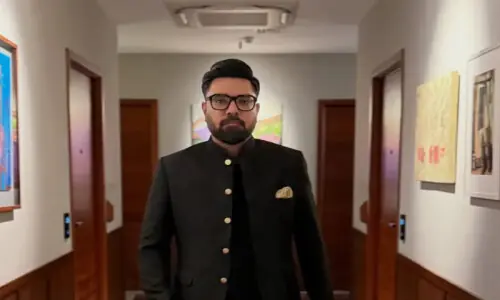
SPOTLIGHT: HUNTING THE CULTURAL STORY

Long before drones swept over glaciers and travel vlogs became the internet’s favourite genre, Zohaib Kazi was searching for something less obvious.
Through Fanoos in 2017 and Coke Studio Explorer (CSE) in 2018, he built a reputation for uncovering Pakistan’s forgotten sounds, traditions and cultures — stories that often existed far from the country’s urban centres. His latest project, The Great Pakistan Adventure (TGPA), marks a departure from music, but not from the curiosity that has always driven his work.
Pakistan’s digital creators have spent years reshaping the country’s image for online audiences, taking viewers beyond postcard landscapes to discover the people, traditions and untold stories that lie beyond the tourist trail. TGPA builds on that momentum with an ambitious four-part web series that can be viewed on YouTube and blends cinematic documentary filmmaking with expedition travel.
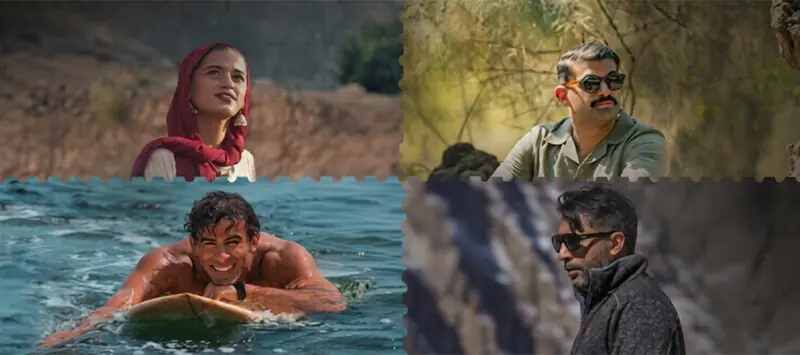
It follows four of the country’s best-known storytellers as they explore dramatically different corners of Pakistan.
From forgotten folk traditions to the songs of remote mountain communities, Zohaib Kazi has spent his career documenting Pakistan’s sound landscape. With The Great Pakistan Adventure, he takes that mission beyond music, revealing lesser-known people and places that shape the country’s identity
Rather than relying on a single host, each episode is led by a content creator whose interests naturally align with the journey: motorcycle traveller Abrar Hassan heads into the mountains of the Hushe Valley in search of the elusive snow leopard and the communities working to protect it; journalist and storyteller Maryam Raja travels through Sindh to uncover its living heritage, wildlife and enduring traditions; travel filmmaker Bilal Hassan — better known as Mystapaki — ventures across the deserts of Cholistan and Bahawalpur; and adventurer Nadir Nahdi traces Pakistan’s little-known surf culture and coastal communities from Karachi to Balochistan.
Directed by Zohaib, the series moves beyond conventional travel programming, using each expedition to examine the relationship between landscapes, identities and the people whose lives are deeply connected to these places. The result is less of a showcase of destinations and more of a portrait of Pakistan told through four distinct voices, each revealing a different facet of a country that continues to surprise even those who know it well.
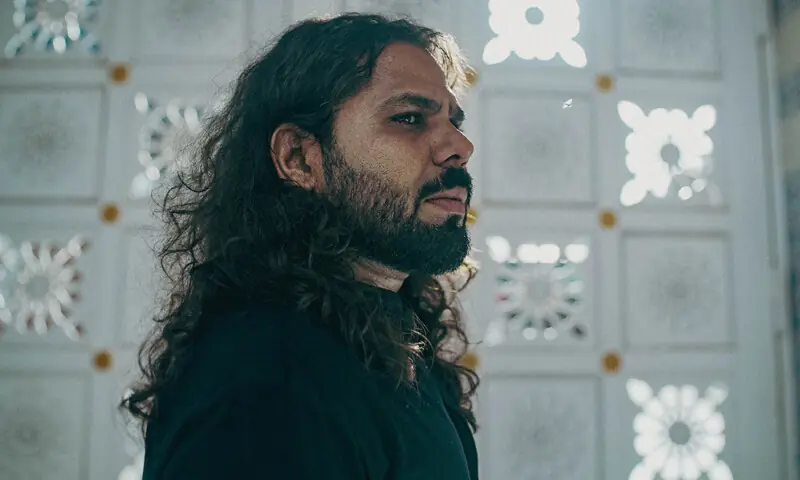
While the BYD Shark 6 serves as the vehicle connecting these journeys, it never overshadows the stories, acting instead as a means to reach some of the country’s most remote and compelling landscapes.
“The intent was to shed light on a lot of human stories,” points out Zohaib. “It’s about exploring our identities as Pakistanis.”
The project occupied nearly eight months of his life. Concept development began in September last year, and post-production wrapped in late April. Timing every shoot around the right season meant long stretches of waiting — and even longer periods were spent filming in some of the country’s most unforgiving environments.
“We were trying to catch things in the right season,” he explains. “It was a long journey.”
For Zohaib, the challenge wasn’t simply logistical. It was creative. “We have the world of vlogs and then we have documentaries,” he says. “We’ve been trying to bridge the gap between them.”
This meant convincing both the client and the production ecosystems to embrace something that sat between a cinematic documentary and accessible digital storytelling. “There was resistance at first,” he recalls. “But they were very receptive.”
Zohaib’s reputation for culturally nuanced storytelling was precisely why he was approached for the series. Yet, despite its adventure-driven premise, Zohaib instinctively steered the project back towards people.
“I love cultural storytelling,” he says. “Your curiosity gets interactions. Things aren’t how you understand them. You get a real reality check.”
A CAREER BUILT ON CULTURAL CURIOSITY
Curiosity and cultural storytelling have always been Zohaib’s forte. He first joined Coke Studio (CS) in 2009 as a music producer and composer, where he worked alongside some of the country’s most celebrated musicians.
His work became known for blending traditional Pakistani musical forms with contemporary production, helping introduce regional folk sounds to mainstream audiences. Rather than simply arranging songs, Zohaib sought to preserve the authenticity of indigenous musical traditions while presenting them in a modern format that resonated with younger listeners.
Following the success of CS, Zohaib conceived and directed CSE, an ambitious documentary series that required travelling across Pakistan in search of undiscovered musical talent and endangered folk traditions. The project took him to some of the country’s most remote villages, where he documented local musicians performing in their native languages and cultural settings, before bringing them into the studio for original collaborations.
More than a talent hunt, CSE became a celebration of Pakistan’s extraordinary musical diversity, introducing audiences to voices and traditions that had rarely, if ever, reached national television. One of the most memorable songs to come from CSE was Pareek, by Ariana and Amreena, two Kalasha girls from Chitral.
Fanoos marked a natural evolution of Zohaib’s work beyond music into broader cultural storytelling. The documentary series explored Pakistan’s living heritage through artisans, crafts people, oral traditions, architecture and communities whose knowledge has been passed down through generations.
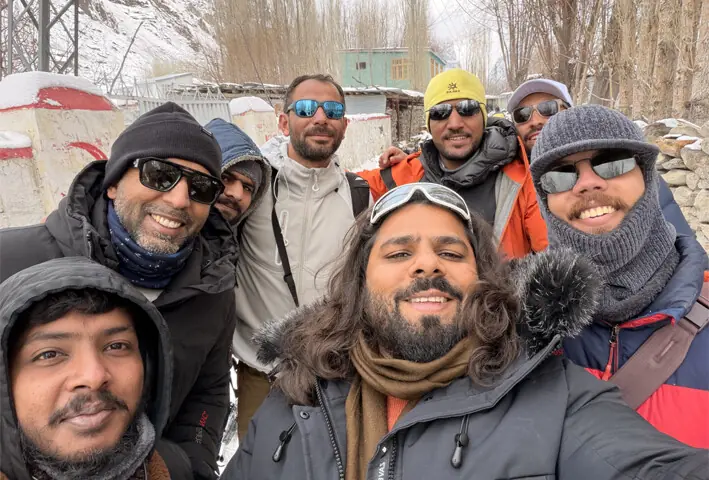
Rather than focusing solely on history, Fanoos examined how culture continues to evolve, highlighting the relationship between people, places and identities. Visually cinematic and deeply immersive, the series reinforced Zohaib’s reputation for telling nuanced stories that celebrated Pakistan’s often-overlooked cultural landscapes.
Together, these projects have established Zohaib as one of Pakistan’s leading cultural storytellers. While CS introduced audiences to the country’s musical richness, CSE took viewers to the communities where those traditions originated and Fanoos expanded that vision to encompass Pakistan’s broader cultural heritage.
TGPA builds on that same philosophy, replacing music with travel and adventure, while retaining Zohaib’s enduring focus on people, identity and place.
WAITING FOR WINTER
Nowhere is that philosophy clearer than in the series’ opening episode, filmed in the Hushe Valley. Conventional wisdom suggested shooting in May, when the roads would be open and conditions more forgiving. Zohaib chose the opposite.
“If we wanted to experience what Hushe is really about, we needed to go when it is at its remotest,” he says.
They arrived after dark. Overnight, snow buried the valley. “It was the harshest of conditions,” he laughs. “Especially for someone from Karachi who isn’t a climber.”
Yet, those hardships delivered exactly what he had hoped for: a version of Hushe that few visitors witness.
The episode also brought together three of Pakistan’s most iconic mountain communities through the people who best represent them: Sajid Sadpara from Sadpara, Sultana Nasab from Shimshal and the people of Hushe itself.
When I point out that he had managed to include all three communities that have produced generations of Pakistan’s high-altitude porters and mountaineers, Zohaib smiles. “Thank you for noticing that,” he says. “The intention was to inspire people to experience snow tourism. Ice climbing is a sport that’s huge in so many countries but it’s something we can develop here too.”
For him, featuring mountaineers such as Sajid wasn’t simply about celebrity. “These kinds of shows reach the mainstream,” he says. “These are the people who should be on billboards. They’re the ones doing the real work.”
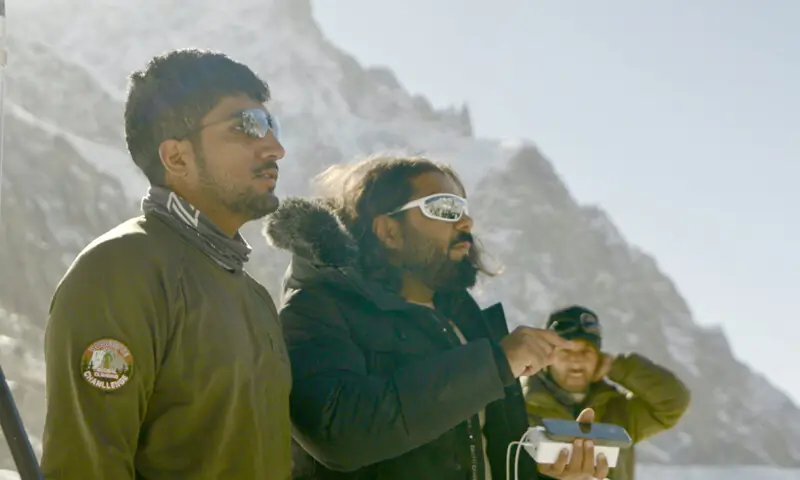
Meeting Sajid himself proved memorable. “[He’s] someone who’s climbed 14 8,000-metre peaks without oxygen… I shook hands with him and thought he should be doing mixed martial arts,” he jokes.
However, more than the filming, Zohaib remembers the conversations. “I wish I’d recorded a podcast there. The conversations were so inspiring. They stayed with me.”
REFUSING TO TELL STORIES THROUGH PITY
Another episode that has resonated with audiences follows Karachi-based surfer Nadir Nahdi as he learns to surf with the young men of Buleji, whose passion for the ocean has quietly built one of Pakistan’s most remarkable grassroots surfing communities.
Zohaib was already familiar with their story. His wife, photographer Insiya Syed, had previously documented them for Reuters. But revisiting the subject required a different perspective.
“We were very careful not to paint anyone as a victim.” After a pause, he adds, “We didn’t want to make poverty porn.” Instead, the narrative focuses on skill rather than circumstances.
“If the boys from Buleji can teach Nadir how to surf, then that proves they can teach. We wanted to show that rather than saying it.”
Watching Nadir finally stand on his surfboard became one of Zohaib’s favourite moments of the entire production. “When it finally happened, we knew we had our story.”
Just as importantly, he hopes viewers come away seeing Karachi differently. “There are places to surf here. There are places to cliff dive. This can be a proper tourism destination.”
THE SONG HE’D BEEN SEARCHING FOR
Perhaps the most extraordinary moment during production almost never made it into the series.
For over a decade, Zohaib had been searching for a traditional climbing song. He was told it was sung in villages near K2. Apart from a grainy camcorder recording from the ’90s, he had never managed to find it. Then, hours before leaving Hushe, something unexpected happened.
“We came back from ice climbing and everyone in the guesthouse started singing it,” he recalls. The villagers had chosen the song to welcome the crew home.
“I recorded it two or three hours before we left,” he says. “I’d been looking for it for 12 or 14 years.” It was, he admits, a deeply personal moment — one that perfectly captures the obsession that has defined much of his career.
WHAT DOES PAKISTAN SOUND LIKE?
That obsession extends beyond filmmaking. For the past three-and-a-half years, Zohaib has quietly been building what may be Pakistan’s most ambitious sound archive — a collection of around 5,000 recordings gathered from across the country.
The project grew out of a simple frustration. “If you search for Pakistani sounds on global libraries, you either don’t find them or you get poor-quality recordings.”
That absence has consequences. “When international productions depict Pakistan, they often end up using sounds from somewhere else — Cairo, for example — because that’s all they have.”
For Zohaib, the archive is about more than preserving audio. It is about preserving identity. “Ten years from now, when my son asks AI what Pakistan sounds like, I don’t want the answer to be generic ‘South Asian’ sounds.”
The archive even allows listeners to navigate Karachi through sound, clicking on locations across the city to hear recordings captured there. “We’re trying to trap time,” he says. “Before these places change.”
It is, in many ways, the same philosophy that underpins TGPA. Behind every landscape lies a story worth preserving. Behind every spectacular shot is a conversation, a tradition or a sound that risks disappearing if no one takes the time to record it.
For Zohaib Kazi, adventure has never really been about reaching remote places. It is about paying close enough attention to discover what has been there all along.
The writer is a journalist, an award-winning documentary filmmaker and a radio correspondent. She can be reached at syed.madeeha@gmail.com
Published in Dawn, ICON, July 12th, 2026