0
0

• Retail price of flour No 2.5 set at Rs125 per kg, fine flour to sell for Rs135 per kg
• Sindh govt’s warnings against wheat hoarding fail to bring down prices
• Officials impose Rs1.2m fine on retailers for charging more than govt-notified rate
KARACHI: While the wheat prices are skyrocketing for the past couple of weeks across Sindh due to failure of the provincial government to curb hoarding and overcharging, the Karachi commissioner has again raised the prices of various flour varieties.
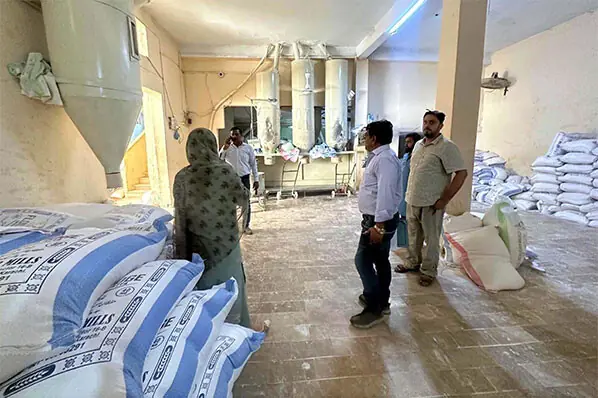
However, the fresh price hike coincided with a citywide crackdown and enforcement campaign to ensure the availability of wheat flour at government-notified rates, as assistant commissioners imposed a total fine of Rs1.2 million on businesses found violating notified flour prices in Karachi’s seven districts.
Keeping the Chakki flour rates unchanged at Rs145 per kilo, the commissioner has increased the retail price of flour No 2.5 by Rs12 per kg to Rs125 per kg and fine flour by Rs14 per kg to Rs135 per kg.
In mid-May this year, the city administrator had shocked the consumers by raising the price of various varieties of flour by Rs4 to 15 per kg.
When the new Sindh wheat crop had hit the markets this year, the regulator had fixed the retail rates of flour No 2.5, fine flour and Chakki flour at Rs99, Rs117 and Rs130 per kg, respectively.
As the millers continued to jack up prices from the beginning of new crop arrival in March — the Sindh government, by maintaining its past tradition, woke up late in the first week of June, putting traders and flour mills on notice over rising flour and bread prices, warning that artificial shortages and unjustified price hikes would not be tolerated.
The measures remained confined to the “high-level” meetings instead of any practical steps, thus encouraging millers to further push up the rates, citing rising wheat prices in the open market.
Last month, Chief Minister Murad Ali Shah had ordered the immediate purchase of 200,000 tonnes of wheat from Pakistan Agricultural Storage and Services Corporation (Passco) and directed a province-wide crackdown on hoarding after reports showed the government had procured only 81,348 tonnes from the FY26 crop against a target of one million tonnes.
The provincial government had begun wheat procurement on April 1 at a support price of Rs3,500 per 40kg from growers. Wheat stocks across Sindh stood at 588,512 tonnes, including 159,577 tonnes in Karachi.
As consumers did not get any relief despite the chief minister’s notice — two more meetings were held on July 9, 2026.
Sindh chief secretary Asif Hyder Shah and Provincial Minister for Food Makhdoom Mehboob-uz-Zaman co-chaired the meeting to review wheat stock position and flour prices across the province and to devise a coordinated strategy against hoarding, illegal storage and artificial price hike.
Around 290 flour mills and 1,033 licensed wheat traders operate in Sindh.
The meeting decided that, in accordance with the decision of the Sindh Cabinet, strict action would be initiated against hoarders and those involved in the illegal storage of wheat. It was further decided that any wheat found to have been illegally hoarded would be confiscated at price already notified.
Any stock beyond the prescribed limit would be treated as hoarding and would be liable to confiscation by the government at the price already notified.
It was also decided that any person, firm or entity other than registered flour mills, chakkis and licensed traders, if found holding wheat stock unlawfully, would face action under the relevant law.
Such wheat stock would also be confiscated at the price already notified by the government.
On Thursday, another meeting was held at the Sindh secretariat, jointly chaired by Sindh Minister for Law and Home Zia-ul-Hassan Lanjar and the provincial minister for food.
It was claimed that the Sindh government had initiated effective and decisive measures to curb wheat hoarding, artificial shortages, and profiteering by making a principled decision to introduce stock limits for flour mills and licensed wheat traders.
Mr Lanjar directed the relevant authorities to finalise stock limits for flour mills and wheat traders at the earliest and present a comprehensive policy without delay.
All the four meetings have so far failed to protect the consumers as the prices of various varieties of flour have surged by Rs30-38 per kg since March till to date, while the rest of the damage was done by frequent increase in prices by the commissioner of Karachi.
As per weekly data of Sensitive Price Index (SPI) ending July 9, the 20kg wheat flour bag, 10kg wheat and one kg fine flour prices had crawled up to Rs2,750-2,900, Rs1,200 and Rs153.11 from Rs2,200-2,500, Rs990 and Rs136, respectively prevailing in the first week of March 2026.
Chairman of Cereal Association of Pakistan Muzzammil Rauf Chappal has urged the government to allow import of two million tonnes of wheat in the first phase and two million tonnes more, subject to market conditions and requirements, to avert any further price escalation in flour prices.
Published in Dawn, July 11th, 2026