Senate body clears blue passport for ex-legislators’ kids
• Former lawmakers’ spouses, children under 28 to get entitlement if bill becomes law
• FBR resists placing officers on ECL in Rs250m cigarette theft case
• Panel questions FBR probe for blaming junior staff
• Inquiry committee to be set up in Islamabad girl’s alleged forced marriage case
• Senators raise concerns over misuse of official security personnel
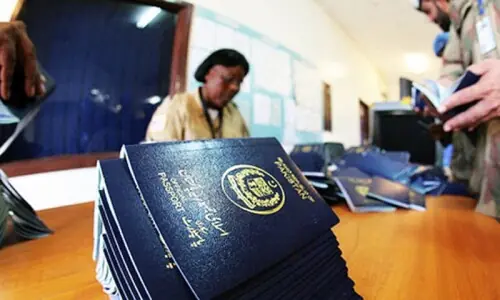
ISLAMABAD: A Senate panel on Friday unanimously approved a bill seeking to allow the issuance of blue passports to dependent children under the age of 28 of ex-members of parliament, bringing them in line with the existing entitlement available to dependent children of retired Grade-22 government officers.
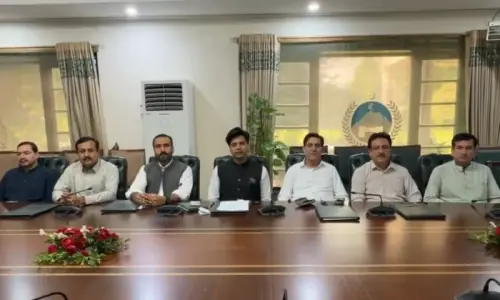
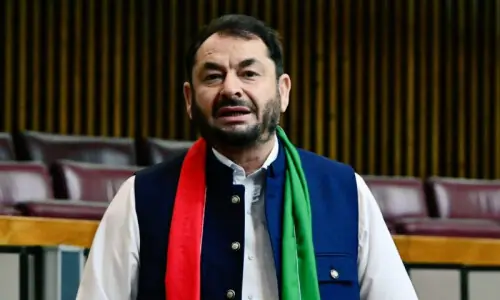
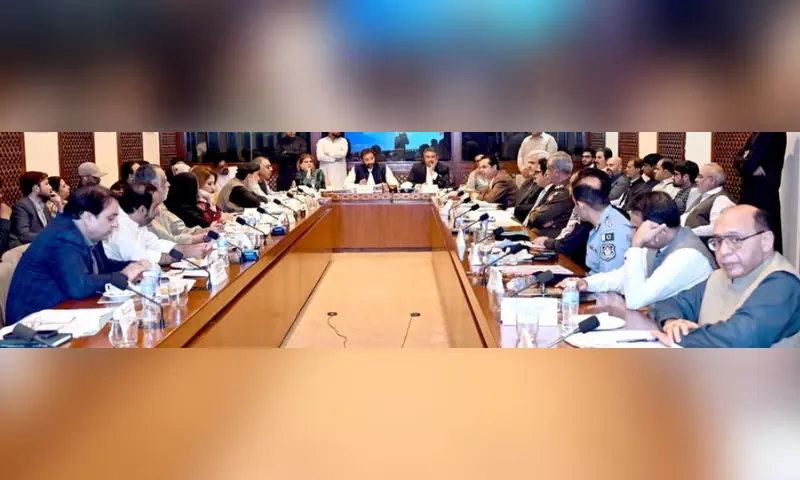
The Members of Parliament Salaries and Allowances (Amendment) Bill, 2026, was introduced as a private member’s bill by Senator Abdul Qadir and approved by the Senate Standing Committee on Interior and Narcotics Control during a meeting chaired by Senator Faisal Saleem Rahman.
Minister of State for Interior Muhammad Talal Chaudhry supported the passage of the bill and said the recommendations would be placed before the cabinet for finalisation by the competent authority.
During deliberations, members discussed the implications of the passport policy, including its possible impact on Pakistan’s international passport ranking, before unanimously approving the proposed legislation for the onward legislative process.
The committee also took up the scandal involving the disappearance of cigarettes worth Rs250 million from Federal Board of Revenue (FBR) godowns in Swabi and Mardan, which took a contentious turn after FBR officials told the panel that the names of officers allegedly involved could not be placed on the Exit Control List before completion of legal proceedings.
During the meeting, FBR officials also said investigative agencies were required to seek the department’s permission before initiating inquiries against FBR officers. They argued that ECL placement could only follow due legal process.
Committee members rejected the position, stressing that accountability institutions must be allowed to work independently. They also questioned the FBR’s internal probe, which pinned responsibility on junior employees, and noted that while the FIR was registered by FBR officers, the department had not fully cooperated with police investigators.
The panel expressed serious reservations over the FBR’s fact-finding report. Despite no signs of forced entry — no broken doors, walls or windows — the report attributed the loss to a watchman, a peon and a driver.
“This amounts to making junior staff scapegoats while shielding senior officials,” members observed.
The chairman informed the committee that the FIA’s inquiry had identified a deputy collector, two officials and two inspectors as allegedly involved. When asked why the suspects had not been placed on the ECL, FIA officials said the matter was still at the inquiry stage and had been transferred to the Islamabad Zone.
FBR officials could not confirm whether the subcommittee’s earlier recommendation to place the officers on the ECL had been implemented, saying the authority rested with the FIA. The FIA assured the committee that it would verify the status.
The committee also reviewed the policy on allocation of non-custom-paid and tampered vehicles to government departments.
FBR officials said such vehicles were allotted under court orders to departments and posts, not individuals. While the FBR previously handled allocations, the responsibility would now shift to the Cabinet Division. Vehicles already with police and other departments would remain with them as per Supreme Court orders.
The committee asked the FBR to submit a complete list of all non-custom-paid vehicles allocated so far and questioned whether future allocations would require fresh cabinet approval. The committee also reviewed security arrangements for Senator Saifullah Abro.
The interior secretary said the Threat Assessment Committee had referred the matter to relevant agencies and Islamabad security had been finalised, but clearance for Frontier Constabulary personnel was pending. The members noted with concern that security in Sindh was still not in place despite earlier directions.
The chairman warned that the Sindh IGP would be summoned and the matter could be sent to the Privileges Committee if not resolved. Senator Abro said he had submitted the names of preferred personnel two months ago, but no notification had been issued. DIG Larkana assured the committee that the names would be reviewed.
Abduction, forced marriage
The panel also discussed the alleged abduction and forced marriage case of a girl from Islamabad.
SP City Dr Ayaz Hussain said an FIR was registered on May 5, a marriage certificate was on record and the woman, aged over 18, had sought court protection and recorded a statement under Section 164 in Khanewal.
The committee decided that the minister of state for interior would constitute a three-member inquiry committee, including one female officer of Grade 18 and two male officers, headed by an officer not below Grade 20, to examine whether the marriage was consensual and whether further legal action was needed.
The committee also discussed issues relating to law and order, public security and policing. The members highlighted concerns over the misuse of official security personnel, particularly the assignment of security details to private individuals, and called for improved oversight, accountability and effective utilisation of police resources in the public interest.
The meeting was attended by Senators Shahadat Awan, Naseema Ehsan, Samina Mumtaz Zehri, Umar Farooq, Palwasha Mohammad Yousaf Zai, Muhammad Talha Mehmood, Mohammad Abdul Qadir, Saifullah Abro and Mir Dostain Khan Domki.
Published in Dawn, July 11th, 2026