0
0

THE apex court has recently lifted the ban on the conversion of residential premises to commercial ones. While all the builders, developers and those associated with the real estate sector have welcomed the move, civil society activists, environmentalists and urban development experts have expressed serious concerns in this regard.
The former believe, and with some justification, that unchecked commercia- lisation will lead to traffic congestion, infrastructure collapse, environmental degradation and pollution.
Indeed, it is an undeniable fact that illegal commercial activities in residential neighbourhoods along with the conversion of residential premises for constructing commercial and multi-storey buildings have continued unchecked over the last several years.
As such, the Sindh Building Control Authority (SBCA), as the regulatory body, has failed to take effective action against the violations of building laws and town planning regulations.
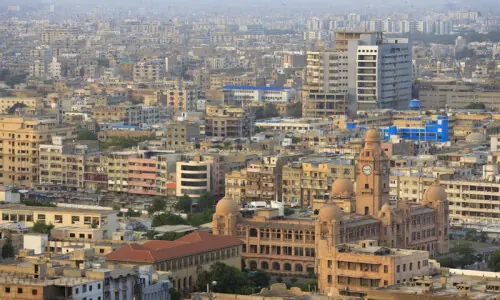
Karachi’s first master plan was prepared in 1958. Over the last 67 years, neither a new master plan has been developed nor has the existing one been meaningfully updated despite the fact that the population and the area of the city have increased manifold.
Today, the city is struggling with in-adequate provision of basic amenities. Large parts of the city face a severe shortage of water supply, and overloaded sewerage system is nearing collapse. Unfortunately, electricity outages for hours and gas loadshedding have now become increasingly common.
In view of the above realities, allowing unrestricted land use conversion, parti-cularly from low-density to high-density residential zones and residential to commercial use, is likely to aggravate public hardships.
Such measures would intensify traffic congestion, put additional pressure on utilities as well as on the collection and disposal of solid waste, and further reduce already available public and open spaces.
Karachi already ranks poorly in terms of urban liveability. Inadequate infrastructure, weak municipal services and poor governance have significantly affected the quality of life of its residents. As things stand, in the wake of the latest court decision, unchecked commercia-lisation will only aggravate the situation further.
If the conversion of residential premises into commercial use is to be permitted, it must be carried out transparently and within the framework of an updated master plan. The process should also involve meaningful public consultation and comprehensive environmental impact assessments. Above all, our policy decisions must safeguard the peace, privacy and community life of the people.
Only through responsible planning, effective regulations as well as sustainable urban policies can Karachi become a truly liveable city for millions of people.
Shams Jafrani
Karachi
Published in Dawn, July 8th, 2026