Lebanon tensions overshadow talks between US, Iran
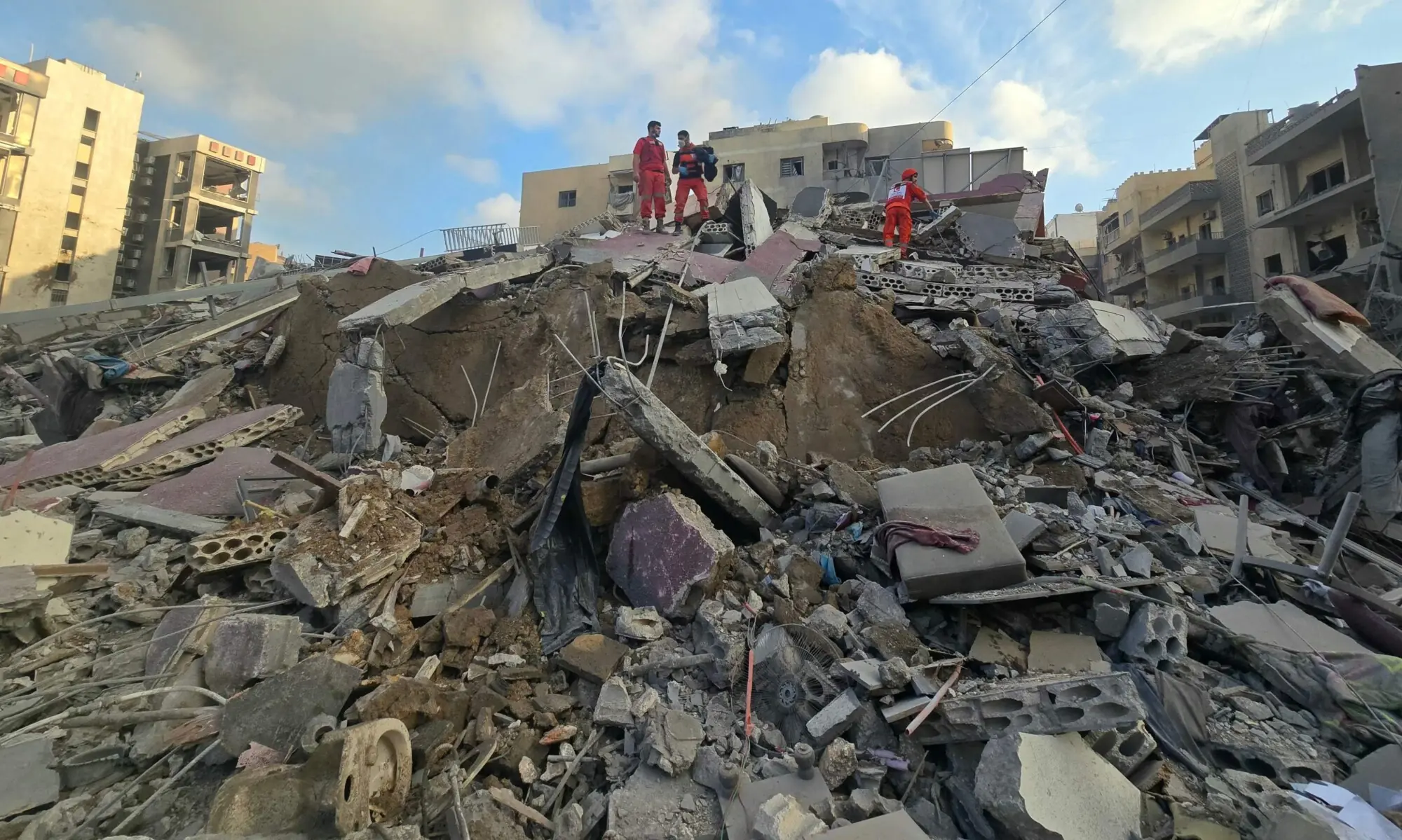
• Tehran says it views ceasefire breaches in Lebanon as violations ‘on all fronts’, suspends exchange of messages with Washington
• Trump prevails on Netanyahu to stop Israeli advance on Beirut, claims contact with Hezbollah ‘through intermediaries’
• US hits Iranian air defences after drone shot down; American base in Kuwait struck
• Araghchi urges Pakistan to continue de-escalation efforts
TEHRAN / WASHINGTON: The delicate diplomatic process keeping hopes for peace between Iran and the US seemed to teeter on Monday after Tehran and Washington offered diverging assessments of the status of negotiations, with Israel’s expanding front in Lebanon proving to be the main spoiler.
Saying that it considered the ceasefire violated “on all fronts” after Israeli PM Benjamin Netanyahu ordered attacks on Beirut, Tehran accused the US of violating the ceasefire and said it had suspended indirect negotiations.
The announcement was shrugged off by President Donald Trump, who said talks with Iran were moving forward at a “rapid pace”.
Initially, Trump said he was not aware whether Iran had suspended the talks. He then told CNBC that he did not care if the talks were over.
“If they’re over, they’re over. If they’re not, you know, I think they took too much time. Frankly, I thought they started to get very boring,” he told CNBC.
But soon afterwards, he moved swiftly to allay Iranian concerns over the Israeli invasion of Lebanon.
Not only did he speak to his ally Netanyahu, but also claimed to have exchanged views with Hezbollah through intermediaries — a first for a US president — to stop the fighting.
“There will be no troops going to Beirut, and any troops that are on their way have already been turned back”, he posted on Truth Social, adding that Hezbollah had also agreed to stop attacking Israel.
A Lebanese official told Reuters that Hezbollah had informed the US, through Lebanon’s parliament Speaker Nabih Berri, that it was willing to halt attacks on northern Israel in exchange for Israel sparing Beirut and its suburbs from any strikes.
Soon after, President Trump announced on his Truth Social website that the talks with Iran were ongoing at a rapid pace.
Ceasefire violation
Earlier, Iranian Foreign Minister Abbas Araghchi said the ceasefire violation on one front was akin to violations on all fronts. “Violation on one front is a violation of the ceasefire on all fronts. The US and Israel are responsible for the consequences of any violation,” he said on X.
Also, Iran’s top negotiator Bagher Ghalibaf accused the US of violating the ceasefire, saying the US naval blockade on Iran’s ports and the escalation in Lebanon were “clear evidence of US non-compliance with the ceasefire”.
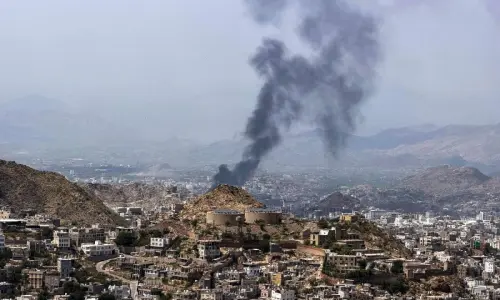
The war launched by the US and Israel on February 28 has killed thousands of people, mainly in Iran and Lebanon. It has also caused global economic pain by pushing up energy prices since Iran effectively closed the Strait of Hormuz, a vital global supply route for oil and liquefied natural gas.
New fronts
Earlier in the day, Iran warned of opening new fronts across the Gulf, including the Red Sea, if the ceasefire with the US collapsed. The Tasnim news agency said Iran and the Resistance Front, which includes its allies in Yemen, Lebanon and Iraq, had set an agenda to completely block the strait and activate other fronts, including the Bab el-Mandeb Strait, to “punish” Israel and its supporters.
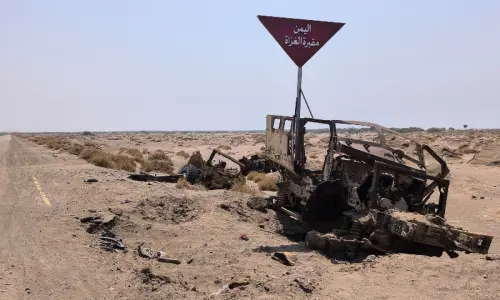
If the Houthis, Iran’s allies in Yemen, open a new front in the conflict, one obvious target would be the Bab el-Mandeb Strait off the coast of Yemen, a shipping chokepoint and narrow passageway that controls sea traffic towards the Suez Canal. Referring to Iran’s demands on Lebanon, the Tasnim news agency said that “there will be no talks until Iran and the Resistance Front’s views on this matter are met”.
Sporadic clashes
Before tensions escalated due to Lebanon, Iran and the US traded blows despite the ceasefire. The US military said it had, over the weekend, struck Iranian air defences, a ground control station and two drones that were threatening ships after “aggressive Iranian actions”, including shooting down a US drone over international waters.
The IRGC said on Monday it had targeted an air base used by the US in response to an attack on southern Iran. It did not identify the base, but Kuwait activated air defences on Monday and denounced
Iranian missile and drone attacks, which it said were undermining efforts to reduce tensions in the region. US forces intercepted two Iranian ballistic missiles targeting American forces based in Kuwait late on Sunday, the US military said on Monday, adding that no American personnel were harmed.
Separately, two explosions struck a cargo vessel in the Gulf about 40 nautical miles southeast of Iraq’s Umm Qasr, one of which was caused by a drone attack, Iraqi officials said on Monday. No one claimed responsibility for the attack.
Dar-Araghchi call
Amid the uncertainty plaguing the peace process, Mr Araghchi expressed appreciation for Pakistan’s “constructive role in regional diplomacy”, and requested Islamabad to continue its efforts to help facilitate de-escalation in the region and maintain the ceasefire.
The comments came in a phone call with Pakistan’s Foreign Minister Ishaq Dar, where both men discussed concerns about the sustainability of the ceasefire currently in place.
According to a statement by the Foreign Office, “FM Araghchi (in his call with Dar) expressed serious concern over recent developments in the region, including ceasefire violations in Lebanon by Israel and the orders by the Israeli government regarding a potential attack in parts of Beirut”.
Mr Dar also spoke with his Egyptian counterpart to discuss regional tensions.
Published in Dawn, June 2nd, 2026