Washington's policy toward Iran — what comes next?
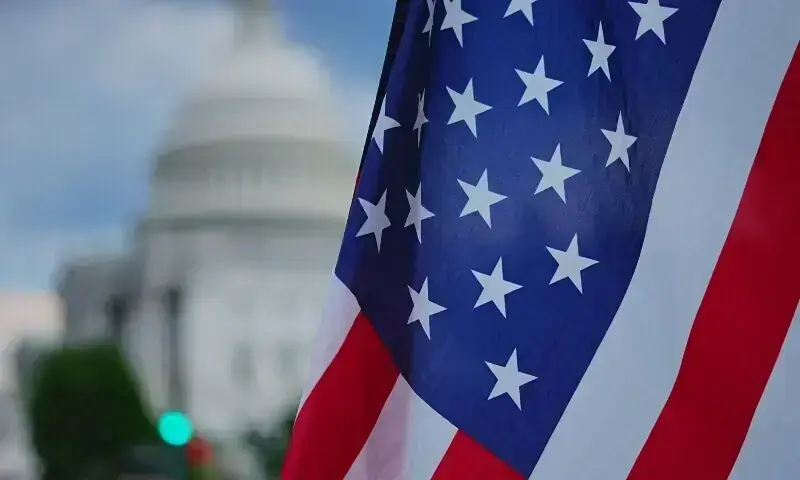
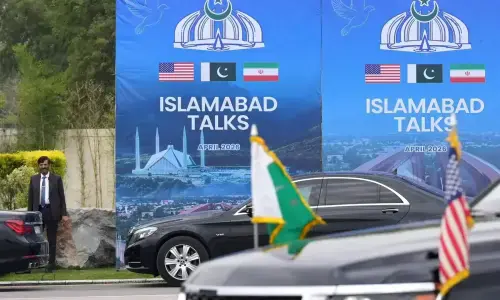
WASHINGTON: Reports that the United States and Iran are close to extending a ceasefire and reopening the Strait of Hormuz have sparked an intense debate in Washington about the future of US policy toward Tehran.
The discussion extends far beyond the White House. Some of America’s most influential think tanks — research institutions that often shape policy debates and supply experts to successive administrations — are offering sharply different assessments of Iran, the consequences of the recent conflict and the political risks facing US President Donald Trump as he heads toward the 2026 midterm elections.
The timing is particularly significant because the midterms will determine control of Congress during the second half of Trump’s presidency. Republicans currently hold narrow majorities in both the House of Representatives and the Senate, but history suggests those majorities could be at risk.
For many, the most important question is no longer whether Washington and Tehran can reach a temporary understanding. It is whether the economic and political fallout from the conflict will reshape American politics and constrain the administration’s options.
The political clock Trump is ignoring
Among those focusing on the domestic implications is James M. Lindsay, a senior fellow at the Council on Foreign Relations (CFR), one of Washington’s most respected foreign policy organisations. Lindsay previously served as director for global issues and multilateral affairs at the National Security Council.
In his latest analysis, Lindsay noted that Trump insists he is unconcerned about electoral consequences.
“I don’t care about the midterms,” Trump said recently, dismissing suggestions that Iran might seek to prolong negotiations until after the elections.
Lindsay believes the political realities are harder to ignore.
“Whatever role the midterm elections play in Trump’s Iran thinking, Iran is likely to play an outsized role in November,” he wrote.
The reason, he argued, was economic rather than military.
According to Lindsay, rising fuel prices and inflation associated with the conflict have weakened public support for the administration. He pointed to polling data showing declining approval ratings among independent voters, Latino voters and even parts of Trump’s traditional political base.
“The House midterms function as referenda on incumbent presidents,” Lindsay wrote, noting that the president’s party has gained House seats only four times since the modern two-party system emerged in the nineteenth century.
Historically, presidents almost always lose House seats in midterm elections. Republicans currently hold only a narrow majority, making them particularly vulnerable if economic conditions deteriorate.
Lindsay argued that Operation Epic Fury and the broader economic consequences of the Iran conflict have contributed to declining support for the administration. Rising energy prices and inflation, he said, are proving more politically damaging than the conflict itself.
Perhaps most significantly, he contended that even a favourable diplomatic outcome may not quickly reverse the political damage.
Why the Senate matters
While much attention focuses on the House of Representatives, control of the Senate could prove equally important.
Republicans currently hold a 53-47 majority in the 100-member chamber.
The Senate confirms cabinet members, ambassadors, senior military officers, federal judges and Supreme Court nominees.
Losing control would significantly complicate the administration’s ability to shape government policy and the federal judiciary.
Iran’s ideology remains central issue
Among the strongest sceptics of a lasting agreement with Tehran is Brett McGurk, associated with the Atlantic Council, a centrist foreign policy think tank based in Washington.
McGurk has served in senior national security positions under four US presidents and most recently coordinated Middle East policy at the White House.
Writing in CNN Politics, McGurk argues that American policymakers repeatedly misunderstand the nature of the Iranian system.
“The central driver of Iran’s behaviour,” he wrote, “has never been US diplomacy or even economic or military pressure. It is the revolutionary ideology of the Islamic Republic itself.”
McGurk argues that American tactics — whether diplomatic engagement, economic sanctions or military action — have proven “wholly ineffective” at changing Iran’s ideological trajectory.
In his view, Tehran’s appointment of what he calls “hardened ideologues” to key positions after the conflict underscores the durability of the system rather than its weakness.
Europe and America drift apart
A different perspective comes from Philip Gordon of the Brookings Institution, one of Washington’s most influential centrist think tanks.
Gordon served as special assistant to President Barack Obama and White House coordinator for the Middle East, North Africa and the Gulf region.
In a recent paper, Gordon argues that the US and Europe continue to share broad strategic objectives in the Middle East, including preventing war, combating terrorism, keeping sea lanes open, limiting nuclear proliferation and promoting regional stability.
Yet Gordon argues that recent events have exposed growing differences between Washington and its European allies.
According to his analysis, European governments were largely sidelined from negotiations and were not consulted before major US and Israeli military actions. The resulting tensions, he argues, have deepened existing disagreements over Gaza and broader Middle East policy.
For Gordon, the growing distance between Washington and key European capitals raises questions about whether the US can continue to rely on the broad international coalitions that characterised previous Middle East initiatives.
The case for maximum pressure
On the opposite end of the policy spectrum is Rebeccah L. Heinrichs of the Hudson Institute, a conservative think tank often associated with hawkish Republican foreign policy positions.
Heinrichs serves on the US Strategic Command Advisory Group and has been a prominent advocate of maintaining pressure on Tehran.
In a recent paper, she argues that Washington should “sustain maximum pressure” on Iran until it can no longer threaten navigation through the Strait of Hormuz or revive its nuclear programme.
She also calls on the administration to “resume Project Freedom” and coalition escort operations to secure commercial shipping through the strategically vital waterway.
Heinrichs argues that the US should “reject interim arrangements” that provide Tehran with economic relief while it remains capable of threatening US interests.
Her recommendations reflect a broader view among conservative national security analysts that negotiations should be backed by overwhelming economic and military pressure rather than accompanied by sanctions relief.