Outlook for peace in the Middle East
As Pakistan plays its part in the daunting challenge of brokering peace, one may take a look at factors likely to influence the course of negotiations between the United States and Iran aimed at a peaceful settlement of the war in the Middle East.
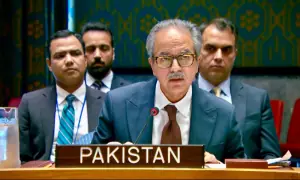
The negotiations follow the recently agreed upon two-week truce, while Prime Minister Shehbaz Sharif has expressed the hope that the 15-day ceasefire will become permanent. The world has backed and lauded Pakistan’s ‘tireless’ and ‘courageous’ diplomacy.
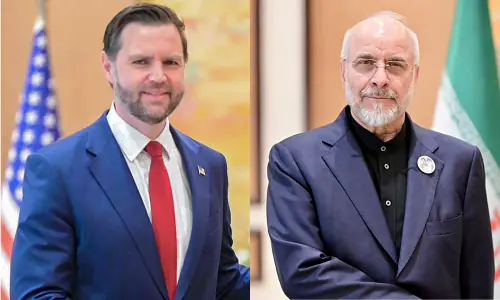
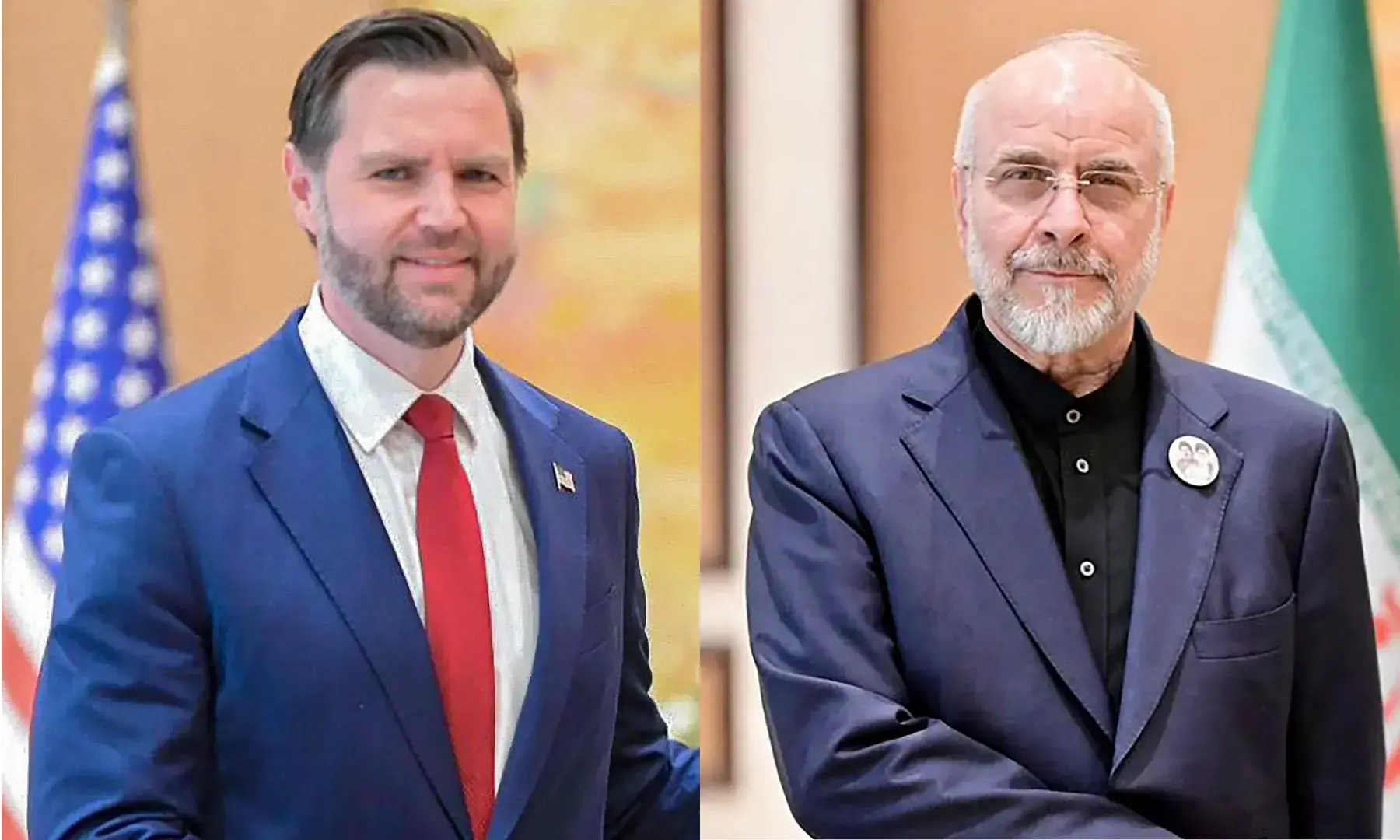
US President Donald Trump told the US delegation led by Vice President JD Vance, quoted by Reuters as saying, “Go and work in good faith to come to an agreement. He is impatient. He is impatient to make progress. He has told us, and I think if they negotiate in good faith, we will be able to find a deal. But that’s a big if, and ultimately, it’s up to the Iranians how they negotiate. I hope they make the right decision.”
President Trump also reportedly said talks on the Iran crisis would be held behind closed doors and that only one group of meaningful points would be acceptable to the US, but gave no details about the negotiations.
‘The conflict has exposed the limits of American power more clearly than any recent war’
Despite its strengths, the US economy may not remain insulated from mounting adverse spillovers of a prolonged Iran war. President Trump has proposed a massive $1.5 trillion US defence budget for FY27 — a 50 per cent increase from previous levels and the sharpest hike since World War Two.
War-driven divisiveness is permeating various US institutions. On April 2, 2026, US Defence Secretary Pate Hegseth forced the top three US generals, including Army Chief of Staff General Randy George, to retire immediately: a major wartime leadership shakeup.
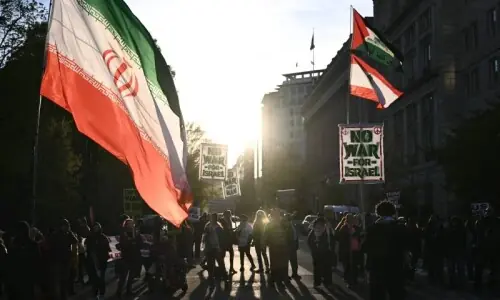
Opposition to the US war of choice is mounting within the US mainstream. Trump’s own party lawmakers are split over the tone and trajectory of the Iran policy. Rare criticism has been voiced within the Republican ranks over the threat to “obliterate Iranian civilisation”. An analyst says, “The episode exposes the divide in Washington.” Different surveys show that many US citizens oppose the war.
On April 8, the US President threatened 50pc tariffs on nations supplying weapons to Iran. He has expressed a preference for tariffs over sanctions as an economic weapon of choice, but his use of sanctions has been even more haphazard, as analysts say, showing a willingness to break norms after a return to the White House. Now, some sanctions on Russia in place since its invasion of Ukraine in 2022 have been eased. The US tariff policy has further fragmented the global markets.
The United States has for years used a carefully designed economic statecraft playbook to pressure American adversaries to change their behaviour or their leadership “This year, Trump has reached the limits of those tools, opting instead to military force to remove the leaders of Iran and Venezuela,” according to a recent analytical report by Alan Rappeport in The New York Times.
The US has for years used carefully designed economic statecraft to pressure American adversaries; this year, Trump has reached the limits of those tools
In sharp contrast, the Iran war had some distinguishing features of how a determined nation defends itself against foreign aggression. In fact, in the words of a US political scientist, if prolonged, this transformational war has the potential to “change the global order irrevocably.”
In recent years, the conventional geopolitical wisdom has been that the world order was moving towards three centres of power, the United States, Russia and China, assumed to be derived primarily from economic scale and military capability.
“The assumption no longer holds,” says Robert A Pape, a professor of political science, who directs the Chicago Project on Security and Threats. A fourth centre of power is quickly emerging that does not rival the three nations economically or militarily, he wrote in his recent article in The New York Times. He adds that Iran’s newfound might derives from its control of the Strait of Hormuz, the most important energy chokepoint in the global economy.
The widening space and opportunity. A changing world provides an impetus to the invincible urge of generations after generations of a nation’s people, like Palestinians and Kashmiris, in their struggle to achieve their individual and national right to self-determination.
A Pakistani analyst who has done extensive work on the governance of the public and private sectors identifies other notable features of the war. Iran has not defeated the United States in the conventional sense, but it has achieved something deeply consequential, wrote Asad Ali Shah in his article published in The News. “It has shown to the world that even the most powerful state on earth cannot easily impose its will over a determined regional power with strategic depth, endurance and command over its critical geography.”
He further notes, “The conflict has exposed the limits of American power more clearly than any recent war. This also makes one truth unavoidable. This crisis cannot be solved militarily.”
Published in Dawn, The Business and Finance Weekly, April 13th, 2026