Israel kills over 250 in heaviest assault on Lebanon
• With 837 wounded, Trump dismisses situation as ‘skirmish’
• UN condemns attacks resulting in significant civilian casualties
• Iran Guards threaten‘regret-inducing response’; Hezbollah vows to retaliate for ‘massacres’
BEIRUT: Israel launched its heaviest and most coordinated air assault on Lebanon on Wednesday since its conflict with Hezbollah began, killing more than 250 people just a day after a US-Iran ceasefire was intended to quiet the region.
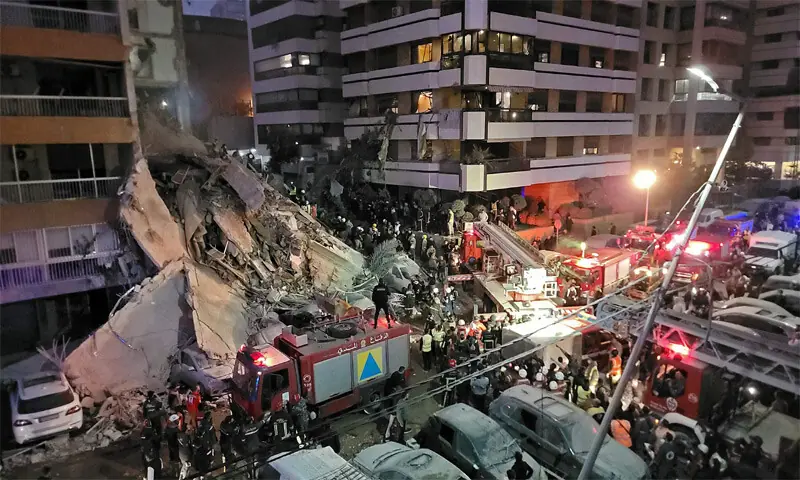
Consecutive explosions rocked Beirut, sending vast plumes of smoke over the capital. The Israeli military said it struck more than 100 Hezbollah command centres and military sites across Beirut, the Bekaa Valley and southern Lebanon.
The wave of attacks killed 254 people and wounded 837, according to Lebanon’s civil defence.
The assault proceeded even as the Hezbollah paused its own attacks, abiding by what three Lebanese sources close to the group said it understood to be an inclusive truce.
But Israeli Prime Minister Benjamin Netanyahu said the ceasefire suspending the six-week US-Israeli war against Iran did not apply to Lebanon.
The White House affirmed that position, creating a volatile disconnect that fuelled the deadly strikes. US President Donald Trump on Wednesday called the situation a “separate skirmish”, telling PBS News that Lebanon was not part of the agreement “because of Hezbollah” but would “get taken care of”.
The attacks drew swift and widespread international condemnation.
The United Nations “strongly condemns the strikes by Israel across Lebanon that resulted in significant civilian casualties,” said Farhan Haq, a spokesman for the UN secretary general.
Several European nations with UN peacekeepers in southern Lebanon reacted with fury after their troops were endangered. Italy summoned the Israeli ambassador after Israeli forces fired warning shots at a convoy of Italian peacekeepers from the United Nations Interim Force in Lebanon (UNIFIL).
“The continued Israeli attacks in Lebanon, which have already caused too many deaths and an unacceptable number of displaced people, must cease immediately,” Italian Prime Minister Giorgia Meloni said in a statement.
Spain also summoned Israel’s representative after a Spanish UNIFIL soldier was briefly arrested by the Israeli army. Germany urged Israel to limit its campaign to “self-defence”.
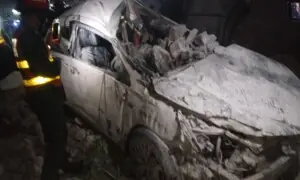
In Beirut, the aftermath was chaotic. Reuters reporters saw people on motorcycles ferrying the wounded to hospitals as ambulances were overwhelmed. In one car park, flames engulfed more than a dozen mangled vehicles.
The head of Lebanon’s doctor syndicate issued an urgent call for all physicians to report to hospitals, while one of the city’s largest medical centres appealed for blood donations of all types.
“Tonight I’m not going to sleep because I’m going to be afraid that it’s happening again,” Naim Chebbo, 51, said as he swept up shattered glass from his home. “I’m living a nightmare”.
Iran’s Revolutionary Guards Corps issued a stern warning that it would deliver a “regret-inducing response” if the attacks on Lebanon did not stop. In a post on X, Iran’s foreign minister said, “The ball is in the US court, and the world is watching whether it will act on its commitments.”
Hezbollah condemned what it called Israel’s “barbaric aggression” and asserted its “natural and legal right to resist the occupation and respond to its aggression”.
A senior Hezbollah lawmaker, Ibrahim al-Moussawi, told Reuters the group had abided by the ceasefire. “But Israel as usual has violated it and committed massacres all across Lebanon,” he said.
The humanitarian crisis in Lebanon has deepened significantly since the conflict erupted on March 2.
Israel has issued evacuation orders for about 15pc of Lebanese territory, displacing more than 1.2 million people. Over 1,500 people have been killed in Israel’s campaign, according to the Lebanese health ministry.
“Hopefully a ceasefire will be reached,” said Ahmed Harm, 54, who was displaced from Beirut’s southern suburbs. “Lebanon can’t take it anymore. The country is collapsing economically, and everything is collapsing”.
Published in Dawn, April 9th, 2026