Rawalpindi’s Holy Family Hospital to have advanced cancer treatment technology
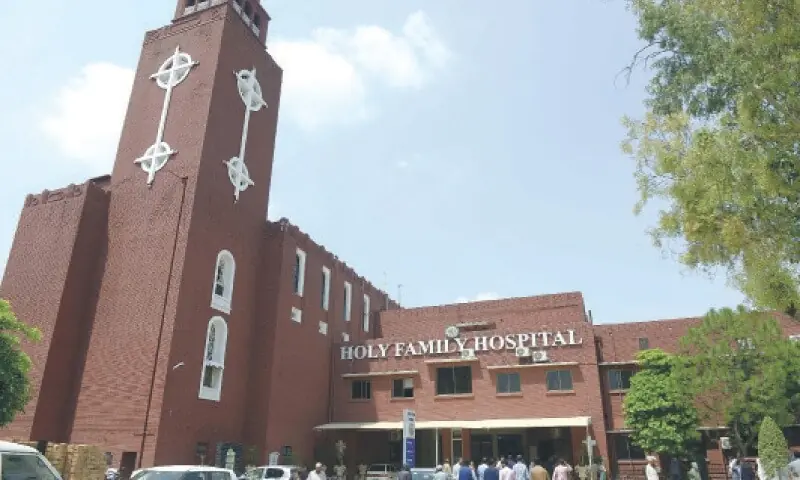
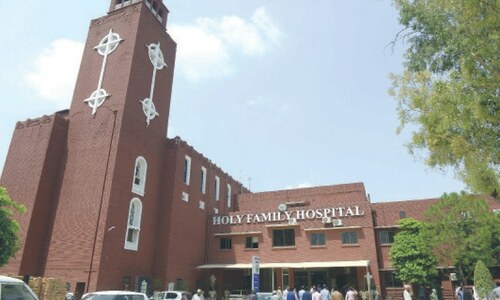
RAWALPINDI: After Lahore, the Punjab government started work to install a Cryoblation treatment facility at Holy Family Hospital (HFH) for cancer patients in the Potohar region.
Talking to Dawn, HFH Medical Superintendent Dr Ijaz Butt said that the facility was brought to Pakistan from China, where the Punjab chief minister had observed the advanced cancer treatment technology at the Xi Ji Tan and Hygea Medical Technologies.
In the initial phase, he said that the treatment facility was introduced in Mayo Hospital, Lahore, and now the government will introduce this treatment in Rawalpindi at Holy Family Hospital and Nishtar Hospital, Multan.
He said that Cryoablation is a minimally invasive, image-guided procedure that uses extreme cold to destroy diseased tissue, such as tumours, by creating a localised ice ball.
It is commonly used for cancer treatment, specifically in the liver, kidney, lung, prostate, and breast or for pain management, offering a faster recovery and less pain than surgery. In all three government-run hospitals of Rawalpindi city, there is no oncology department to treat cancer patients, and they have to go to private hospitals in the twin cities of Rawalpindi and Islamabad.
A senior doctor of Benazir Bhutto Hospital told Dawn that the cancer patients had been asked to go to private clinics and hospitals as the government failed to introduce the department in the government-run hospital.
He said that the patients arrived with complaints of tumours and cancer were treated like common patients, as there was no department where the senior doctor examined and diagnosed the cancer. However, he said that the cancer patients were told to contact Islamabad or a private clinic for further investigations of their disease.
“We have no option but to advise the patient for private clinics. As many as 50 patients arrived with cancer disease in each government-run hospital of Rawalpindi but received no treatment,” he said.
He said that there was a need to establish the oncology department in all three hospitals, as the holy family hospital is treating liver-related cancer, but without a specialist or oncologist.
“There is no facility of frozen section procedure in which the pathologist can make a report of microscope analysis whether or not the tumor removed from the body completely,” he said.
He said that if the patient arrived in the government-run hospital, the doctors send him/her to the private laboratory to investigate the presence of tumor and after the surgery of the tumour, the doctor would remove the tumour or not without the presence of specialists.
However, he expressed hope that the people would benefit from the facility that would be introduced in Holy Family Hospital.
Published in Dawn, March 8th, 2026