Pleas of Afghans for naturalisation certificate declared premature
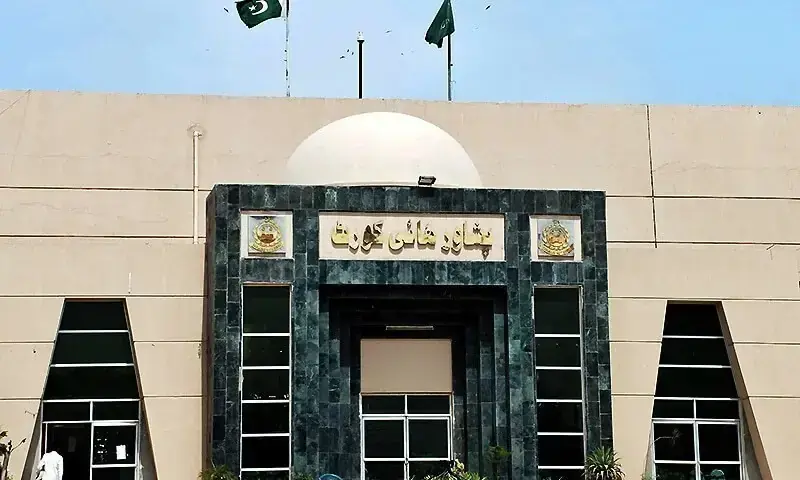

PESHAWAR: Peshawar High Court has declared as premature and non-maintainable pleas of several Afghan nationals, seeking issuance of naturalisation certificates to them by the government.
A bench consisting of Justice Wiqar Ahmad and Justice Farah Jamshed, while disposing of around a dozen petitions of Afghan nationals, ruled that petitions couldn’t be directly entertained by that court unless the person had first exhausted departmental remedies.
The petitioners including Mohammad Jamil and several others stated that they had mostly migrated to Pakistan in 1988 with some of the families arriving prior to 1980. They claimed that they had been residing, conducting businesses and integrated socially and economically in the country for decades.
While they possessed Afghan Citizens Card (ACC) and Proof of Registration (POR) cards to regularise their stay, they contended that their prolonged and continuous residence qualified them for citizenship via naturalisation certificate under Naturalisation Act, 1926.
PHC rules petitioners should first avail departmental remedy
They claimed of filing the petitions after failure of respondents including federal government to consider their eligibility for naturalisation.
The assistant attorney general, Rahat Ali Nahqi, appeared for federal government along with officials of Nadra and immigration and passport including Mohammad Mubarak, Shahid Imran Gigyani, Moazzam Habib, Shafaullah and Asghar Jamil.
The bench in its 22-page detailed judgement thoroughly discussed provisions of Naturalisation Act, 1926, Pakistan Citizenship, 1951, rules framed under both the laws, Constitution of Pakistan and judgements of superior courts.
The bench pointed out that sections 9 and 20 of Citizenship Act bifurcated the mechanism for acquiring citizenship, distinguishing between citizens of Commonwealth countries or British protected persons and individuals belonging to other foreign states.
“An analysis of the two aforementioned statutes (Naturalisation Act and Citizenship Act) and the rules framed thereunder manifests that individuals, who are nationals of countries other than Commonwealth states or British protected persons, may only be granted citizenship under Section 9 of Pakistan Citizenship Act, 1951, subsequent to obtaining a naturalisation certificate under Naturalisation Act and fulfilling the requisite formalities, including the administration of an oath,” the bench observed.
It said: “Any such person residing in Pakistan and fulfilling the conditions stipulated in Section 3 of Naturalisation Act may apply to federal government for the grant of a naturalisation certificate in the manner provided under Section 4 thereof. The designated office for the receipt of such applications is that of the assistant director, General Branch, within Directorate General of Immigration and Passports.”
“Such applications may be submitted by post with an ‘acknowledgement due card; in all instances, the receiving officer is duty-bound to provide an acknowledgement upon submission,” the bench explained.
The bench observed that those petitioners had directly approached the court without submitting any proof that they had applied to the relevant office for the issuance of a naturalisation certificate. “No such acknowledgement from the Directorate General Immigration and Passports has been annexed with any of these writ petitions,” it added.
“In such circumstances, a writ petition cannot be entertained directly by this court unless the person has first exhausted departmental remedies. Since an alternate remedy is available before the relevant department, a person seeking any right under Section 3 of Naturalisation Act must first file a formal application under Section 4 of said Act before the competent officer,” the bench ruled in the judgement authored by Justice Wiqar Ahmad.
The bench held that a writ petition filed by a foreign citizen for the issuance of a naturalisation certificate should only be maintainable where the petitioner demonstrated substantial compliance with the available statutory machinery by filing a formal application under Section 4, supported by an official acknowledgement or proof of postage.
“This court, in exercise of its constitutional jurisdiction, must respect the legislative intent and the functional integrity of statutory forums; therefore, it cannot exercise the executive functions by issuing a naturalisation certificate directly. Such a grant remains the exclusive prerogative of federal government, which job has been assigned to Director General Immigration and Passports,” the bench ruled.
It further declared: “The alternate remedy is not only efficacious but exclusive to the authority of the relevant officer of federal government. Consequently, this court shall only intervene where the statutory remedy is proven to be inefficacious or illusory due to administrative inaction, typically evidenced by a failure to process the application within sufficient time i.e a period of six months.”
“In the absence of such proof of exhaustion of departmental remedies, all the writ petitions were found premature, and therefore not maintainable. The petitioners shall remain at liberty to approach the competent authority in the manner prescribed by Naturalisation Act, 1926,” the bench ordered.
The court maintained: “The principle that constitutional jurisdiction should not ordinarily be invoked in the presence of an efficacious statutory remedy is not a rule of limitation but of judicial restraint, designed to preserve the functional integrity of statutory forums and respect legislative design.”
Published in Dawn, March 6th, 2026