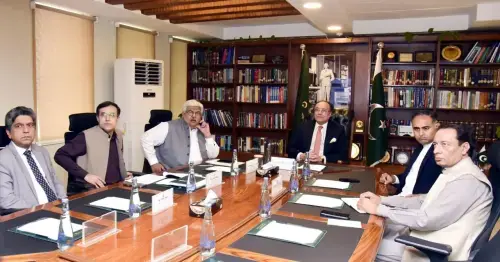
ISLAMABAD; The board of governors of the International Atomic Energy Agency (IAEA) unanimously approved on Wednesday the ‘Safeguards Agreement’ between IAEA and Pakistan for the application of safeguards at the fifth unit of the Chashma nuclear power plant.
This significant milestone for Pakistan’s energy sector is an important development that reflects the international community’s continued confidence in the country’s commitment to the peaceful use of nuclear energy and its adherence to global non-proliferation and safeguards obligations. Pakistan is member of the 35-member board for 2025-26.
IAEA safeguards are embedded in legally binding agreements. In line with the IAEA’s statute, states accept these safeguards through the conclusion of such agreements with the agency. Safeguards are implemented in three states that are not party to the NPT – India, Pakistan and Israel – on the basis of item-specific agreements they have concluded with the IAEA, according to the agency’s information.
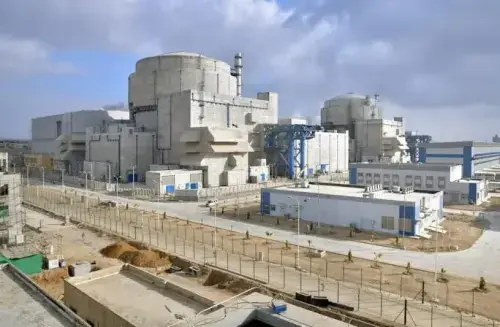
Unit-5 of the Chashma Nuclear Power Plant will have a gross capacity of 1,200 MW(e). The pressurised water reactor is expected to become operational by 2030. Upon completion, the unit will provide a substantial source of low-carbon electricity to Pakistan’s national grid, contributing to energy security, climate goals and sustainable economic growth.
Pakistan currently operates six nuclear power reactors at two sites, with a combined installed capacity of 3,530 MW(e), achieving an average capacity factor exceeding 90pc. Over the past year, nuclear power accounted for 18.3pc of the national electricity mix and 34pc of the total low-carbon electricity generation.
With more than 100 reactor-years of operational experience, Pakistan maintains a strong record of safe, secure and fully safeguarded nuclear power operations in line with international standards. At Chashma Nuclear Power Plant, four CNP-300 reactors are currently in operation.
The construction on the new Chashma Unit-5 began recently, and IAEA Director-General Rafael Mariano Grossi, during his visit to Pakistan a year ago, visited the site to view a concrete pouring for the new power reactor and to officially open a new incinerator that will be used for the treatment of radioactive waste.
Nuclear science and technology are providing clean energy, life-saving cancer care and better food to millions of people in Pakistan.Nuclear techniques and applications are used in agriculture, food preservation and industry.
Published in Dawn, March 5th, 2026