0
0

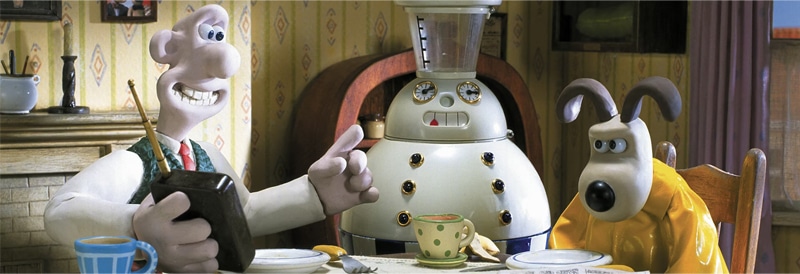
The art and craft of stop-motion animation has been celebrated in several exhibitions recently, including a show at London’s South Bank Centre and last year’s Tim Burton retrospective at the Design Museum.
Now it’s the turn of Aardman, as the studio celebrates almost half a century of silly characters, cracking jokes and comical villains in a new exhibition in London.
Since its founding in 1972 by Peter Lord and David Sproxton, the Bristol-based Aardman has cultivated an identity as one of animation’s most trusted and commercially successful production houses. Animator Nick Park joined in 1985, bringing Aardman Oscar success in 1991 with Creature Comforts — the first of many.
Widespread critical acclaim led to high-profile partnerships with Hollywood companies DreamWorks and Sony Pictures in the early 2000s. But it’s the studio’s homegrown history of feature films, animated shorts, TV series and various other projects that take centre stage at the Young V&A for the new ‘Inside Aardman — Wallace and Gromit and Friends’ exhibition.
Aardman is the British studio behind beloved stop-motion animations such as the Wallace and Gromit films. Now its pioneering creative magic gets a tribute at an exhibition in London
Drawn from the studio’s 50-year legacy, the gallery’s impressive collection of sets, puppets and other behind-the-scenes material provides an affectionate look at the production stories behind some of Aardman’s most celebrated animated creations.
THE CRAFT BEHIND THE ART
The exhibition is a quickfire journey through the techniques and technologies of handmade claymation that have defined the company’s signature animation style.
We learn about the moveable metal armatures and sculpturing of Plasticine, silicone rubber and foam that build Aardman’s three-dimensional models. And we get to see the invisible labour of foley artists (sound creators) and sound designers involved in the realisation of Aardman’s animated screen worlds.
At the centre of the exhibition is the literal flagship piece — the huge galleon from The Pirates! in an Adventure with Scientists! (2012), which towers over the curated collection of miniatures. Other highlights include the prison cell set from Wallace & Gromit: Vengeance Most Fowl (2024), home to the villainous penguin Feathers McGraw. Visitors can also create their own performances and stop-motion shorts in special interactive booths.
One of the most welcome curiosities is that the archival and audiovisual materials are organised to reflect the various stages of stop-motion animation as a creative process. An impressive collection of pre-production artefacts include never-before-seen storyboards, concept art and illustrations. All are testament to the meticulous craftsmanship of the animators and highlight the almost imperceptible details involved in building stop-motion animation from the ground up.
Lesser-known processes like needle-felting and “dope sheets” (drawings that break down dialogue into the appropriate mouth shapes frame-by-frame) accompany the more recognisable three-dimensional characters that celebrate the artisanal logic powering Aardman’s creativity.
What is clear from this peek inside the magical animated world of Aardman is that its animators are quintessential problem-solvers. The exhibition’s focus on the early Morph shorts reveals how clingfilm can function as an excellent substitute for water.
Similarly, the models and miniatures from A Grand Day Out (1989) show that lentils can have the appearance of well-worn rivets. Even icing sugar can give claymation models a duller, matte look. In the hands of Aardman’s skilled animators, everyday objects and materials can be transformed in all kinds of ways to sell the illusion.
Notable too among the wealth of handmade materials and processes is the spotlight on computer imaging and other forms of digital intervention — a surprise, perhaps, given Aardman’s renowned dedication to working with tangible, material objects. Yet the crude sketches doodled on scraps of paper from which the earliest story and character ideas were formed give way, in the exhibition’s closing stages, to a recognition of other kinds of animated techniques.
Computer-generated layering and 3D printing add in visual effects largely impossible to achieve in stop-motion. Green screens and even virtual reality visualisations help the animators “design and test ideas for sets before building them.” All show how digital technology has come to occupy a central place in the production pipeline of Aardman films.
Rather than obscure such processes behind the lucrative business of handcraft for which Aardman is internationally celebrated, the exhibition rightly makes a virtue of the virtual. The studio chooses not to obscure how and where digital processes have contributed to their big-screen blockbusters — even if their computer-animated films Flushed Away (2006) and Arthur Christmas (2011) are curiously sidelined.
Many visitors will be well-acquainted with the characters and objects brought together for Inside Aardman, yet there is enough devotion to animation as an industrial art form to satisfy creative practitioners and historians alike.
This excellent collection at the V&A show confirms Aardman as masters of their craft within the tradition of British animation, and a studio that can rightfully claim to be the true pioneers of Plasticine.
The writer is Senior Lecturer in Liberal Arts and Visual Cultures Education at the Department of Interdisciplinary Humanities at King’s College, London in the UK
Republished from The Conversation
Published in Dawn, ICON, February 22nd, 2026