Five food officials sacked for ‘misappropriating’ wheat stocks
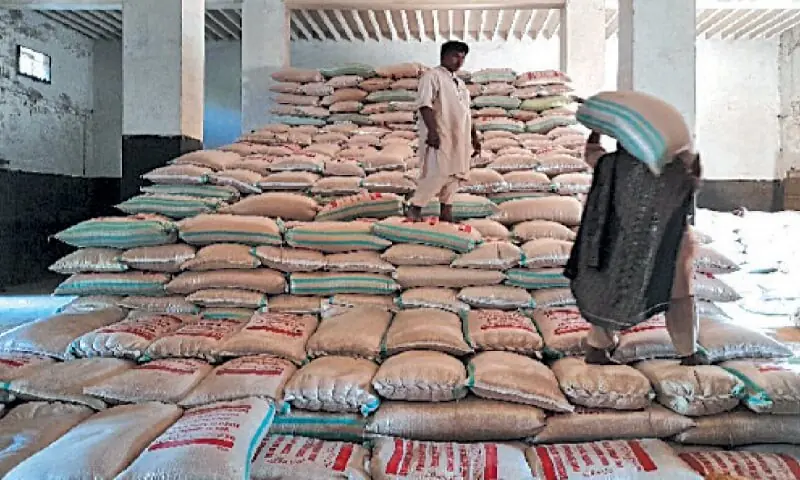
HYDERABAD: Five food inspectors have been sacked and many other officers suspended for misappropriating wheat stocks during the process of releasing the commodity to roller flour mills last month, it was officially stated.
Some of them have been arrested by the Anti-Corruption Establishment (ACE), Sindh Chief Secretary Asif Hyder Shah disclosed on Monday.
Disciplinary and criminal proceedings were initiated against the five food officials during the ongoing inquiry into misappropriation of huge wheat stocks and releasing of subsidised wheat to non-functional flour mills last month.
Show-cause notices have been issued to many others as well for causing nearly Rs480m loss to the provincial kitty, by issuing wheat to non-functional flour mills, according to Sindh Food Secretary Ghulam Abbas Naich.
Fourteen others suspended as inquiry into release of wheat to ‘closed mills’ continues
He said these mills subsequently sold the stocks in the open market, where the price was on a higher side, ie Rs11,500-11,600 per 100kg as against the official issue price of Rs8,000.
The government had notified the ex-mill rate of a 10kg flour bag as Rs104 and retail price as Rs107per kg for roller flour mills last week.
The food department had revised the issue price downwards from Rs9,500/100kg to Rs8,000/100kg as it has planned to procure wheat from farmers this year.
Shortly afterwards, however, reports of irregularities within the food department started surfacing. The department had reduced the rate only to encourage roller millers and chakki owners to lift wheat from its godowns instead of open market.
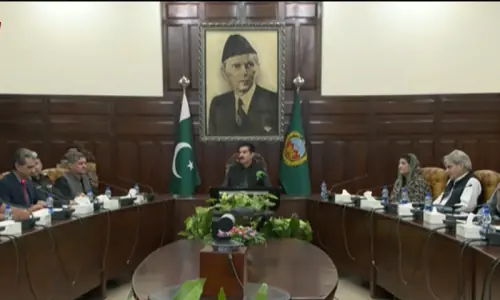
As the reports of irregularities and misappropriation of wheat continued unabated since late last year, Chief Minister Syed Murad Ali Shah ordered action against unscrupulous elements within the department and outside. The inquiry was supervised by Chief Secretary Asif Hyder Shah.
“Besides price regulation, the government launched internal accountability to dismantle corruption within the wheat procurement and distribution system … detailed inquiries were conducted into wheat stocks relating to multiple crop years, revealing serious cases of misappropriation, artificial shortages, gross negligence, and collusion by departmental officials,” the CS told Dawn on Monday and confirmed initiation of criminal proceedings against certain officials.
He disclosed that “five officials [food inspectors] have been dismissed / removed from service”. In addition, several other officers have been suspended and some of them arrested by the Anti-Corruption Establishment (ACE).
Recovery of hundreds of millions of rupees from the guilty has also been ordered.
Unlike other provinces, he claimed, Sindh government’s steady wheat supply stabilised atta prices as supply of subsidized wheat was restricted to verified, functional flour mills and atta chakkis, mandates on-site milling, and enforces strict monitoring to prevent diversion. He believed this targeted and controlled distribution has reduced speculative trading, ensured affordable atta availability, and produced positive market outcomes for vulnerable households.
CS Sindh said that the CM had directed the department and district administrations to maintain strict vigilance throughout Ramazan to ensure price stability.
According to him, essential food items would not be allowed to become instruments of profiteering, especially during sacred and sensitive periods like the holy month of Ramazan.
Subsidised wheat worth Rs478,923,256 only supplied in the name of nonfunctional flour mills from food godown was sold in open market causing a loss of millions of rupees to the provincial kitty.
These five food inspectors removed from service are Bashir Ahmed Kandhar, Dawan Ali Shah, Rahimdad Jakhrani, Jam Rafi Raza and Shahdad Sangi. They were found to have misappropriated wheat stocks from Jan 1 to 31, according to an official information.
Fourteen other officials have been suspended on the same account. They included deputy directors Nasrullah Chandio and Abdul Waseem Jamali of Mirpurkhas and Larkana districts; food supervisors, and additional and assistant district food controllers.
Published in Dawn, February 3rd, 2026