0
0
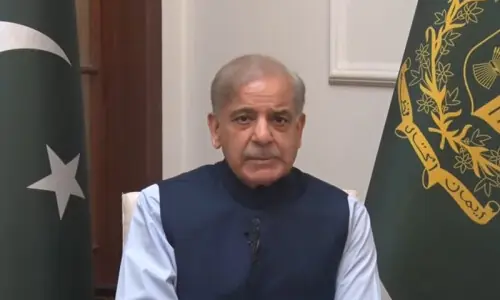
IN his address at the University of Haripur recently, Prime Minister Shehbaz Sharif made important albeit familiar remarks of how national progress could only be realised if equal opportunities and upliftment were ensured for all regions in the country. It is a sentiment that resonates deeply with every Pakistani who is left behind in life because of the lack of both essential public services and economic opportunities in their respective cities and towns due to the state’s poor development choices. These regional inequalities — present in incomes, living standards, and development — have not only undermined national cohesion but also led disillusioned youth to resort to violence against the state in parts of the country. The Population Council’s District Vulnerability Index shows that “regional disparities are not accidental but an outcome of decades of skewed development policies and poor political priorities”. Not just that, the wide distribution of these inequalities across provinces, regions, cities and towns signifies the exclusion of a very large segment of the population from national development strategies.
The question is: can these deep structural disparities be tackled by the prime minister distributing laptops or his government sponsoring students for training or studying in China? Undoubtedly, such initiatives will improve the prospects of the recipients of these laptops and scholarships, and may even transform life for some. But they can hardly help overcome the challenge of uneven development, or of providing equal opportunities to those who exist on the margins of society. What PM Shehbaz Sharif described as “holistic development” demands a radical shift in the state’s priority of investing only in politically important regions or cities. Mr Sharif also described the country’s youth as the greatest national asset. This is a refrain we hear on almost a daily basis from one politician or the other. However, the real challenge has never been one of identifying the importance of youth; it has been one of converting the potential of this asset into productivity. This brings us back to the issue of regional disparities that is preventing our youth from realising their full potential. The country’s economic challenges do not stem from a lack of adequate resources but from how the state distributes them. The words spoken by the PM will remain hollow until the centre and provinces rehash their entire development paradigm.
Published in Dawn, December 21st, 2025