Dengue cases on decline but experts fear re-emergence of disease next year
PESHAWAR: With dip in temperature, cases of Dengue Haemorrhagic Fever have started to decline only to re-appear next year with same pattern that has continued for last 10 years in Khyber Pakhtunkhwa, according to experts.
“Every year, down trend in dengue infections starts in November and this year is no exception as the number of patients has started to decrease,” they said.
On Tuesday, the province recorded 23 fresh cases and three hospitalisations, which declined on Wednesday to eight cases and one admission. On Thursday, the number of infected people remained six with only one hospitalisation.
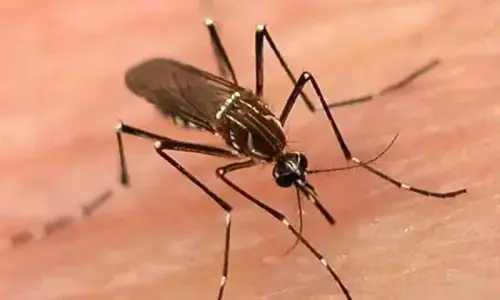
However, experts say that the vector-borne sickness vanishes when temperature gets down below 15 degree Celsius because mosquitoes, the carrier and transmitter of dengue cannot survive in low temperature and as result people stay safe from bites.
KP has recorded 6,116 infections in current year so far
According to them, Peshawar is known for hot summers and from May through September daily maximum temperatures often rises above 45 degree.
The province has been endemic for dengue fever for the past one decade and people experience the disease from April to November every year. The cases of dengue fever start appearing in March and April but rise slowly in June, July, August September and October and then begin to fall in November.
The provincial government devises ‘dengue action plan’ on annual basis under which all line departments are tasked to take measures for prevention of the disease. The plan, supervised by chief secretary and implemented through district administrations, seeks to coordinate efforts and eliminate breeding sites of mosquitoes but the situation with regard to control steps don’t see any improvement and the disease has become recurring public health issue in the province.
Experts say that the main causes of inability of government to do away with the disease are excessive power outages that force people to store water, mostly in unsafe ways that provide breeding spaces to mosquitoes. They add that officials of health department have found larvae in utensils almost in every house they visit in hotspot areas and this is a regular feature every year.
Secondly, the standing water pools, which are also one of the prime sources of mosquitoes’ production, are neither filled nor sprayed regularly to eliminate larvae. When the disease strikes the province in hot months and starts infecting and sending people to hospitals, relevant departments swing into action, notably health department that allocate isolates beds in hospitals to admit patients.
Infections and hospitalisation continue till November and stop when temperature becomes cool and mosquitoes disappear. Every year, government spends about Rs40 million on it with no durable solution in sight as experts know that the disease will re-emerge next year. “This vicious cycle is in progress,” they say.
This year, the province-wide tally of dengue cases is 6,116 so far with only four deaths, down from seven recorded in 2024.
Officials associated with anti-dengue efforts say that government should focus on prevention from the start of the year with priority of eliminating breeding spaces of mosquitoes to resolve the issue once for all. This year, the province imported cases in early months from Karachi and Punjab and the existence of mosquitoes exacerbated the issue and many districts became infected.
“Elimination of breeding sites of mosquitoes will not safeguard people from dengue but also from other vector-borne diseases, such as malaria and cutaneous leishmaniasis,” say health officials. Often the blame is laid on health department, which is only concerned with diagnostic and treatment aspects of the matter while other departments, which are required to put brakes on the causative agents, are ignored, they add.
Published in Dawn, November 28th, 2025