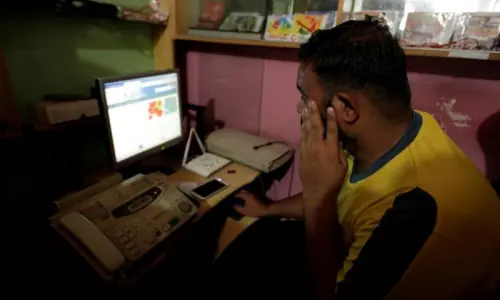
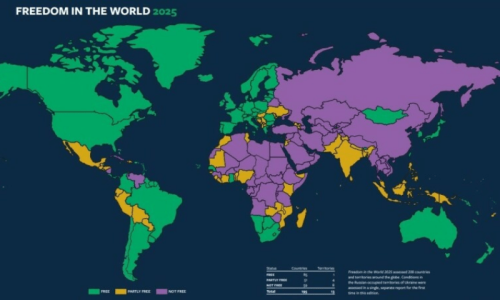
IT comes as no surprise but is nevertheless cause for embarrassment. Pakistan has been placed close to the bottom in Freedom House’s Freedom on the Net index, scoring only 27 out of 100. Ranked ‘not free’, the country accompanies China, Iran and Russia on the list known for internet curbs. Regional peers, meanwhile, performed better with India at 51, Sri Lanka at 53 and Bangladesh at 45. All three were declared ‘partly free’. The assessment comes at a time when Pakistan is experiencing major democratic curtailments such as the passage of the 27th Amendment, besides repeated internet shutdowns, including the recent weeklong outage in Balochistan.
According to the report, which gave Pakistan a score of 6/25 on ‘access’, 13/35 on ‘limits on content’, and 8/40 on ‘violations of user rights’, the country has seen a rapid decline over the past 15 years. In this period, like in other countries experiencing similar downward trends, the government imposed curbs on online activity in response to challenges to its rule. The country was ranked ‘not free’ in 2012 and not much seems to have changed since. Between June 2024 and May this year, repeated disruptions were reported across major communication platforms, including WhatsApp and Signal, often linked to new blocking and monitoring technologies. In November 2024, authorities restricted internet services across Islamabad during mass protests.
The pattern intensified this year with threats to block VPNs, mandatory registration requirements that sought user identification details, and amendments to Peca introduced in January. Rights groups warn that these changes contain vague language that can easily be used to suppress speech that is critical of the state. Such repressive actions have consequences. The report documents at least five death sentences issued for alleged online blasphemy during the coverage period. It also highlights the continuing influence of the establishment over electoral processes, media environments and policy decisions. These pressures create an atmosphere in which online and offline expression feel unsafe.
Heavy-handed restrictions reinforce the perception that the state prefers control and opacity over engagement and accountability. The passage of the 27th Amendment, criticised for weakening constitutional safeguards, adds to the sense that Pakistan’s democratic space is contracting. Elections alone cannot uphold democracy. They require an open public sphere in which citizens can speak, assemble and challenge authority.
When the physical and digital spheres contract simultaneously, the foundations of democratic life weaken. In a modern democracy, the internet must serve as a basic civic infrastructure rather than a tool of control. Transparent regulation, judicial oversight of shutdowns and the repeal of opaque cyber law provisions are non-negotiable. Pakistan can still walk back and reverse this negative trajectory. It remains to be seen whether the political will to do so exists.
Published in Dawn, November 16th, 2025