ENVIRONMENT: CAN OUR CITIES BREATHE AGAIN?


For much of the 19th and 20th centuries, London and Paris were amongst the most polluted cities in the world. The “Great Smog” of 1952 blanketed London in a sulphurous haze that killed several thousands of people within days. The River Thames, once central to the city’s life, had become so biologically dead by the 1950s that scientists described it as incapable of supporting any aquatic species.
Across the English Channel, in Paris, the Seine was no different. The river was effectively an open sewer, carrying industrial waste and untreated effluent, forcing a nationwide swimming ban that lasted nearly a century. Both cities became emblematic of the costs of industrial modernity, where economic progress was built on the steady suffocation of air and water.
A BLUEPRINT FOR REVIVAL
However, over the course of a few decades, both cities have achieved an extraordinary reversal of their ecological decline. Today, the Thames supports over 100 species of fish. The Seine, once declared ecologically irreparable, hosted open-water swimmers during the 2024 Olympics. London now brandishes the title of world’s largest urban forest, with more trees than people, estimated at over 8.4 million. Paris has reconfigured its riverbanks into green corridors and pedestrian zones.
These recoveries are the outcome of decades of deliberate urban reform, environmental regulation and a civic understanding that public health and ecological well-being are inseparable.
London and Paris were once as choked and polluted as Pakistan’s cities are today. Their remarkable recovery offers a clear blueprint…
What these cities demonstrate is that environmental collapse is not irreversible. It can be slowed, even reversed, when societies recognise that the urban and the ecological are not opposing realms. The transformation of London’s air and Paris’ rivers began with a shift in how citizens saw nature — not as an externality to be managed, but rather a broader system that must be integrated with the city’s design. That shift, cultural before it was technical, remains absent from Pakistan’s urban experience.
DESIGNED FOR DISREGARD
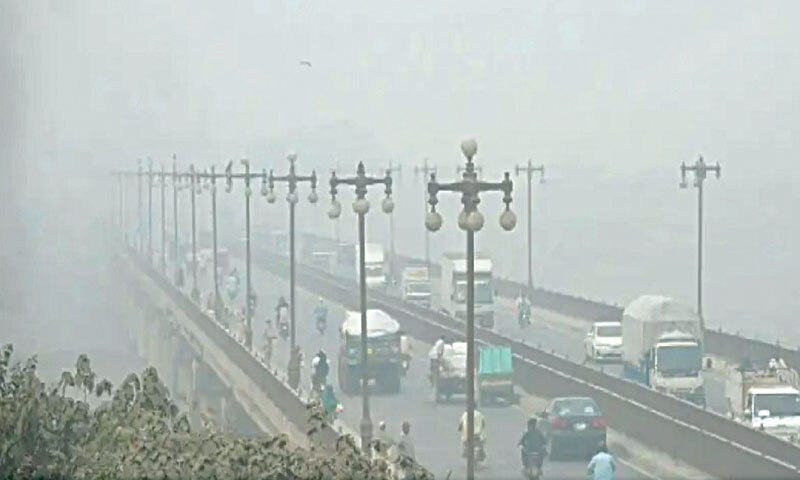
In Pakistan, the smog that settles over cities each winter has ceased to shock citizens. It has become a seasonal condition, which is endured, discussed and then forgotten, precisely because it mirrors the design of the cities themselves.
Lahore’s air is unbreathable for the same reason the Ravi runs dry: the environment has been systematically engineered out of the urban imagination. The haze that hangs above the cities each year is reflective of a society that no longer recognises its dependence on living systems. The smog, then, is the most visible expression of how urban life in Pakistan has detached itself from the natural world that once sustained it.
The disconnect extends beyond the air. In most Pakistani cities, nature appears only when it disrupts. It enters urban consciousness through crises; when rivers overflow or when the heat becomes unbearable. Outside these moments, it remains absent, pushed to the peripheries of both space and thought.
Green spaces are treated as ornamental rather than essential, while rivers are seen as dumping sites. The city’s relationship with its environment has been reduced to management, not coexistence.
THE COST OF A STERILE CITY
The consequences of this disconnection are not only environmental. They shape how people inhabit and experience urban life. In cities increasingly defined by enclosure, congestion and traffic, the absence of accessible green space translates into a continuous strain.
Studies in public health show that contact with nature — trees, open spaces, clean air — lowers stress, improves attention and strengthens community bonds. In Pakistan, these benefits are largely absent. Most children grow up without safe parks to play in, without the sensory familiarity of trees or soil, and without a sense that the natural world exists within their reach. What emerges is a generation for whom the environment is an abstraction, encountered only through crisis or catastrophe.
This distance alters civic behaviour as well. When nature becomes invisible, so does care for it. The ability to empathise with living systems — rivers, animals, air — diminishes when those systems are reduced to hazards or background noise. The city’s emotional ecology thins alongside its physical one. What remains is a model of urban life that breeds fatigue rather than belonging, where public space feels contested and the idea of collective stewardship has little meaning.
THE MECHANICS OF RECONNECTION
Reconnection begins with reimagining what a city is for. If Pakistan’s cities have treated nature as excess, they can just as well choose to fold it back into their design. The recoveries of Paris and London did not emerge from technological breakthroughs alone; they began with the recognition that ecological restoration is also social renewal.
When London began expanding its tree cover, it was not merely planting oxygen-producing units, it was cultivating a public relationship with nature, one visible in everyday life. When Paris restored the Seine, it was reclaiming the river as a shared space rather than a utility. Both cities learned that environmental revival is not separate from civic imagination.
The central lesson is that ecological repair is cumulative. It starts small: a schoolyard transformed into a micro-garden, a vacant plot rewilded, a riverside cleaned by volunteers. These gestures carry weight because they make nature visible again within the urban frame. They also teach recognition and ownership of the natural environment.
In several cities abroad, students now participate in mapping local biodiversity or restoring small habitats on their school grounds, simple exercises that turn environmental awareness into lived experience. Such acts, multiplied across neighbourhoods, are essential in re-establishing the connection that industrial urbanism has severed.
A SHIFT IN VISION
Pakistan’s cities need not replicate these models to learn from them. The principle is transferable even when the context differs, ie to reintroduce life into spaces that have forgotten it. Rewilding portions of Karachi’s coastline or planting trees along inner-city streets must not be aesthetic gestures. They signal a recognition that the urban and the natural are intertwined, that the health of one depends on the survival of the other.
The histories of Paris and London reveal that the recovery of ecological life in cities is inseparable from the recovery of imagination. Clean rivers and breathable air were not technical outcomes alone; they reflected a public decision to live differently, by replacing extraction with stewardship and indifference with care. That same recognition remains elusive in Pakistan’s urban vision, where progress continues to be defined by expansion rather than repair.
To move beyond this requires more than municipal reform. It calls for a cultural reorientation that begins in classrooms, neighbourhoods and households, for a generation that grows up seeing the city as an ecosystem rather than a machine. The future of Pakistan’s urban centres will depend on whether they can rediscover this reciprocity. Without it, development will remain a narrow pursuit, efficient, but ecologically and emotionally barren.
Cities that learn to coexist with their environments also rediscover a sense of belonging. They begin to breathe differently. Pakistan’s cities still have that chance: to see their rivers not as drains, their air not as hazard and their trees not as obstructions but as part of a shared inheritance.
The question, as smog descends each winter, is whether we are willing to imagine that recovery and whether we can look beyond the grey, and remember what it means for a city to be alive.
The writer focuses on environmental issues and is currently the coordinator for policy and programme development at WWF-Pakistan. He can be contacted at sheheryarkhan95@gmail.com
Published in Dawn, EOS, October 26th, 2025