LAHORE: In response to Governor of Khyber Pakhtunkhwa, Faisal Karim Kundi’s complaint that wheat supply from Punjab has been suspended, the Punjab officials tasked with maintaining supplies of commodities and regulating their prices deny that there is any ban on inter-province movement of grain.
Speaking to the media after a ceremony to distribute checks to flood victims in Dera Ismail Khan, the KP governor regretted the reports that Punjab has banned movement of wheat to other provinces as flour millers from KP, Punjab and Sindh are protesting against the move.
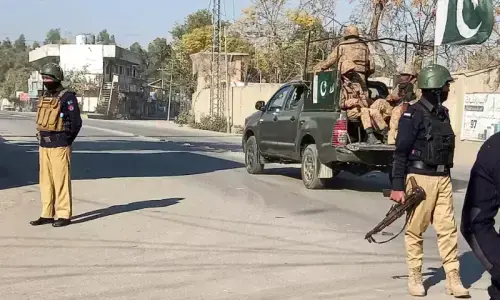
Punjab officials deny that they are restricting inter-province movement of wheat. However, they do admit that they have set up check-posts on inter-province roads to curb ‘unusual’ and ‘suspicious’ grain movement.
The government has also reportedly banned use of wheat in the poultry feed mills as Pakistan Poultry Association chairman Abdul Basit has demanded that the government allow duty-free import of maize to save the industry from the feed crisis caused by the use of grain by the feed mills.
Officials say check points set up to curb ‘unusual’ and ‘suspicious’ movement of the staple
The Pakistan Flour Mills Association (PFMA) has already decried the provincial government’s “unannounced” ban on wheat and flour movement, terming the move unconstitutional and against the policy of deregulation.
According to PFMA Punjab Chairman Riazullah Khan, check posts have been set up at exit points of the province to block the transportation of wheat and flour to other regions. He termed these measures against the spirit of deregulation, under which the trade and movement of wheat were to remain unrestricted.
Khan said that wheat stocks in the country were sufficient to meet food requirements and warned that unnecessary restrictions often become the root cause of crises.
He said that provinces including Khyber Pakhtunkhwa, Balochistan, and parts of Sindh rely heavily on wheat supplies from Punjab and the disruption was creating a sense of deprivation and unrest among smaller provinces, while also threatening the financial stability of the flour milling industry, which has invested billions of rupees nationwide.
Published in Dawn, September 8th, 2025