Anti-migrant venom finds fuel in Northern Ireland sectarian divide


 0
0
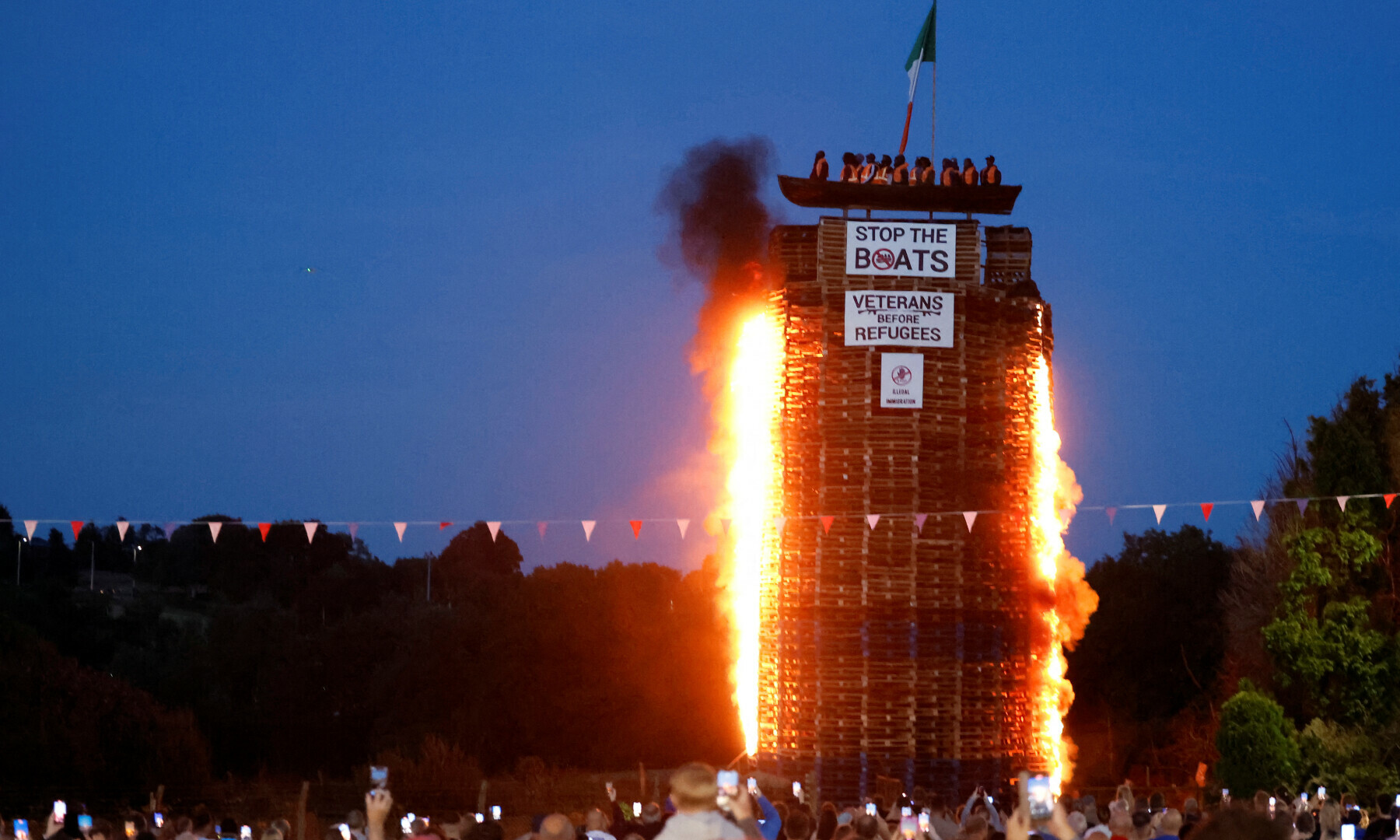
BELFAST: An effigy of life jacket-wearing migrants and their boat burned atop a huge bonfire in Northern Ireland, a potent example of how the province’s deep sectarian divide has fanned and mixed with anti-immigrant hatred.
Researchers pointed to fundamental shifts in the power once wielded by pro-UK Protestant loyalists, who have in recent years echoed some of the right-wing stances heard elsewhere in Europe.
The migrant effigy had been hoisted atop a stories-tall stack of wooden pallets, one of hundreds of pyres lit each year in the run-up to July 12, a historically Protestant celebration. But many Catholics see the fires and accompanying parades, which celebrate Protestant king William of Orange’s victory over his Catholic rival in 1690, as a provocation that sometimes triggers violence.
Despite an outcry over the migrant effigy — which bore a sign saying “Veterans before refugees” — organisers were defiant and hundreds watched the pyre burn on Thursday in the village of Moygashel.
“Wherever we have to place a bonfire, we will,” said a man identified as a “community representative” in a video published to social media by Turning Point UK, a group that promotes right-wing causes.
“Whatever we choose to put atop the bonfire, we will. Nobody, but nobody will dictate otherwise,” he added, facing away from the camera but toward the pyre also topped with an Irish flag.
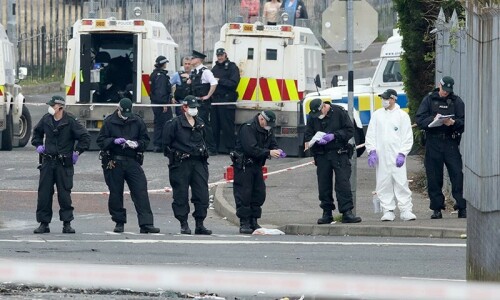
The bonfire went up in flames roughly a month after anti-immigrant attacks and unrest broke out just an hour’s drive away in Ballymena and other towns, while rioters struck immigrant areas in Belfast in August 2024. In both instances the violence took place in loyalist areas, which experts said was not a coincidence.
Loyalists ran Northern Ireland until the 1970s, said Dominic Bryan, an anthropology professor at Queen’s University Belfast, noting the situation has changed dramatically since.
A 2021 census found that Catholics for the first time outnumbered Protestants in Northern Ireland — 45.7 per cent to 43.48pc of the province’s 1.9 million people.
“People from a working class loyalist position have seen themselves lose power and lose space and lose people and they have become effectively a minority,” he added.
To deal with their change in fortunes, they have adopted anti-immigrant arguments to a degree, Bryan noted. Loyalists have “become more of a minority position and in some ways that has made some of their demonstrations feel even the more extreme,” he said.
‘Far more dangerous’
Since 2000 — just a few years after the 1998 Good Friday accords ended most of the Troubles violence — the province’s foreign-born population has increased significantly, census figures showed. The figure hovered well below two percent in the late 1990s, but by 2021 had climbed to 6.5pc, which is still far less than the 16pc average for the United Kingdom.
Lurking in the background are the loyalist groups who battled Republican fighters over decades of bloody sectarian conflict during the so-called Troubles. Daniel Holder, director of human right group Committee on the Administration of Justice, said some of the groups are still intact, despite the peace process.
“There is a notable difference in the Northern Ireland context that makes things far more dangerous,” he added. “That notable difference relates to the clear involvement of elements of loyalist paramilitary organisations and their members within racist acts of violence and intimidation in their areas of control.”
Published in Dawn, July 13th, 2025