Apparently, there seems to be more self-assertion by provinces in the country’s public policies, as indicated by record high annual development plans, while linking the provincial budget surpluses for fiscal consolidation to actual and not projected federal fiscal transfers.
The existing centralised framework of fiscal federalism has been put under some pressure. The PML-N-ruled Punjab government has allocated a Rs740 billion estimated provincial surplus for FY26, amid an understanding reached between the federal government and the International Monetary Fund.
The provincial finance minister, however, clarified, “It is pertinent to mention that the achievement of this provincial surplus is directly related to FBR’s [Federal Board of Revenue] revenue target.”
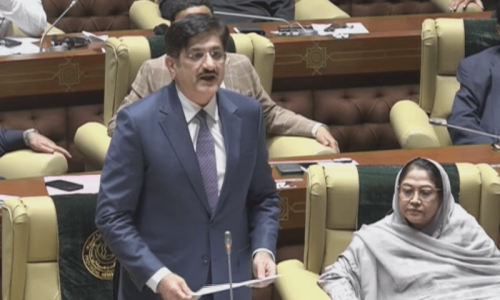
Sindh, ruled by the PPP (PML-N coalition partner at the centre), has in its budget projected a provincial deficit of Rs38bn next fiscal year against the federal budget’s proposed Sindh surplus of Rs298bn. In addition, the Sindh deficit is premised on the FBR meeting its budgeted target of revenue collection next year, a target that has invariably fallen short nearly every year, with the shortfall in the outgoing year acknowledged at around Rs1 trillion. The Sindh budget noted that its share in 2024-25 was lower than the federal budget had estimated by Rs104bn.
Similarly, Khyber Pakhtunkhwa (KP) has projected a budget surplus of Rs157bn that is lower by Rs15.8bn from what was budgeted by the federal government, spelling out various reasons for the cut, including specific fiscal reasons associated with the lower taxes by the FBR than budgeted, leading to lower than budgeted total transfers to KP. The province generated more than Rs100bn during the current year.
Interestingly, the most impoverished province, Balochistan, raised its budget surplus to Rs51.5b from Rs36.5b after reviewing its budget allocations presented in the provincial assembly, provincial Finance Minister Shoaib Nosherwani told a news conference on June 18.
Despite asserting greater agency in their respective budgets for FY26, Provinces continue to face deep-rooted challenges in taxation, local governance, and agricultural reform
The federal government’s target to reduce the budget deficit to 3.9 per cent of the GDP next year depends on the provinces collectively delivering a cash surplus of Rs1.46tr.
On the other hand, the provinces face serious challenges, including realising potential revenues from agricultural income tax badly needed for investment in boosting the shattered farm economy, removing disparity in socio-economic development between various regions within each province and improving governance for effective service delivery for the benefit of the common citizen by democratically empowering the third tier of government.
The provinces account for 30pc of the national expenditure but finance only 17pc of this expenditure, says Dr Hafiz A Pasha, emphasising that the time has come for much greater focus on their finances.
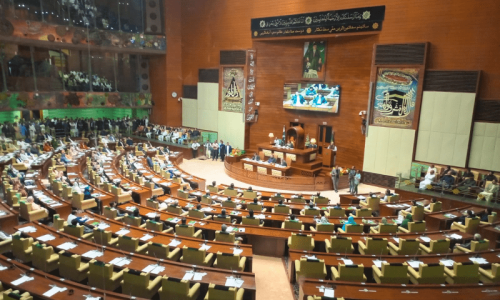
In the general debate on next year’s federal budget, as witnessed every year, the National Assembly once again echoed with the familiar demand recently for creating new provinces. PML-N Federal Minister for Religious Affairs Sardar Muhammad Yousuf demanded carving out the Hazara province in Khyber Pakhtunkhwa, whereas PPP’s Syed Murtaza Mahmud called for creating a South Punjab province.
They argued that more provinces were needed to remove a sense of deprivation among the people of the deprived regions, to resolve public issues and to meet people’s needs. PPP’s Abdul Qadir Gilani complained that only three development schemes had been announced for southern Punjab, whereas some 40 plans had been announced for Lahore and central Punjab.
The uplift of agriculture is another priority the provinces need to address. The plight of the farm economy is indicated by the fact that on June 18, the federal government reportedly decided to import 750,000 metric tonnes of sugar after exporting almost the same quantity. Total disbursement of agricultural credit remained at 63.8pc of the target in FY24 and 54.3pc of the projected amount in FY25.
Finance Minister Muhammad Aurangzeb informed the National Assembly on June 23 that the government has decided to withdraw sales tax and duty exemptions on imported cotton and yarn to support local cotton farmers and revive the domestic textile industry. Agriculture plays a pivotal role in economic resilience and rural livelihoods, contributing 23.5pc to national GDP and employing 37pc of the labour force.
Punjab has set up a task force to present actionable recommendations to revamp the province’s agriculture and achieve a targeted growth of 4pc in the coming fiscal year.
Investment funds to modernise and boost agricultural production can best be raised by realising the potential of tax revenue from the proposed levy of income tax on farm incomes. But experts fear potential agricultural income tax revenue will be difficult to collect owing to resistance by landed aristocracy.
The federal government’s target to reduce the budget deficit to 3.9pc of the GDP next year depends on the provinces collectively delivering a cash surplus of Rs1.46tr
Similarly, no move has been made by any province to empower the elected representatives of local governments as constitutionally mandated for improving governance and effective service delivery that benefits common citizens also.
PML-N sources confirm the proposed final draft of the Local Government Act 2025 is expected to be passed in the provincial assembly after the budget session. They say the new system will eliminate direct elections for union council chairmen and vice-chairmen. Instead, elected councillors will select the top representatives. Now, local governments are managed by provincial governments through civil servants.
Published in Dawn, The Business and Finance Weekly, June 30th, 2025