ISLAMABAD: Economic experts have raised alarms over the implications of the budget saying it ‘focuses on meeting the IMF conditions for the next tranche’ and is full of contradictions and missing targets.
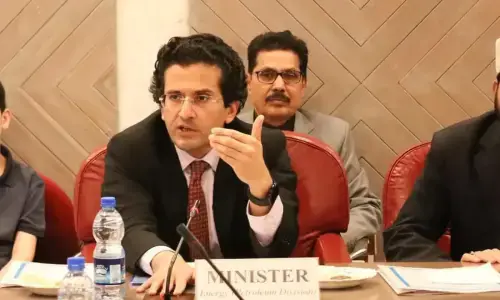
“The measures announced in the federal budget would hit economic stability of the country, debt repayments, climate goals and social protection,” the experts told a media briefing arranged by the Sustainable Development Policy Institute (SDPI).
SDPI Executive Director Dr Abid Qaiyum Suleri highlighted Pakistan’s pressing fiscal constraints, saying the government has only Rs11 trillion at its disposal amid massive debt repayments and increasing defence needs.
“India’s $80 billion defence budget dwarfs Pakistan’s $7 billion. The government is compelled to ramp up defence spending, especially after recent tensions with India, but this comes at the cost of development expenditure,” he warned.
Dr Suleri said the budget’s regressive taxation structure, particularly the 18 per cent General Sales Tax (GST) on solar panels, is a “misstep” that undermines Pakistan’s climate ambitions and nationally determined contributions.
“The allocation for dams remains ‘business as usual’, even as the Indus Waters Treaty stands suspended. Water should be treated with the same urgency as defence,” he suggested.
Dr Sajid Amin Javed, Deputy Executive Director SDPI, pointed out that the budget was designed to meet short-term IMF targets but lacked long-term structural reforms.
With Rs600 billion in new taxes, mostly indirect, and inflation expected to stay high, he warned that the budget will squeeze the salaried class while offering tax breaks to sectors like real estate and large retailers.
SDPI Deputy Executive Director Dr Shafqat Munir acknowledged the tough economic conditions under which the budget was framed, stating “every government tries to cut the cloth according to the size”.
He welcomed the six per cent budget allocation for climate-related commitments and the 8.6pc of development funding directed at climate adaptation.
However, he pointed out the contradictions that “imposing 18pc GST on solar panels while introducing a carbon levy of Rs2.5 per litre sends mixed signals.” The budget document makes no mention of measures to uplift wages or protections for the over 75 million-strong industrial labour force, he said.
Dr Fareeha Armughan, SDPI research fellow, said less than 1pc of the budget is allocated to education with labour issues conspicuously absent.
SDPI research fellow Dr Khalid Waleed expressed concern over a 27pc cut to Wapda’s hydel project budget and the declining subsidies, especially a 57pc cut for Balochistan’s solar tubewells.
Published in Dawn, June 16th, 2025