Manila Bay’s social, environmental ruin
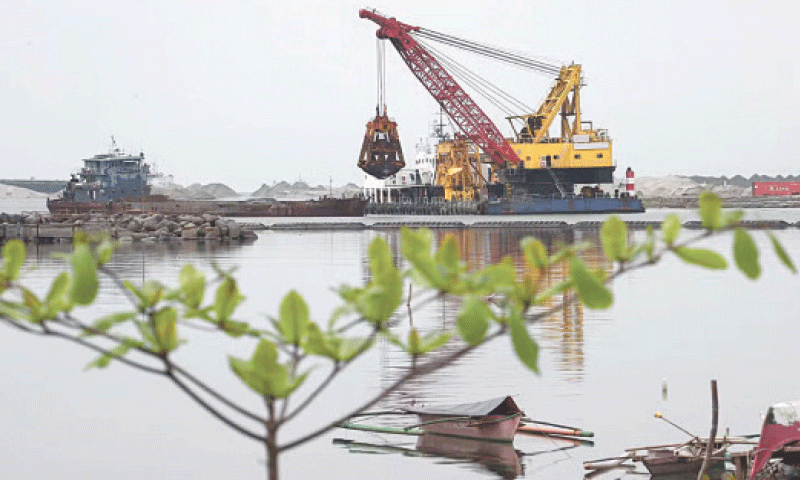

THE good news is that Manila Bay is “alive and vibrant,” according to a new scientific study. However, the same study said reclamation projects the size of two Metro Manila cities threaten its life and sustainability.
The study released by the Department of Environment and Natural Resources (DENR) warned that these projects could change the natural flow of water currents in the bay. This would create a bottleneck in the flow of water, cause huge floods in nearby cities, and could become breeding grounds for bacteria since it will take time for the floodwaters to recede. This degradation would then kill the flora and fauna —51 coral genera and 167 fish species — in the bay’s ecosystem.
Another crucial impact is the loss of mangroves that serve as natural defence against typhoons, storm surges and coastal erosion.
Twenty-one projects are expected to rise from around 6,100 hectares of reclaimed land, or about the combined size of Manila and Marikina. Two of these projects are ongoing, 12 have been approved, and seven are new proposals.
In 2023, President Marcos ordered the suspension of the projects. But per reports, at least one — the Pasay Harbor City reclamation — has been allowed to continue after securing necessary permits and approval from the Philippine Reclamation Authority (PRA). It was not clear what the other ongoing project is.
These findings are not necessarily new. As early as 2019, environmentalists have warned against the reclamation projects, saying that they could destroy the bay’s rich biodiversity and endanger nearby communities. Earlier studies have cited flooding, storm surges, land subsidence, and liquefaction as among the dangers that those who live in the coastal area are likely to face. They also warned that any reclamation done in the bay could block alternative rescue routes should a massive earthquake hit Metro Manila.
The health of Manila Bay communities is also at risk, with scientists detecting pathogenic bacteria, such as Enterobacteriaceae and Stenotrophomonas, and 11 kinds of metals, including highly toxic cadmium and lead, in the water.
Despite this, the DENR study found that, from April to October 2024, Manila Bay fisherfolk caught an average of two kilograms to four kg of fish per hour, a much better yield than the average of one kg to two kg per hour in other fishing grounds in Masinloc, Siargao, Lingayen, Ragay, and San Miguel Bay.
Still, the reclamation has already displaced thousands of fisherfolk families in Bulacan and Cavite, and should it continue, more will face the loss of fishing grounds. In addition, the bay’s existing conditions could cause food poisoning among those consuming shellfish from there.
This only adds to the sea of challenges that Filipino fisherfolk already face, from dwindling catch to access to traditional fishing grounds, particularly in the West Philippine Sea. All the more that authorities should help protect their rights and livelihood because this also means protecting the country’s food safety and security.
Published in Dawn, May 5th, 2025