The World Bank has approved a sum of $102 million in financing for a project that aims to enhance access to microcredit and support the resilience of the microfinance sector and its borrowers, particularly in the face of climate-related shocks.
The financing under the ‘Resilient and Accessible Microfinance (RAM) project’, was approved by the World Bank board of directors on Tuesday, according to a news release issued by the World Bank’s Resident Mission in Islamabad.
In February, a World Bank delegation visited the country to touch base on Pakistan’s economic reforms, including the privatisation agenda as a follow-up to the Country Framework Programme (CPF) finalised in January with indicative assistance of about $20 billion.
“Microfinance is a critical tool for supporting the livelihoods of vulnerable populations in Pakistan,” said Najy Benhassine, World Bank country director for Pakistan.
“This project will help strengthen the resilience of the microfinance sector, particularly in the face of growing climate risks, ensuring that the sector can continue to provide essential financial services to those who need them most, especially in rural areas.
“This project is part of our broader commitment to promoting financial inclusion in Pakistan and to increasing resilience to climate change, as spelled out in our new 10-year Country Partnership Framework,” he added.
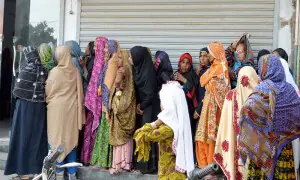
According to the statement, the project will benefit nearly 1.89m people, including more than 1m women and over 350,000 youth, and especially those in vulnerable and low-income rural areas.
Through the provision of financial resources to microfinance institutions, the project will ensure that institutions can “continue to provide services even during climate-induced financial pressures”.
“The project will provide increased access to microcredit for individuals and small businesses, providing them ‘recovery loans’ to help them gain financial stability,” the statement read.
Namoos Zaheer, task team leader for the project, said the project had been designed based on lessons learned from the devastating floods of 2022 and is a significant step to bolster financial inclusion in Pakistan,.
“It will enhance economic empowerment and resilience of those at the bottom of the economic pyramid, particularly women, small farmers, and families in rural areas who are more prone to climate shocks.”
The project will be implemented by the Ministry of Finance through the State Bank of Pakistan. It will be first in a series of interventions to support the sector, to be designed and phased in close partnership with other international financial institutions.
Key components of the project include the establishment of a Climate Risk Fund, innovative use of agrotechnology solutions, capacity building for microfinance institutions, and the development of risk management frameworks to enhance the sector’s resilience.
The project is co-financed by a $23m grant from the Global Shield Financing Facility (GSFF), which is a multi-donor trust fund hosted by the World Bank Group and financed by the Governments of Canada, Germany, Japan, Luxembourg, and the United Kingdom.
The GSFF supports poor and vulnerable countries and people with increased access to financial protection against climate shocks, disasters, and crises.
Pakistan has been a member of the World Bank since 1950. So far, the Bank has provided $48.3bn in assistance to the country.
The Bank’s programme in Pakistan is governed by a Country Partnership Strategy with four priority areas of engagement: energy, private sector development, inclusion, and service delivery.
The current portfolio for IBRD, IFC and MIGA in Pakistan include 106 projects and a total commitment of $17bn.