0
0

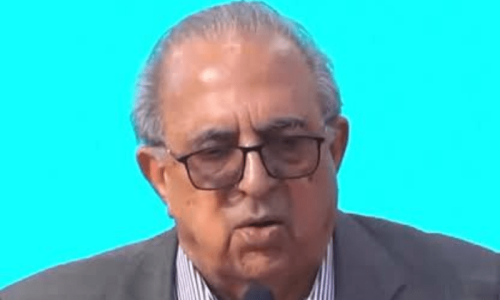
ISLAMABAD: Senior representative of the Pakistan Bar Council (PBC) Akhtar Hussain on Monday became the first casualty in the wake of controversies related to the judicial appointments when he resigned from the prestigious slot of the Judicial Commission of Pakistan (JCP).
“I am unable to continue and hereby resign as being member of JCP,” says a one-page resignation letter addressed to Chief Justice of Pakistan (CJP) Yahya Afridi, who is also JCP chairman.
The resignation has come against the backdrop of recent Lahore High Court and Islamabad High Court bar association elections, which certain factions of the legal fraternity construe as an unequivocal message to the powers that be, the executive, and the judiciary that the impugned 26th Amendment undermines the judiciary’s independence and the rule of law.
In his resignation letter, Akhtar Hussain recalled that the PBC had nominated him as JCP member thrice. He added that he continued to discharge his responsibilities to the best of his abilities, but “on present controversies with regard to judicial appointments, I am unable to continue and, hereby, resign as being member of JCP.”
A copy of the resignation was dispatched to the PBC chairman, who happens to be the Attorney General for Pakistan, so that the PBC makes new nomination as provided under the Constitution.
“Sir I pay regards to all the members of JCP and assure you and all the members that I will continue to make all efforts for development and independence of judicial and democratic institutions,” the letter stated.
Meanwhile, a meeting of the JCP has been summoned for Feb 26 to choose a new member. It is expected that former vice chairman of the PBC and ex-president of the Supreme Court Bar Association (SCBA) Mohammad Ahsan Bhoon would replace Mr Hussain.
Mr Hussain had attended a number of JCP meetings to elevate 36 judges to different high courts and seven judges to the Supreme Court under the 26th Amendment.
He told Dawn that he believed the appointments of judges in the superior judiciary should not be based on a majority vote, rather a procedure for such appointments should be developed.
He was of the opinion that the transfer of Justice Sarfraz Dogar from LHC to the IHC under Article 200 could be digested, but his subsequent appointment as acting chief justice of the IHC by ignoring other senior judges was unacceptable.
Mr Hussain had given a dissenting opinion on the issue of judge’s seniority in IHC in addition to the dissension on the issue of appointing Justice Shujaat Ali Khan and Justice Ali Baqar Najafi from the LHC to the SC. In the previous JCP meeting, no judge could be brought to the SC from the LHC due to lack of a majority vote on the issue of appointing Justice Khan and Justice Najafi.
Published in Dawn, February 25th, 2025