Economy, not security, to drive country: Shahid Khaqan Abbasi

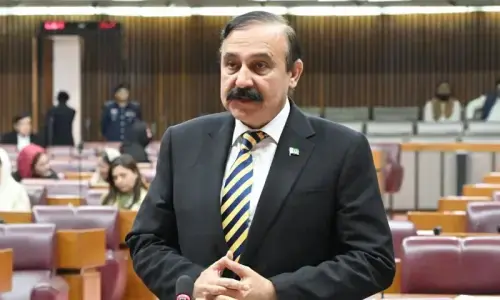
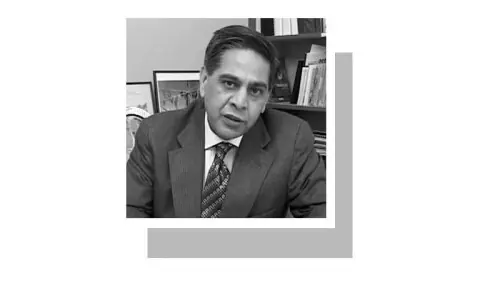
LAHORE: Former prime minister Shahid Khaqan Abbasi says Pakistan cannot grow economically unless it becomes a fully functional democracy.
Speaking at a session titled “Can Economic Progress and Democracy Coexist?” organised by the Pakistan Institute of Legislative Development and Transparency (Pildat) on Thursday, he said the countries that had prospered while being autocracies were not similar to Pakistan in any aspect as they had long histories of homogeneity and social discipline.
Other speakers included former caretaker federal minister for privatisation Fawad Hasan Fawad, former federal minister for commerce Khurram Dastgir, and Interloop Ltd chief marketing officer Faryal Sadiq.
“Our autocrats want to be democrats and our democrats want to be autocrats,” the ex-premier said, reflecting on the nation’s political conundrum.
He explained why Pakistan’s autocratic regimes were remembered in the popular narrative as economically successful, saying that they all operated in an aid-driven environment, which was the real reason behind the growth. He stressed that geopolitics no longer allowed for aid-led growth, adding that economy, not security, would drive this country and its politics now.
Mr Fawad stressed that dictatorships had not achieved human development even if they had achieved economic growth. He called for transforming the state’s functioning to prioritise efficiency, transparency and accountability.
While emphasising that privatisation and deregulation were necessary for business, he argued that this approach could not be adopted in the areas of the state’s essential functions — health, education and skills development.
Mr Fawad said privatisation in Pakistan had often been mishandled due to a lack of transparency and accountability, highlighting PIA and Pakistan Railways that suffered because they operated in an environment of mismanagement and limited oversight.
Mr Dastgir reflected on Pakistan’s ongoing economic challenges and asserted that his party’s government had solved many economic hurdles when it left power in 2013, including terrorism and energy shortages.
He asserted that the success of democratic governments hinged on transparency, accountability and active stakeholder engagement.
Ms Faryal Sadiq argued that the issue was not democracy but the lack of consistency in policies and political instability, which hindered economic activity. She added that the private sector’s potential to drive further growth depended on consistent policies and sound governance.
She underscored the importance of stability and consensus-driven policies for businesses to prosper.
Earlier, Pildat President Ahmed Bilal Mehboob opened the session, highlighting the lack of attention given to economic issues in the political discourse, which was often dominated by abstract politics.
Published in Dawn, December 20th, 2024