PESHAWAR: Pakhtunkhwa Energy Development Organisation (Pedo) and Bank of Khyber have signed memorandums of understanding to launch two mega projects worth Rs55 billion to solarise all public buildings and provide solar units to low-income households.
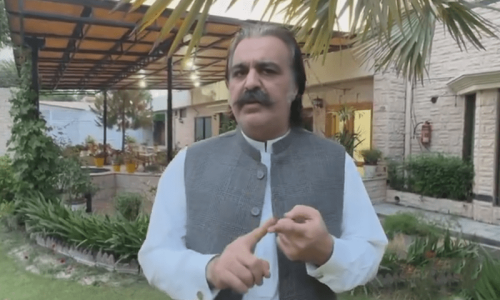
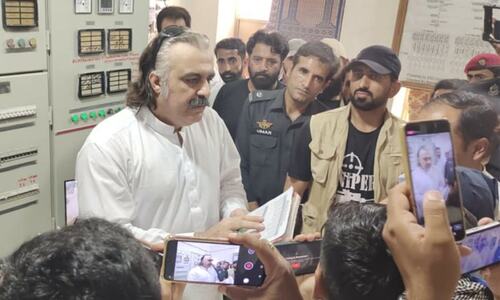
The MoUs signing ceremony was held at the Chief Minister’s House. Chief Minister Ali Amin Khan Gandapur was also present on the occasion.
The project, according to a statement issued from the chief minister’s secretariat on Saturday, is aimed at ending the electricity load-shedding in the province.
One of the projects envisages solarising public sector hospitals, universities, colleges, schools, police stations, prisons, tube wells, streetlights and other government offices, the statement said, adding that the estimated cost of the project was Rs20 billion.
It said initially, some 13,000 public buildings have been identified for conversion to solar energy and their solarisation will be carried out at an estimated cost of Rs15 billion.
The statement said a total of 130,000 low-income households would be provided solar units.
It added that 65,000 households would be provided solar units free of cost while the remaining 65,000 houses would get solar panels with 50 per cent contribution by the government and 50 per cent by the beneficiaries.
“The overall estimated cost of the project is Rs35 billion. Under the project, some 100,000 houses in the settled districts and 30,000 houses in merged districts will be converted to solar energy,” the statement said.
Speaking at the ceremony, Gandapur said the provincial government was making huge investments in the energy sector to ensure availability of uninterrupted power supply to citizens and enhance the province’s revenue.
He added that areas with higher power losses would be prioritised for the project.
“Providing solar units will help alleviate the burden of electricity bills on citizens and ensure uninterrupted power supply to them,” the statement quoted CM Gandapur as saying. He added solarisation of government buildings would result in significant savings on account of electricity bills.
“The newly initiated solarisation schemes are of national importance, and their implementation will reduce the burden on the national grid as well,” he said.
Published in Dawn, November 10th, 2024