116 people killed in stampede at religious event in India’s Uttar Pradesh



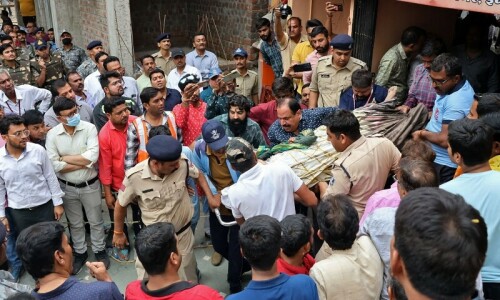
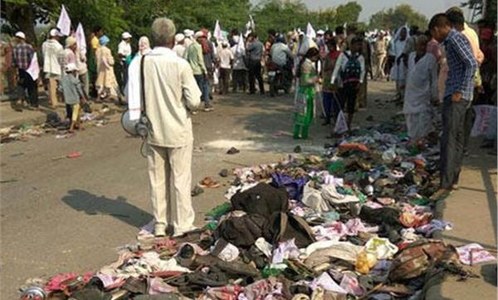
Nearly 116 people were crushed to death at a Hindu religious gathering in northern India on Tuesday, government officials said, the worst such tragedy in more than a decade.
A large crowd had gathered near the city of Hathras for a sermon by a popular preacher but a fierce dust storm sparked panic as people were leaving.
Many were crushed or trampled, falling on top of each other, with some collapsing into a roadside drain in the chaos.
“The attendees were exiting the venue when a dust storm blinded their vision, leading to a melee and the subsequent tragic incident,” said Chaitra V, divisional commissioner of Aligarh city in Uttar Pradesh state, told AFP.
“We … are focusing on providing relief and medical aid for the victims,” she added.
Senior police officer Shalabh Mathur said that it appeared “more people had come than permission was asked for”.
Several hours after the crush, Chaitra said that “the death toll stands at 116”, with at least 18 others injured.
Most of the dead were women, according to state chief medical officer Umesh Kumar Tripathi, who told reporters “many injured” have been hospitalised.
Lines of ambulances carried the injured to hospitals.
Wailing women and crying men gathered outside one mortuary in the town of Etah, where many of the dead were taken, seeking news of their relatives.
Deadly incidents are common at places of worship during major religious festivals in India, the biggest of which prompt millions of devotees to make pilgrimages to holy sites.
“When the sermon finished, everyone started running out,” Shakuntala, a woman who gave only one name, told the Press Trust of India news agency.
“People fell in a drain by the road. They started falling one on top of the other and got crushed to death.”
Prime Minister Narendra Modi announced compensation of $2,400 to the next of kin of those who died and $600 to those injured in the “tragic incident”.
“My condolences are with those who have lost their loved ones … I wish for the speedy recovery of all the injured,” Modi wrote on social media platform X.

President Droupadi Murmu said the deaths were “heart-rending” and offered her “deepest condolences”.

Grim record
Uttar Pradesh Chief Minister Yogi Adityanath also “expressed condolences” to the relatives of those killed, his office said.
“He has directed the district administration officials to immediately take the injured to the hospital … and to speed up the relief work at the spot,” it said. Adityanath’s office said an investigation had been ordered into the deaths.
Religious gatherings in India have a grim track record of deadly incidents caused by poor crowd management and safety lapses.
At least 112 people were killed in 2016 after a huge explosion caused by a banned fireworks display at a temple marking the Hindu new year.
The blast ripped through concrete buildings and ignited a fire at a temple complex in Kerala state, where thousands had gathered.
Another 115 devotees were killed in 2013 in a stampede at a bridge near a temple in Madhya Pradesh.
Up to 400,000 people were gathered in the area and the stampede began after a rumour spread that the bridge was about to collapse.
In 2008, 224 pilgrims were killed and more than 400 were injured in a stampede at a hilltop temple in the northern city of Jodhpur.