KARACHI: The anxiety among businessmen is yet to subside after the elections, as they believe that only a significant drop in power, gas, and interest rates can revive economic activities and attract investors, making the working environment less tense and challenging.
CEO of the Pakistan Business Council (PBC), Ehsan Malik, emphasised that a faltering economy demands astute management and cannot be left on autopilot. Uncertainty in the government is detrimental to investor confidence, he added.
Mr Malik stated that businesses recognise the inevitability of the 24th IMF programme, regardless of the ruling party. The country needs larger assistance, around $8-10 billion, over a longer four to five-year period, to undertake fundamental reforms and re-profile debts.
He added that these reforms should cover the broadening of the tax base, stemming losses of state-owned enterprises through privatisation, and arresting the build-up of circular debt in the energy sector.
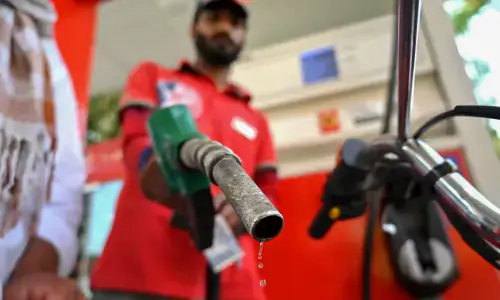
Demand steep cuts in power, gas, and interest rates to boost investor morale
Simultaneously, the federal government must renegotiate the NFC Award, reduce expenditure, cut fiscal deficit, and trim borrowing to lower inflation and debt servicing costs, he said.
He acknowledged the challenges of implementing these measures, especially by a quasi-coalition government, considering the potential impact on vote banks, including feudal landlords, urban property owners, retailers, service providers, informal transporters, undocumented real estate owners, and state-owned enterprise employees at risk of displacement.
Mr Malik questioned the effectiveness of the Special Investment Facilitation Council (SIFC) in facilitating a massive transformation for immediate and long-term objectives. Without this, he warned, neither local nor foreign investment will materialise, and inflation will persist.
He urged the PML-N government to prioritise the country over the party and avoid repeating the mistakes of the PDM government.
The PBC suggested that stakeholders collaborate to ease tensions, resolve differences, and find common ground in the country’s interest. The deficit of trust is as significant, if not more, as the twin deficits on external and fiscal accounts.
Senior vice president of the FPCCI, Saquib Fayyaz Magoon, expressed optimism about political and economic uncertainties dissipating after the general elections. He emphasised the necessity of reducing power, gas, and interest rates for both local and foreign investors to take risks.
President of the KCCI, Iftikhar Ahmed Sheikh, highlighted existing political and economic uncertainties.
“We hope that the upcoming government will engage with the business community to address the unbearable gas and power tariffs and formulate long-term policies to reduce the cost of doing business,” he said.
For the last two months, both foreign and local investors have remained reluctant to put up fresh investments, thus operating below their capacity due to high utility charges, he added.
No industry can function at 22pc interest rates, he said, adding that the energy crisis in the last few months has forced many SMEs to close down their units.
Secretary general of the OICCI, M. Abdul Aleem, briefly stated, “The investment climate is far from attractive for foreign investors and nees serious policy decisions by all stakeholders to overcome the current depressed economic and investment environment.”
Auto part maker/exporter Mashood Ali Khan emphasised the importance of leveraging administrative experience as the new government takes office. He urged effective resource allocation, emphasising development and industrialisation in the upcoming budget. Prudent fiscal management, cutting unnecessary expenses, and prioritising investments are crucial for progress.
He said the new government needs to build trust among domestic investors, ensuring a conducive climate, followed by clarity and consistency in industrialisation policies.
Mr Khan highlighted the need for immediate action on energy prices, reducing interest rates, and lowering electricity and gas costs to alleviate burdens on businesses and stimulate economic activity.
Published in Dawn, February 29th, 2024