Arif Alvi fourth president to complete full term

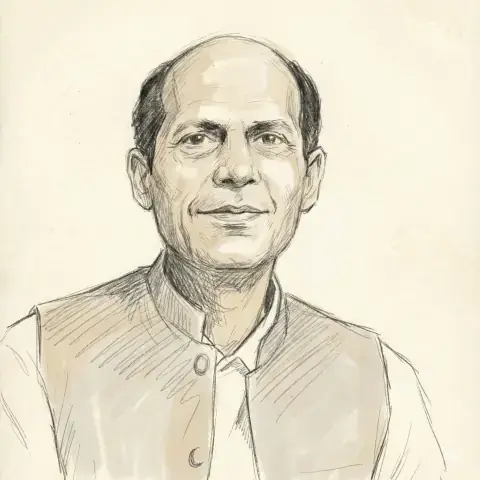
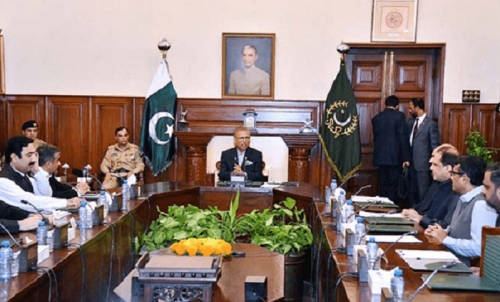
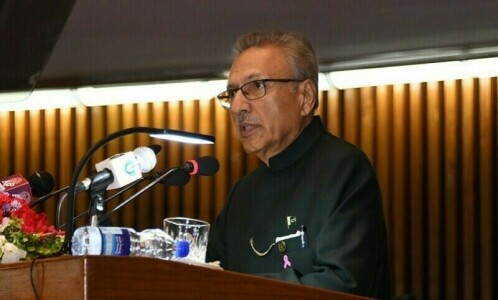
ISLAMABAD: Dr Arif Alvi is on course to become the country’s fourth democratically elected president to complete a five-year term, with his tenure officially ending today (Friday).
The three presidents before Dr Alvi who completed their full terms were Chaudhary Fazal Elahi (fifth president, from 1973 to 1978), Asif Ali Zardari (11th, from 2008 to 2013), and Mamnoon Hussain (12th, from 2013 to 2018). Therefore, Dr Alvi will also be the third consecutive president to have a full term.
Besides, Dr Alvi is likely to remain in office indefinitely in the absence of an electoral college required to choose the president. This will make him one of the only heads of state in the country’s history to have an extended term, though Chaudhry Elahi also spent an additional month in office as a figurehead before Ziaul Haq became president on Sept 16, 1978.
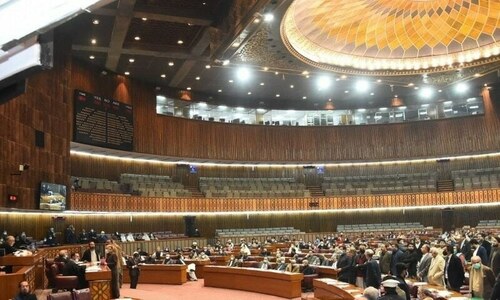
Under the law, the president is elected by members of both houses of the parliament — i.e. the Senate and the National Assembly — and the four provincial assemblies.
Likely to remain in office indefinitely in absence of electoral college
Article 44(1) of the Constitution says that the president will hold office for a term of five years from the day he assumes charge, but he continues to hold the office until a successor is chosen.
Since mystery shrouds the fate of general polls, with the Election Commission apparently planning to hold elections somewhere around late January, how long Dr Alvi will remain in office is anyone’s guess.
Throughout his term, Dr Arif Alvi has remained at the heart of controversies, with critics accusing him of playing with the Constitution and turning the Presidency into an “ordinance factory” by promulgating 77 ordinances.
He was also criticised inside and outside the parliament for allegedly sending references with bad intent against judges of the superior judiciary and making legally flawed appointments on the prime minister’s advice in autonomous and semi-autonomous bodies, which were struck down by courts.
Dr Alvi also took a lot of flak after dissolving the National Assembly on the advice of former prime minister Imran Khan, shortly after the then deputy speaker of the National Assembly Qasim Suri prorogued a much-awaited session without allowing the vote on a no-confidence motion against Mr Khan.
However, a five-judge Supreme Court bench later unanimously held Dr Alvi’s decision to dissolve the National Assembly “contrary to the Constitution and the law and of no legal effect”.
Similarly, in June 2020, the Supreme Court threw out the presidential reference against Justice Qazi Faez Isa, terming it “invalid”.
“[The reference] is declared to be of no legal effect whatsoever and stands quashed,” read the majority (9-1) short verdict on a petition filed by Justice Isa and others seeking the dismissal of reference sent by Dr Alvi.
In February this year, President Alvi bypassed the Election Commission and unilaterally announced election dates for Punjab and Khyber Pakhtunkhwa, setting April 9 as the election date.
His most recent controversy came when Dr Alvi claimed that he had not signed two key bills giving more powers to the Army and intelligence agencies.
However, the two bills — concerning amendments to the Pakistan Army Act and the Official Secrets Act — became the acts of the parliament.
“As God is my witness, I did not sign Official Secrets Amendment Bill 2023 & Pakistan Army Amendment Bill 2023 as I disagreed with these laws,” Dr Alvi posted on social media site X, formerly Twitter.
Dr Alvi also accused his own staff of undermining his will and command, inviting wrath of the critics who advised him to resign if he couldn’t keep his own staff under control.
Published in Dawn, September 8th, 2023