Proposal to retain concessions for hybrid carmakers raises eyebrows


LAHORE: While it works to increase revenue collection from all other sectors, the government is said to be considering a proposal seeking the continuation of tax concessions — granted by the PTI government — on the manufacture of hybrid electric vehicles in the upcoming federal budget.
Sources privy to the development told Dawn that the government is considering keeping the policy, which amounts to a tax concession of around Rs3 million on the making of an average hybrid vehicle, conservatively priced at Rs12m each.
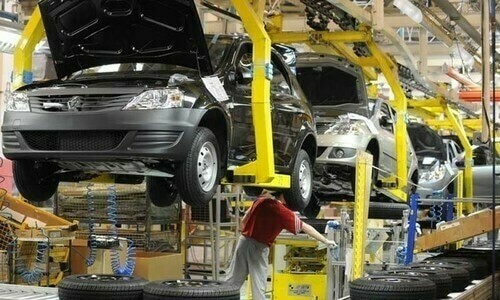
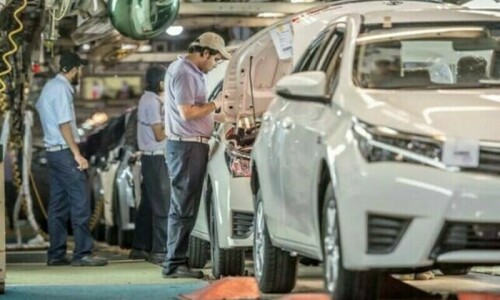
This comes at a time when the automobile sector is reeling from taxes of up to 36 per cent on the manufacture of standard vehicles and several leading automakers have had to enforce production shutdowns in the face of falling demand.
An industry insider claimed that the reason for continuing tax concessions on the manufacture of hybrid vehicles was that some leading auto manufacturers were looking to enter the hybrid market and are said to be putting pressure on the government to provide them with a friendly environment.
It is pertinent to mention that the International Monetary Fund (IMF) has been pushing Pakistan to abolish all subsidies, rebates etc.
Under the proposed policy, sources claimed the government would be providing a concession of around 8.5pc on general sales tax (GST) while the customs duty would be around a mere 4pc.
These concessions, when added up, would mean that hybrid vehicles would be taxed at 22pc, compared to around 36pc tax on small cars up to 1,000cc.
Drawing comparisons with neighbouring India, industry insiders say that while the government provides concessions there as well, there exists a price cap to ensure that affordable vehicles are being subsidised, not those meant for the affluent classes.
At the current rates, only the extremely well-off can afford to purchase a hybrid vehicle. This is why some are calling on the government to ensure the manufacture of low-cost hybrid hatchbacks so they are within the reach of the lower-middle or middle class.
Talking to Dawn, Lahore Chamber of Commerce & Industry (LCCI) President Kashif Anwar was of the view that at a time when the country is passing through a fuel and energy crisis, it was difficult to fathom how the government could justify such a policy.
“Hybrid vehicles required electricity for charging. This means that they have to get that power from the national grid, which is already priced quite high. But yes, it can be justified if hybrids are charged on solar power,” Mr Anwar argued.
He said that as with any policy, the government must weigh its pros and cons. “Will the hybrid vehicles policy bring in foreign investment, create jobs or produce small vehicles affordable for the common people? If the answer is yes, then it should be continued,” he said, adding that in the current economic situation, even small 800cc cars are out of reach for the average person.
Leading automakers have also appealed to the government to avoid imposing more taxes on cars up to 1,000CC. “As we are fighting for our survival, we request the government to not impose any new taxes in the upcoming budget, especially on up to 1,000CC vehicles,” reads a letter the company wrote recently to PM Shehbaz Sharif.
The federal finance minister and finance secretary did not respond to requests for comment, while a spokesperson for the finance ministry said he was not aware if this policy would be continued in the upcoming fiscal year, or not.
Published in Dawn, June 8th, 2023