Water matters


 3
3


ENVIRONMENTAL degradation caused by the deadly human footprint on earth’s ecosystems has resulted in an ominous and multidimensional water crisis on a global scale. The crisis is felt more deeply in Asia and Africa, home to 78 per cent of the world’s population. In these regions, rapid urbanisation has intensified the demographic pressures while policy failures to maintain, develop and modernise water systems and civic infrastructure have worsened conditions for poor and marginalised communities.
Poor developmental practices resulting in lack of proper sanitation and access to clean drinking water are an important aspect of the global water crisis affecting millions of lives. Today, many of the rivers and lakes in Asia are contaminated with untreated municipal and industrial waste. Of the world’s 10 most polluted rivers eight are in Asia, including the Indus and the Ganges.
In several countries, including Pakistan, mushrooming of unplanned peri-urban neigbourhoods without waste water treatment facilities has contributed to the pollution of freshwater bodies such as the Indus and the Ganges. Moreover, millions of people are left without drinking water and exposed to health risks when weak drainage and sanitation systems are damaged by freak rains or flash floods, resulting in sewage inundated cities or localities. At least two billion people across the world drink water contaminated with faeces, a recipe for the transmission of cholera, diarrhoea, polio, typhoid and other water-borne diseases.
The impacts of water crisis on health, food security, employment, education and poverty alleviation are already impeding economic development, disrupting social harmony and attainment of human rights in developing countries.
Of the world’s 10 most polluted rivers, eight are in Asia.
The UN General Assembly formally recognised the human right to water and sanitation in July 2010. Resolution 64/292 also acknowledged that clean drinking water and sanitation were essential to the realisation of all human rights. Meanwhile, Sustainable Development Goal (SDG) 6 of the 2030 Agenda aims at ensuring water and sanitation for all by 2030.
In response to a call by the UN General Assembly to states and international organisations to provide funds and technology to developing countries for safe, clean, accessible and affordable drinking water and sanitation, considerable efforts are being made. A UN initiative called the SDG 6 Global Acceleration Framework aims at engaging all sectors of society to improve support to developing and poor countries while the UN Environment Programme assists governments, through its Global Water Partnership network in designing and implementing country-led responses on water-related SDGs.
Notwithstanding the success of some water-related international goals in recent years, such as improving drinking water sources and efficiency, the world is mostly off track in achieving SDG 6. The World Bank notes that at least a billion people globally lack access to potable water while 2.5 billion people have inadequate sanitation. In Asia, around 700 million people lack access to clean and potable water while 1.8 billion lack access to proper sanitation.
An effective response to the water crisis would require a broad-based, cross-sectoral approach by governments in partnership with the private sector, civil society and local authorities. On the other hand, budgetary allocations and investments in water management will need to be increased significantly. According to a WHO survey, for every $1 invested in water and sanitation, there is an economic return of between $3 and $34.
The water and sanitation crises can be solved through an integrated approach involving all sectors and stakeholders such as the UN’s Integrated Water Resource Management programme that has been successfully implemented in several countries. The IWRM “promotes the coordinated development and management of water, land and related resources, in order to maximise economic and social welfare in an equitable manner without compromising the sustainability of vital ecosystems”.
In practical terms, this will require governments to devise comprehensive policies, enable and empower local authorities to implement them effectively, partner with the private sector to leverage funds and engage citizens to raise awareness and change wasteful manners about this most valuable and scarce natural resource.
With less than a decade left to reach the SDGs by 2030, we need to accord high priority to water matters by making every drop count. Anything less would deepen the crisis, undermine sustainable development and human rights and endanger millions of lives on the planet.
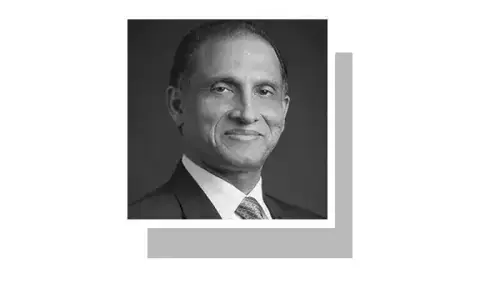
The writer is director of intergovernmental affairs, United Nations Environment Programme.
Published in Dawn, October 27th, 2020