PM to chair meeting of country’s first inter-ministerial body on nutrition today


 4
4

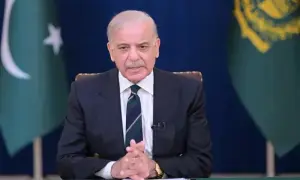
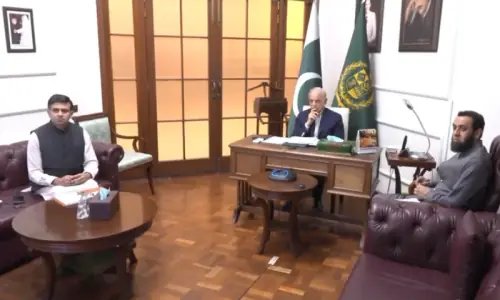
ISLAMABAD: With more than 40pc of children in Pakistan facing stunting issues due to malnutrition, Prime Minister Imran Khan is going to chair a meeting of the Pakistan National Nutrition Coordination Council (PNNCC) today to address the subject.
This is the first time in the country’s history that an inter ministerial body has been created to steer a nutrition-specific agenda.
In his first address to the nation, Mr Khan held up an MRI of a stunted child and highlighted the issue of malnutrition. The Ehsaas Nashonuma initiative — a conditional cash transfer programme - was recently launched to tackle stunting in children below the age of two years along with pregnant and breastfeeding mothers. In the first phase of the programme, 35 Ehsaas Nashonuma Centres have opened in nine districts in the country.
According to a statement issued by the Poverty Alleviation and Social Safety Division, there was no serious effort made in the past to address the issue of stunting, which caused stunting in more than 40pc of children.
That is why the federal government has institutionalised the inter-ministerial PNNCC, chaired by Mr Khan with eight cabinet ministers in the council.
PNNCC is a federal-level coordination body on all nutrition and allied matters with mandate to lead national nutrition policy
Special Assistant to Prime Minister on Social Protection and Poverty Alleviation Dr Sania Nishtar is the vice chair and hosts the council’s secretariat. Other council members include Minister for National Food Security and Research Syed Fakhar Imam, Minister for Planning, Development and Special Initiatives Asad Umar, Minister for Interprovincial Coordination Dr Fehmida Mirza, Minister for Education and Professional Training Shafqat Mehmood, Adviser to the Prime Minister on Commerce and Investment Abdul Razak Dawood, Adviser to the Prime Minister on Finance and Revenue Abdul Hafeez Sheikh, Special Assistant to the Prime Minister on Climate Change Malik Amin Aslam, Special Assistant to the Prime Minister on National Health Services Dr Faisal Sultan, the chief secretaries of all four provinces, Gilgit-Baltistan and Asad Kashmir, federal secretaries, and experts from Unicef and an NGO.
The PNNCC is a federal-level coordination body on all nutrition and allied matters. It has been assigned the mandate to lead the national nutrition policy and specific strategies, and to ensure cross-country, cross-ministerial, inter-sectoral and interprovincial collaboration to prevent stunting and malnutrition among children.
The council will meet at least every six months and periodically review progress made by stakeholders.
Speaking on the scale and scope of the PNNCC, Dr Nishtar said: “The role of the council is very important in Pakistan’s federal system where nutrition is a decentralised subject and a provincial responsibility.
“The issue of nutrition is multifactorial with an interplay of agriculture and food systems, health and hygiene, poverty, inadequate dietary intake and household environment. Hence, it is truly multi-sectoral and the need for federal stewardship is very important and therefore, the role of this council is critical.”
“The role of the federal government is to coordinate high-level policy but not to micromanage,” she said, adding that the Poverty Alleviation Division and planning and NHS ministries coordinate well. She said the second role of the federal government is to provide visibility of nutrition-specific data and information, to which end a Nutrition Dashboard is being released.
The dashboard is being developed under the Ehsaas umbrella to analyse and track data from nutrition programmes and take corrective action as and when required.
She said: “The third major role of the council is to steer special programs and we are doing Ehsaas Nashonuma, the conditional cash transfer program centred on nutrition.”
Published in Dawn, October 5th, 2020