Makli — the necropolis for saints and kings


 0
0
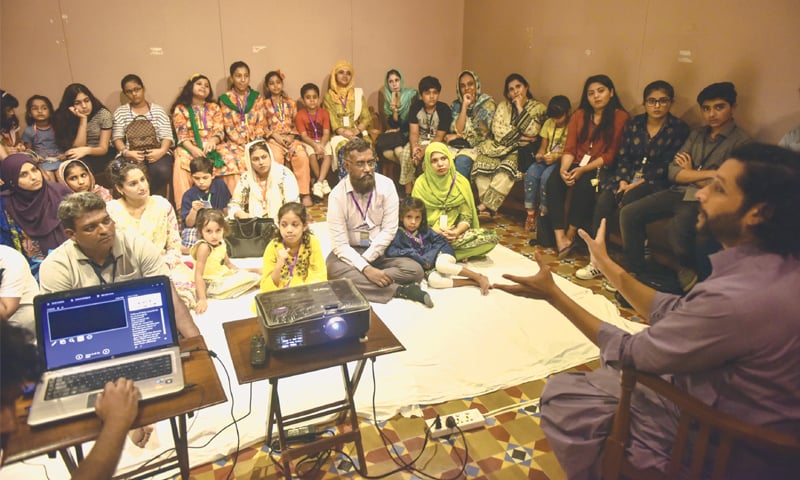
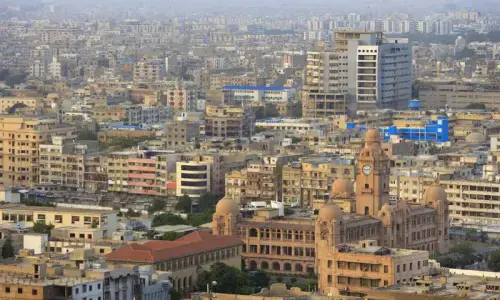
KARACHI: Makli is the largest necropolis for saints and kings in the world. This was said by
architect Zain Mustafa in his lecture on the historic site of Makli delivered to groups of children and history buffs at the Mohatta Palace Museum as part of an ongoing exhibition on Wednesday evening.
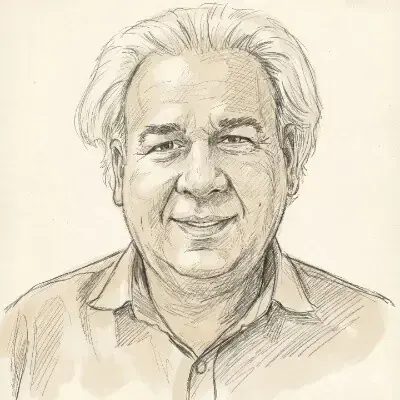
Mr Mustafa first introduced himself to the audience. He said he was not an archaeologist, but was a traditional architect. His architectural education is basic. He returned to Pakistan from abroad after completing his studies in 2010 and started teaching architecture at a university. There he discovered that students in Pakistan had the knowledge of architectures related to the West but knew little about their own region, and next to zero about Pakistan’s architectural history.
Mr Mustafa said our history is great and rich but because of infrastructural deficiencies we don’t get to see it. We know about the Great Wall of China but don’t know about Ranikot. First we need to understand our own history, and only then we can design our future. A research work that came out last year revealed that our history is 7,000 years old which means that the Indus Civilisation is older than the Mesopotamian. The history from 1947 that we are taught is political history.
Mr Mustafa said there was the issue of owning one’s own heritage. Our history is equally, if not more, intense and great [than histories of other parts of the world]. Makli is relatively modern (1350-1780). What makes Makli special is that it’s the mouth of the River Indus. Water is life; people who ruled this area in the past controlled water from here.
Underlining the importance of Makli, Mr Mustafa said it is a beautiful space; it is not [just] a graveyard — it’s our genetic indexing. It gives us a luxurious architectural space. You have this luxury of looking at 400 years of four different types of typologies. One can tell how rich or not-so-rich the ruler who made a particular mausoleum in Makli was by looking at the quality of the stone he used in its construction. The denser the stone the farther the area it has come from. This is the reason, he pointed out, that when he takes children for a tour of the area he asks them to have a look at the structures or caress them with their vision to know the densities of the material used in structures. One could extrapolate things such as how a particular structure came up, what material was used in it etc, by just looking at them.
Mr Mustafa said Makli was a little more than one hour drive [from Karachi], poetic lyrical place where one can see monuments. He claimed that there are 150,000 graves in it. “It is the largest necropolis for saints and kings in the world… Whoever is buried here is not a commoner (aam aadmi nahi hai),” he remarked, adding when he takes people there he advises them not to make noise — respect must be shown to the site. It is a spiritual sanctuary. Mentioning political slogans written on some of the structures, he argued when someone writes on them, it becomes difficult to remove it because the stone is porous.
After the talk, the visitors were taken to the rooms where an exhibition on the subject has been arranged.
Earlier, Khalid Soomro introduced the speaker to the audience and spoke briefly about the exhibition for students.
Published in Dawn, June 27th, 2019