China invites UN observers to restive region of Xinjiang, but with 'conditions'



China said on Monday it would welcome UN officials to the restive western region of Xinjiang with the condition that they stay out of the country's internal affairs.
This comes after UN human rights chief Michelle Bachelet said in December that her office was seeking access to the region to verify reports of re-education camps holding Muslim minorities.
Reports of gross human rights violations targeting the Uighur ethnic minority in the region in China's northwest, which shares a border with Pakistan and Afghanistan, have leaked out in the past year.
“Xinjiang is an open region, we welcome all parties, including UN officials, to visit, if they abide by China's laws and regulations, and go through the proper travel procedures,” Chinese foreign ministry spokesman Lu Kang said at a regular press briefing.
But he warned that foreign nationals, including UN officials and experts, should avoid interfering in China's internal affairs.
China's foreign ministry regularly claims it welcomes visits to Xinjiang from foreign journalists and officials.
But foreign journalists travelling to the region are frequently detained and followed by police to prevent and obstruct reporting on the internment camps and treatment of Uighurs.
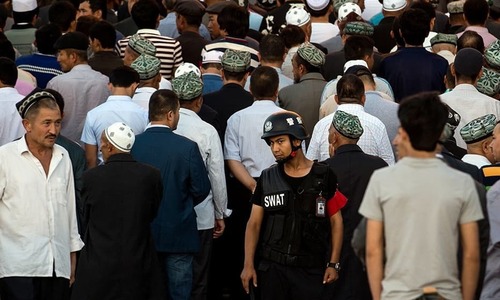
China has long imposed draconian restrictions on the lives of Muslim minorities in the region in the name of combating terrorism and separatism.
But police measures have intensified in recent years, and an independent UN panel believes as many as one million ethnic Uighurs and other Turkic Muslim minorities are being held in re-education centres.
Activists say ethnic minorities can be detained for transgressions as minor has wearing long beards or face veils.