0
0
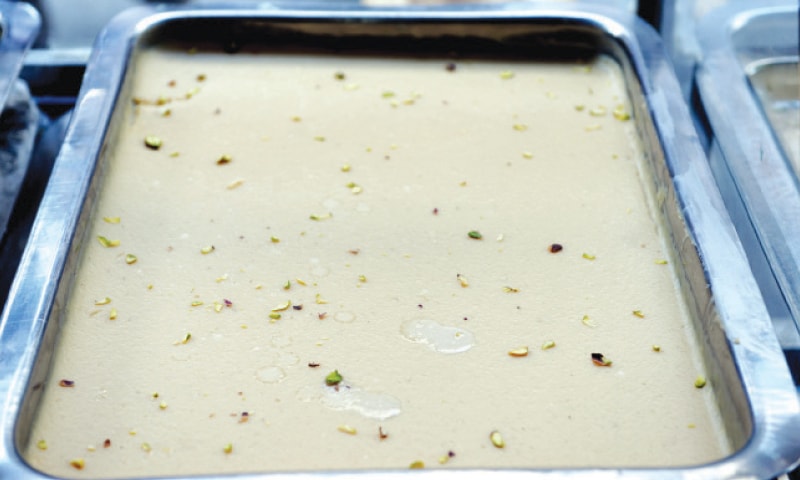

RAWALPINDI: Whether lunch or dinner, most people in this part of the world are always ready for a bite of dessert after their meal. And among the subcontinent’s wide range of meetha, kheer is always a crowd pleaser.
Made from ground rice, sugar and milk and garnished with almonds, pistachios, raisins and saffron, kheer can be enjoyed as a dessert or a refreshment.
Kheer is the subcontinent’s take on rice pudding, served at both Hindu and Muslim special occasions. Although it has been eaten in the region since ancient times, it was the Mughals that added garnishes such as nuts and silver leaf.
More and more outlets have started serving kheer in the city over the last decade, many of them opened by milkmen that sell both milk and kheer, as well as other milk-based foods such as rabri, khoya, butter and ghee.
There are also many kheer shops in the city’s downtown area. The dessert is sold all year round and made daily, to ensure customers receive fresh food.
“We started selling kheer after the partition. In the summer, we sell rice and milk kheer and in the winter we add carrots to the kheer and it is also served chilled,” said Arslan Ahmed, who owns a shop in Bhabara Bazaar.
He said they do not use any artificial flavours in their kheer since most people prefer simpler recipes. The kheer is, however, garnished with crushed almonds and silver leaf.
An old shop in Chittian Hattian also specialises in kheer. “Most people come to buy it for their families, but we also get orders to make kheer on special occasions, such as on 12 Rabiul Awwal, for weddings and niaz,” shop owner Mohammad Rizwan said.
For parties, they prepare the kheer, also known as firni, in clay pots – usually over a hundred.
“We belong to village, and in our village we have plenty of rice and milk so we made kheer every day. But in cities we have to go to the shops if we want kheer,” Satellite Town resident Chaudhry Amir said.
He said the traditional recipe for kheer does not ask for sugar, and instead consists of milk and sugarcane juice.
“In the past, kheer was cooked for several hours until the milk turned a yellowish colour, and that was the best kind of kheer,” he added.
Mohammad Akram, who lives on Committee Chowk, said he prefers to pick up kheer during a visit to the bazaar rather than spicy snacks. “We usually have falooda or kheer whenever we visit the downtown area,” he said.
Published in Dawn, October 23rd, 2017