WASHINGTON: Away from the acrimony and distrust that mar India-Pakistan relations, two scientists from these neighbouring countries are working together at a US university against cancer.
In a recent study, the two from the Western Michigan University, Kalamazoo, made significant contributions to cancer research using stable isotopes of nitrogen. Isotopes are atoms of the same element that differ in the mass but are same for most other purposes.
The findings were published in Scientific Reports, a Nature Group publication.
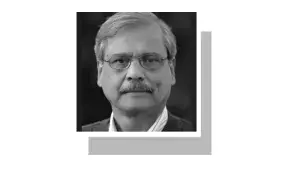
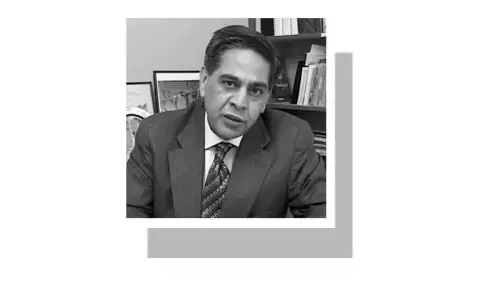
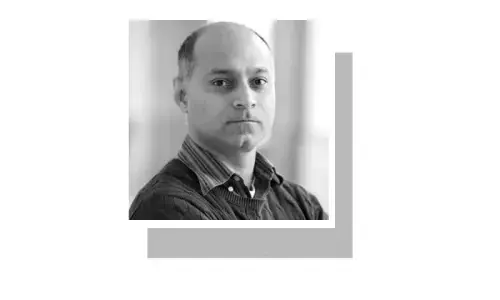
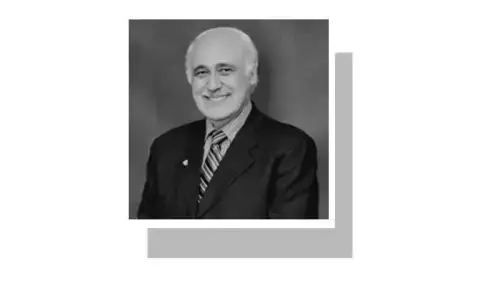
The scientists involved are Prof R.V. Krishnamurthy, Prof Karim Essani and Dr Yogesh Suryavnashi.
Lead author Prof Krishnamurthy, who is an isotope chemist specialising in earth science, said: “I have been nurturing the idea of using natural distribution of stable isotopes in medical research, particularly cancer, for a long time, but could not proceed until I found the right collaborator in Karim who is a professor in our biology department and an expert in virology.”
The scientists analysed the nitrogen isotope ratios in individual amino acids in healthy and cancerous colo rectal cancer cells and showed that by using nitrogen isotopes one can get information on the metabolism of amino acids in cancerous cells. The authors focused on the aglutamic acid which is a non-essential amino acid meaning it can be made in the body.
An essential amino acid on the other hand has to be supplemented by diet.
Glutamic acid is a significant source of energy and is also used to make other amino acids by cells.
The research by this group showed glutamic acid metabolism is different in cancerous cells compared to healthy cells.
They were assisted in the research by graduate student Dr Yogesh Suryavanshi. Prof Krishnamurthy is an Indian and Prof Essani is from Pakistan, who came to the US several decades ago.
Prof Krishnamurthy, who is all praise for his collaborators Prof Essani and Dr Suryavanshi, said: “This is a small step in cancer research but arguably the first of its kind. There is potential for applying these techniques to several cancer types and develop methods in diagnostics and therapy. Obviously this calls for expertise from diverse disciplines. In the scheme of a building, this is not even a brick, but a grain of concrete.”
Published in Dawn, June 12th, 2017