40
40
Army Chief General Qamar Javed Bajwa on Monday expressed the hope that timely completion of the China-Pakistan Economic Corridor (CPEC) would usher in a new era of development in the region.
He was addressing the passing out parade of newly recruited Baloch personnel of the Pakistan Army in Quetta.
He said Balochistan is an integral part of Pakistan and its resources would in future open new paths of progress for the people of Balochistan.
Development in Balochistan would ensure peace and stability in the country, the army chief added.
"That is why our enemies want to hinder Balochistan's bright future.
"I am extremely pleased that the people of Balochistan... have rejected all anti-Pakistan elements."
Gen Bajwa said Pakistan's "doors are open for those brothers who have been misguided by the enemy".
He said the betterment of law and order in Balochistan is the "foremost priority of the government" and in this respect, the Pakistan Army is assisting with the training and capacity building of police and other law enforcement agencies.
"Pakistan Army, despite limited resources, has always tried to play its positive role in the educational, societal and economic progress of the province alongside other institutions," he said.
"Pakistan Army is the manifestation of national unity in which all provinces are represented approximately according to their populations."
In today's ceremony, 577 recruits successfully completed their training and were awarded certificates by the army chief.
So far, over 13,000 Baloch youths have been trained and recruited by the Pakistan Army.
About CPEC
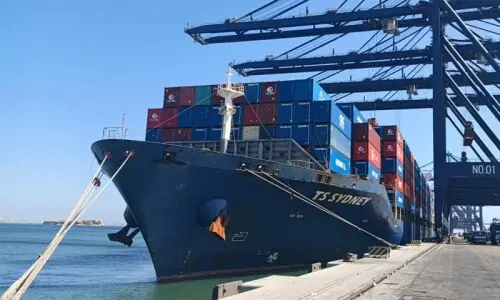
Balochistan is a key region for China's ambitious $46 billion CPEC infrastructure project linking its western province of Xinjiang to the Arabian Sea via Pakistan.
Security problems have mired CPEC in the past with numerous attacks, but China has said it is confident the Pakistani military is in control.
The CPEC is a 3,000-kilometer network of roads, railways and pipelines to transport oil and gas from Gwadar Port to Kashgar city, northwestern China's Xinjiang Uighur autonomous region.
Proposed by Chinese Premier Li Keqiang during his visit to Pakistan in May 2013, the CPEC will act as a bridge for the new Maritime Silk Route that envisages linking three billion people in Asia, Africa and Europe.
An official agreement on the corridor was signed between the two countries in May last year during President Xi Jinping's historic visit to Pakistan.
A flagship project of the Belt and Road initiative as well, the CPEC intends to revive the ancient Silk Road with a focus on infrastructure, and constitutes the strategic framework of bilateral cooperation.
The project links China's strategy to develop its western region with Pakistan's focus on boosting its economy, including the infrastructure construction of Gwadar Port, together with some energy cooperation and investment programs.